
 Worksheets
Quiz - Ecology
Total questions: 25
Worksheet time: 1hrs 15mins

The snake in this food chain is a
producer
primary consumer
secondary consumer

The rabbit, field mouse, and the deer are all
producers
primary consumers
secondary consumers
tertiary consumers

What is the grass in this food web?
producer
primary consumer
secondary consumer

Which of these is a food chain that can be found in the food web shown in the picture?
grass-mouse-deer
rabbit-snake-fox
grass-mouse-snake
mouse-weasel-fox
The arrows in a food chain or food web represents what?
They show the flow of oxygen between organisms in an ecosystem.
It shows how sunlight flows within an ecosystem.
They show what direction the energy is flowing between organisms in an ecosystem.
They represent how water is transferred within a habitat.
In a food web, arrows point towards:
who gets energy.
who gets eaten.
who loses energy
the producers who make the energy

After completing your calculations, what is the average amount of energy transferred from one trophic level to the next?
90%
70%
50%
10%


An ecological symbiotic relationship between two organisms where one benefits and the other is harmed…
parasitism
herbivore
mutualism
carnivore
commensalism

This is the job or role of a specific organism within its habitat...
producer
prey
carnivore
niche
photosynthesis

What you would call an ecological symbiotic relationship between two organisms where one benefits, but the other is not helped or harmed?
mutualsim
predator
commensalism
parasitism
herbivory
Technically speaking, ALL food chains should end with these types of organisms so that nutrients can be recycled back into the habitat…
parasites
predators
herbivores
symbiotes
decomposers
A pair of red, male kangaroos are seen fighting over a potential mate. The ecological relationship between the two male kangaroos shown is -
Commensalism
Mutualism
Predator-Prey
Competition
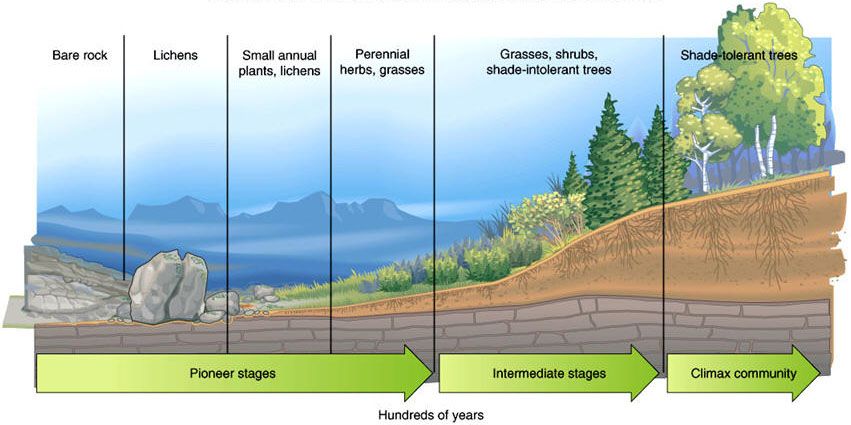
The picture display which type of succession?
primary
secondary
tertiary
all of the above
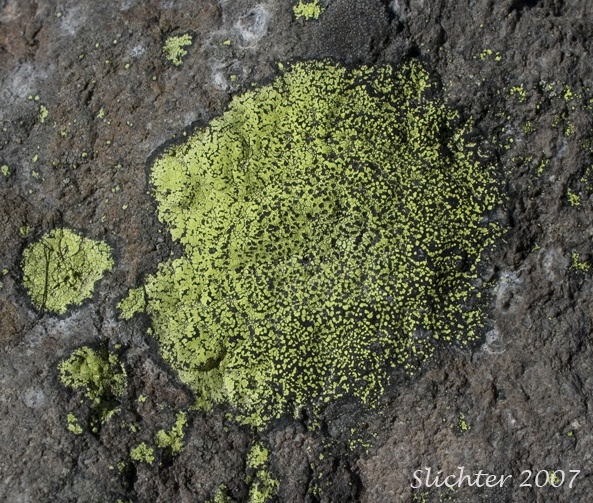
What is the name given to lichen/algae during primary succession?
pioneer species
volunteer species
founder species
conqueror species
After a volcanic eruption, volcanic rock is present (but no soil). Which of the following states the most likely order of succession that would be seen?
Lichens → Shrubs → Grasses → Trees
Lichens → tree → shrubs→Grasses
Grasses → Lichens → Shrubs → Trees
Lichens → Grasses → Shrubs → Trees

Why does primary succession typically occur over a longer period of time (as compared to secondary succession)?
Because trees do not perform respiration
Because the climax community is usually a forest.
Because primary succession already has soil
Because primary succession does not begin with soil being present

This is the largest number of individuals of a population that the environment can support...
carrying capacity
population crash
lag phase
mutualism

According to the graph, what is causing the deer population to decrease
They got sick
The wolf population is decreasing
The wolf population increased
They ran out of food

When a population grows past the ecosystem's carrying capacity, what happens to the population?
Continues to grow
The population starts to die off to return to carrying capcity
The population will go extinct due to lack of resources
The population grows then finds a new carrying capacity

