

wayground logo

Free Printable Worksheets

Font size

S
M
L
XL
Worksheets

Roman Republic to Empire

Total questions: 40

Worksheet time: 26mins
Name
Class
Date
1.
Which mountains stretched from north to south?
a)
Alps
b)
Apennines
2.
Which best describes the climate of Ancient Rome?
a)
Mediterranean
b)
Hot, dry summers
c)
Mild, wet winters
d)
All of the above
3.
Why was the location of Rome so ideal?
a)
Fresh Water, Good Land
b)
Sea Access, Ideal Climate
c)
Protection
d)
All of the above
4.
Which river runs through Rome?
a)
Po
b)
Tiber
c)
Tigris
5.
Which of the following is NOT one of the geographic features of Rome?
a)
volcano
b)
mountains
c)
rivers & seas
d)
desert
6.
How many hills was Rome built upon?
a)
2
b)
5
c)
7
d)
10
7.
Which of the following is NOT true about Romulus and Remus?
a)
Twins born to a princess and Roman god of war
b)
Raised by a she-wolf
c)
Became gods after winning many wars
d)
Romulus killed Remus and became King of Rome
8.
How did Romans learn about Greek culture? 
a)
They moved to Greece
b)
Greek colonists settled nearby
c)
They sold slaves to Greece
d)
Greek leaders met with Roman leaders
9.
Which mountains served as a natural border to the north?
a)
Alps
b)
Apennines
10.
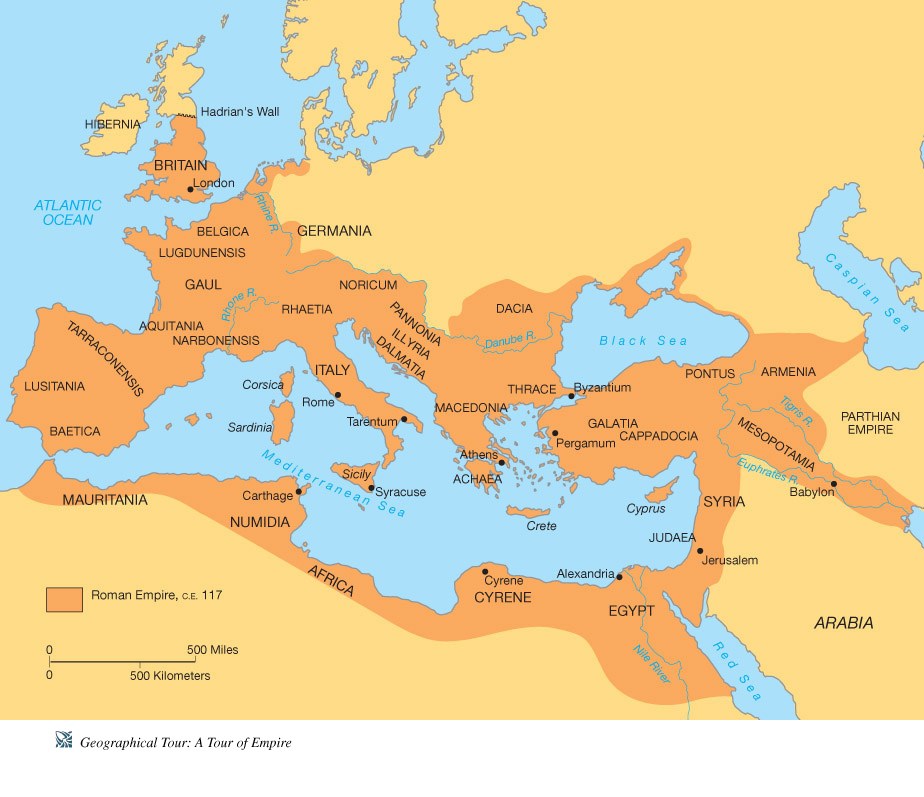
If you traveled from Italy to Cartage, which direction would you be going?
a)
north
b)
southwest
c)
northeast
d)
southeast
11.
________are 2 officials elected by the senators who serve for 1-year terms. 
a)
Consuls
b)
Senate
c)
Tribunes
d)
Dictators
12.
This group was part of the lower or middle class. Common people.
a)
Patricians
b)
Plebeians
c)
Slaves
d)
Priests
13.
Representatives from the Plebeian class that were elected to protect Plebeian interests.
a)
Consuls
b)
Slaves
c)
Plebeians
d)
Tribunes
14.
What type of government did Rome have, after they threw out their king?
a)
Democracy
b)
Oligarchy
c)
Monarchy
d)
Republic
15.
What term describes an action taken by a leader in which they say no to a law?
a)
consul
b)
legion
c)
tribune
d)
veto
16.
What is a main difference between the current U.S. government and that of the Roman republic?
a)
Women are allowed to vote.
b)
A system of checks and balances is in place.
c)
The senate is a branch of government.
d)
Officials can veto other officials.
17.
What does Republic mean?
a)
Common people in Rome.
b)
A form of government with elected leaders,
c)
Wars fought in Rome.
d)
A person trained to fight.
18.
In times of crisis, what did the Roman Republic do differently?
a)
They elected new Senate members who took full control of the government.
b)
They allowed the army to run the country.
c)
They selected a dictator to rule with absolute power for a short time.
d)
They elected a king to permanently take control.
19.
Who was Julius Caesar?
a)
He declared himself dictator for life, which led to change of the Roman government from a republic to an empire
b)
He was the founder of Rome.
c)
He was the last emperor of Rome.
d)
He was a brilliant architect who built the first aqueduct.
20.
How did the Romans carry water from hills and valleys into cities?
a)
by combining a set of layers
b)
by combining a set of arches
c)
by building aqueducts
d)
by building a bridge
21.
The Pax Romana was
a)
A program to give land to the poor
b)
A period of Civil Unrest, riots, & wars
c)
Period of peace and prosperity
d)
The leader of the senate
22.
The wealthy ruling class of Rome was called
a)
Ciceros
b)
Plebeians
c)
Visogoths
d)
Patricians
23.
Rome’s 200 years of peace was called the...
a)
Age of Augustus.
b)
Resurrection.
c)
Pax Romana.
d)
Crucifixion.
24.
Roman roads were built primarily in order to allow...
a)
senators to get to the Senate.
b)
Rome’s armies to travel through the empire.
c)
merchants to travel safely.
d)
slaves to travel into the countryside.
25.
What material did the Romans invent that helped their structures last?
a)
volcanic rock
b)
asphalt
c)
cement
d)
lime
26.
How did Constantine affect Christianity?
a)
He made Christianity legal in 313 AD
b)
He placed even more bans on the religion.
c)
He persecuted Christians in the Colosseum.
d)
He moved the capital of Rome to the Eastern Empire.
27.
Which popular Roman attraction is pictured?
a)
Colosseum
b)
Pantheon
c)
Circus Maxiums
d)
Forum
28.

earliest attempt by the Romans to create a code of law

a)

constitution

b)

the twelve tables

c)

patriarchal society

29.
A Roman public meeting place
a)
Agora
b)
Town Hall 
c)
Forum
d)
Voting Center
30.

Barbarians

a)

at an advanced stage of social and cultural development.

b)

a stage of social and cultural development considered to be more advanced

c)

Word used by Greeks and Romans for all people who did not share their culture

d)

polite and well-mannered

31.

Which of the following are NOT Roman architectural inventions?

a)

The arch

b)

The column

c)

The keystone

d)

The dome

32.

Which engineering innovations allowed Romans to built large and long-lasting structures like the one shown?

a)

Clay Bricks and Mortor

b)

Arches and Concrete

c)

Stone saws and tar

d)

Cranes and Pulleys

33.

What is a similiarty between US and Roman citizenship?

a)

Women do not have full rights

b)

Citizens can vote and participate in government

c)

You must serve in the army to earn citizenship

d)

You have to live in both countries to get citizenship

34.

What innovation allowed fresh water into Roman cities?

a)

rivers

b)

aqueducts

c)

catapults

d)

arches

35.

The teachings of Jesus of Nazareth led to what religion's development?

a)

Nazarene

b)

Christianity

c)

Judaism

d)

Protestantism

36.

What continents did the Roman Empire extend into?

a)

Africa

b)

Asia

c)

Europe

d)

North America

37.

What Roman architectural legacy would you find in the U.S. Capitol building?

a)

stadium

b)

dome

c)

columns

d)

aqueduct

38.

The Romans studied ____________ to produce a calendar.

a)

the moon

b)

the stars

c)

the flight of a swallow

d)

the flight of a butterfly

39.

The name of this famous temple built in Rome that has a large dome is called the;

a)

Pantheon

b)

Colosseum

c)

aqueduct

d)

area

40.

Romans would go here to socialize and get clean.

a)

Pantheon

b)

Colloseum

c)

Baths

d)

Palatine Hill
