Wayground logo

Free Printable Worksheets

Font size

S
M
L
XL
Worksheets

US History Review

Total questions: 41

Worksheet time: 21mins

Name
Class
Date
1.

Where were the 13 American Colonies located?

a)

Eastern Seaboard

b)

Mexico

c)

Caribbean

d)

Western Seaboard

2.
Which of the following is not one of the original 13 colonies?
a)
Maryland
b)
Rhode Island
c)
Kentucky
d)
Georgia
3.
Which of the following colonial groups does not belong?
a)
New England Colonies
b)
Southern Colonies
c)
Middle Colonies
d)
Atlantic Colonies
4.

Which group of colonies had a combination of a warm climate and rich soil that supported plantations?

a)

New England Colonies

b)

Middle Colonies

c)

Southern Colonies

5.

Who led the Continental army?

a)

John Adams

b)

George III

c)

George Washington

d)

Charles Cornwallis

6.
This Act made colonists buy stamps to place on all their printed documents. 
a)
Tea Act
b)
Quartering Act
c)
Intolerable Acts
d)
Stamp Act
7.
The British government put a tax on something the colonists drank.  What was it?
a)
coffee
b)
milk
c)
tea
d)
water
8.
What did the sons of Liberty do to protest the tax on their favorite drink?
a)
nothing
b)
they boarded ships and threw the tea into the water
c)
they paid the tax
d)
they wrote a newspaper article about the unfair tax
9.

The colonists were subjects to this type of government in which a king or queen ruled a nation.

a)

democracy

b)

oligarchy

c)

monarchy

d)

dictatorship

10.
This region relied heavily on slave labor
a)
North
b)
South
11.
Abolitionists ___________________ slavery and convinced other to organize the Underground Railroad. 
a)
enjoyed
b)
wanted 
c)
opposed 
d)
started 
12.
What law compelled the North to return runaway slaves back to the South?
a)
Fugitive Dog Acts
b)
Fugitive Slave Act
c)
Abolition Act of 1850
d)
I refuse to answer this question based on the fact I have not studied!
13.
What is the name for people who wanted to put an end to slavery?
a)
Underground Railroaders 
b)
Suffragists
c)
Bushwackers
d)
Abolitionists
14.
What was the time period that followed the Civil War called?
a)
The Golden Age
b)
The Roaring Twenties
c)
The Industrial Revolution
d)
Reconstruction
15.
Which amendment officially ended slavery in the United States?
a)
12th
b)
13th
c)
14th 
d)
15th
16.
The 14th Amendment of the United States Constitution...
a)
Gave African Americans citizenship
b)
Gave African Americans the right to vote
c)
Freed the slaves
d)
Gave landowners the right to sharecrop
17.
The 15th Amendment of the United States Constitution...
a)
Gave African Americans the right to own businesses
b)
Freed the Slaves
c)
Gave African American men the right to vote
d)
Forced African Americans back into slavery
18.

These were used to take away the rights of African Americans in the South after the Civil War.

a)

Amendments

b)

White Codes

c)

Black Codes

d)

Civil Rights

19.
The invention of the cotton gin increased the efficiency of cotton production and actually increased the demand for this
a)
Water Power
b)
Coal
c)
FIre
d)
Slaves
20.
Until the 1800s, how did most families get the items they needed for daily life?
a)
They made tools, clothing, materials, and food by hand.
b)
They bought them from factories.
c)
They bought them on the Internet.
d)
They bought them from stores.
21.
The _______________ is the name for the change from goods being made by hand at home to making them by machine in factories.
a)
French Revolution
b)
Machine Revolution
c)
Industrial Revolution
d)
Technological Revolution
22.
Why did river travel improve during the 1800s?
a)
because of the invention of the steam engine
b)
because of the invention of stagecoaches
c)
because of the invention of the reaper
d)
because rivers were getting faster every year
23.

This refers to the migrating of people from the countryside to the cities.

a)

urbanization

b)

industrialization

c)

socialism

d)

liberalism

24.
Which of the following was NOT associated with early factory working conditions?
a)
Low wages
b)
Safe working conditions
c)
Dangerous working conditions
d)
Widespread pollution
25.
What event sparked the beginning of World War I in Europe?
a)
The assassination of Archduke Ferdinand of Austria
b)
German threats across Europe
c)
The use of chemical weapons by the Germans
26.
What was the significance of the Lusitania to the United States?
a)
It was President Wilson's favorite ship and the Germans tried to sink it. 
b)
The Germans sunk the British ship Lusitania with Americans on board which helped get us in the war. 
c)
It was carrying gold to help fund the Allies and the Germans sunk it. 
27.
Explain what the Zimmerman Telegram was.
a)
It was a secret message the U.S. intercepted from Germany telling Mexico to attack the U.S. 
b)
It was a message from Germany that admitted that they were losing the war. 
c)
It was a telegram that showed the Central Powers' war plans. 
28.
What is the date WWI ended and why is it significant?
a)
Nov. 11 - we now celebrate President's Day on that day. 
b)
Nov. 12 - We made it election day to celebrate democracy. 
c)
Nov. 11 - we honor Veterans of all wars
29.
Why did the US Congress not sign the Treaty of Versailles?
a)
Because it punished Germany too harshly after the war. 
b)
Because it included the The League of Nations which meant we would have to back up our Allies if they got in another war. 
c)
It said the US had to help our allies rebuild after the war. 
30.

Modern 1920s woman who had a new liberated lifestyle (nontraditional)

a)

floozie

b)

flapper

c)

flubber

d)

flippant

31.

What amendment gave women the right to vote?

a)

16

b)

18

c)

19

d)

21

32.

What amendment banned alcohol (Prohibition)?

a)

16

b)

18

c)

19

d)

21

33.

Why was the 1920s known as the "Roaring 20s?"

a)

huge increase in immigration which led to fighting

b)

economic depression

c)

people were free to drink and party at their leisure

d)

it was a time of cultural and social changes

34.

Amendment that ended prohibition

a)

16

b)

18

c)

19

d)

21

35.
Which year marks the Stock Market Crash that began the Great Depression?
a)
1927
b)
1928
c)
1929
d)
1930
36.

The term appeasement refers to ---

a)

giving in to an aggressor to avoid war

b)

depending on allies to fight for you

c)

disarming to show your unwillingness to fight

d)

standing up for one's beliefs

37.

Which two cities were attacked with atomic bombs by the United States?

a)

Nagasaki & Hiroshima

b)

Tokyo & Kyoto

c)

Tokyo & Yokohama

d)

Osaka & Kyoto

38.

Which president of the United States died during World War II?

a)

Dwight Eisenhower

b)

Franklin Roosevelt

c)

Harry Truman

d)

Woodrow Wilson

39.

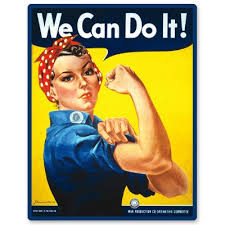
Who is this a image of and what did she a symbol of .....

a)

June the Fighter symbol of women's suffrage

b)

Susan the solider symbol of women working on airplanes

c)

Rosie the Riveter symbol of women working in factories during the war.

40.

What was President Roosevelt referring to in this speech?

a)

The victory at Normandy and liberation of France.

b)

the Japanese bombing of Pearl Harbor.

c)

The Battle of Britain.

41.

What is another name for the Invasion of Normandy?

a)

Battle of France

b)

Battle of the Bulge

c)

D-Day

d)

V-E Day