Worksheets
Evolution and Natural Selection
Total questions: 13
Worksheet time: 10mins

How do you "win" at natural selection?
survive
go extinct
survive & reproduce
Which of the following is a factor in natural selection?
Individuals of species compete with one another to survive.
All species are genetically diverse.
Individuals better able to adapt to changes leave more offspring.
All of the above.
Starting in 1954, commercial fishers in the northwest Pacific were paid by weight, rather than by the individual fish, for pink salmon. The fishers increased the use of a type of net that selectively catches larger fish. Which of the following effects did this change in fishing technique most likely have on the salmon population over the next 20 years?
The average body size of the salmon population decreased significantly.
The average body size of the salmon population increased significantly.
The average body size of the males in the salmon population increased, and the females stayed the same.
None of the above.
The Asian shore crab invaded parts of the eastern coast of the United States about 15 years ago. The Asian shore crab preys on blue mussels. In the time since the Asian shore crab arrived, the average shell thickness of the blue mussel population has increased.
Which of the following is the most likely reason that this increase in shell thickness has occurred?
Blue mussels with thick shells attract more crabs that mussels without thick shells.
Blue mussels with thick shells grow in larger colonies than mussels without thick shells.
Blue mussels with thick shells catch more food per day than mussels without thick shells.
Blue mussels with thick shells survive and reproduce more successfully than mussels without thick shells.
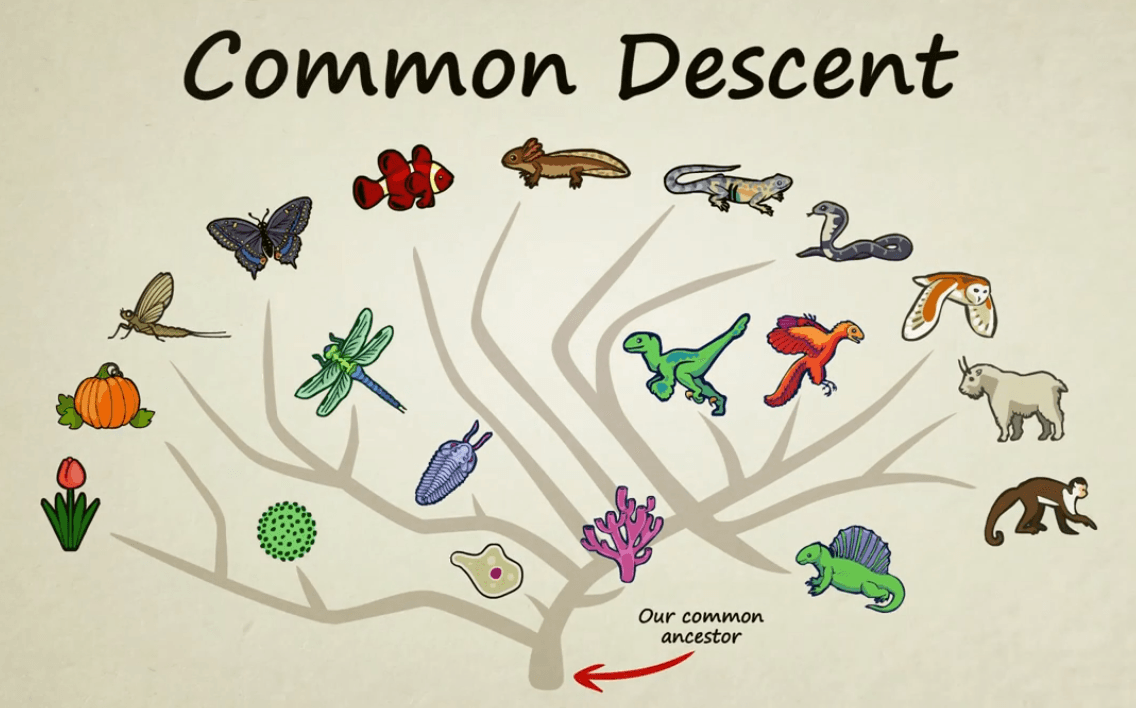
The theory of ‘common descent with modification’ states that all modern organisms
can change in response to environmental change
are descended from a single ancestral species
can be arranged in a linear order from “least evolved” to “most evolved”
Have not changed over time
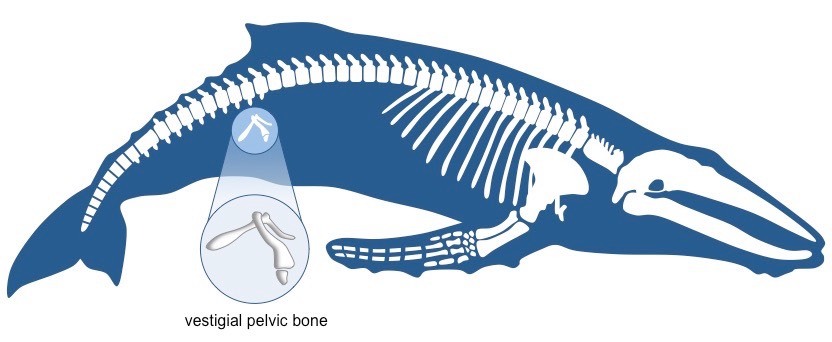
The presence of pelvic bones in the baleen whale is evidence of which of the following?
Whales can travel on land when necessary.
Whales are developing into animals with four functioning limbs.
Whales have functional legs that are hidden by fat and skin.
Whales evolved from four-legged animals.