
 Worksheets
History of Pakistan
Total questions: 81
Worksheet time: 45mins
Who felt that Muslims gain modern education?
Sir Syed Ahmad Khan
Allama Iqbal
In which year Allama Iqbal gave the idea of a separate home land ?
9301
1950
1960
Who was the first Governor General of Pakistan ?
Muhammad Ali Jinnah
Allama Iqbal
Who was the first Prime Minister of Pakistan ?
Liaquat Ali Khan
Allama Iqbal
Who was the first Prime Minister of Pakistan ?
Liaquat Ali Khan
Allama Iqbal
Who hosted the flag of Pakistan for the first time ?
Fatima Sughra
Fatima Ali Jinnah
When Pakistan Resolution was adopted?
1940
1930
1960
When partition of Bengal was announced?
1908
1905
1910
When Indian National Congress was established?
1885
1990
1999
When war of independence was fought ?
1857
1957
When All India Muslim league was founded?
1906
1907
1908

__________ Pakistan covered the province of Bengal.
North
East
West

West Pakistan was made up of the provinces of ___________ Balochistan, NWFP and Punjab.
Sindh
Gilgit Baltistan
Khyber Pakhtunkhwa

Nearly_______ Muslims, Hindus and Sikhs migrated from both sides across the line of partition into Punjab.
10 thousand
100 billion
10 million

_________ factors in migration included facing racism, harsh attitude, cruelty or torture including possible death.
pull
push
None of the above

The idea of having a separate homeland meant ease and freedom. This can be considered as _______ factors in migration.
pull
push
Both of the above
The great migration ended around___________.
1947
1950
1948

Millions of immigrants had to live in _____________ with no facilities or money.
open
houses
refugee camps
People found an alternate of sugar and replaced it by _________.
jaggery
honey
brown sugar
The subcontinent became a culturally diverse area, where people of different ethnic groups and people of different religious identities were coexisting.
Yes, this is true. Every invader brought his own religion and culture to the subcontinent.
No, there were only two religions in the subcontinent - Islam and Hinduism.
who is the national poet of Pakistan?
Liaqat Ali Khan
Allama Iqbal
Muhammad Ali Jinnah
A rock deep within the Earth experiences extreme temperature and pressure. After a long period of time it becomes which rock?
Magma
Igneous
Metamorphic
Sedimentary


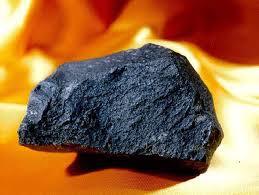


The three main layers of the Earth are the _____________, _____________, and _____________.
core
crust
mantle
asthenosphere
litosphere


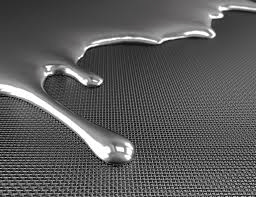
Which layer is made (mostly) of LIQUID iron and nickel?
crust
mantle
outer core
inner core
Sally is researching the differences that exist in each layer of the Earth. Which of the following best describes Earth's crust?
Solid, rocky
Liquid, metallic
Semisolid, convecting
Dense, extremely hot

Which layer of the Earth is the THINNEST?
crust
mantle
outer core
inner core
Which layer of the Earth is the THINNEST?
crust
mantle
outer core
inner core
Which layer is the coolest?
crust
mantle
outer core
inner core

What is Magma ?
Molten rock under the earth's surface
Molten rock on the earth's surface
Which is the process that breaks up rock on Earth’s surface?
deposition
melting
compaction
weathering
Geologists have classified rocks into three major groups of rocks which are:
inorganic, organic and chemical rocks
igneous, sedimentary and metamorphic rocks
metamorphic, chemical and non chemical rocks
sedimentary, inorganic and igneous rocks
Any rock that forms from another rock as a result of changes in heat or pressure (or both) is a:
chemical rock
igneous rock
sedimentary rock
metamorphic rock
Streak is the color of a mineral’s
fracture
luster
powder
cleavage
What kind of igneous rock usually contains large crystals?
clastic
extrusive
organic
intrusive
You find a deposit of organic limestone. In what type of rock setting did it probably form?
the ocean
a volcano
a swamp
sand dunes
A rock that forms from many small fragments of other rocks is a(n)
igneous rock
metamorphic rock
sedimentary rock
extrusive rock
The process by which metamorphic rock changes to igneous rock begins with
melting
erosion
deposition
crystallization
Which rock cycle process causes many sedimentary rocks to have visible layers?
eruption
intrusion
crystallization
deposition
If heat and pressure inside Earth cause the texture and crystal structure of a rock to change, what new material is formed?
sedimentary rock
metamorphic rock
igneous rock
chemical rock
You find a rock in which the grains are arranged in wavy, parallel bands of white and black crystals. What kind of rock have you probably found?
igneous
sedimentary
metamorphic
extrusive
A substance that flows and whose shape can change, but
not its volume is a:
solid
liquid
volume
matter
A substance that resists to change its shape is a:
liquid
solid
matter
volume
The amount of space that a matter occupies is its:
volume
liquid
solid
length
A naturally occurring solid that can form by inorganic processes and that has a crystal structure and a definite chemical composition.
It´s a rock
It´s a crystal
It´s a mineral
It´s a substance
The particles of a mineral line up in a pattern that repeats over and over again with a pattern of a mineral’s particles that forms a translucent or transparent solid is a:
granite
crystal
solid
sand
An element is a substance composed of
many particles
a single kind of atom
a crystal arrangement
many layers
All minerals are substances that where formed by
volcano activity
human intervention
natural processes
rock deposition
To be classified as a mineral, a substance must satisfy this
requirement
have a definite chemical composition
naturally occurring
be a solid
all the above
To be classified as a mineral, a substance must satisfy this
requirement
have a definite chemical composition
naturally occurring
be a solid
all the above
The streak of a mineral is the
color of the rock
when it carved a line in a surface
is the color of it´s powder
is its hardness
How long have rocks been around?
a few months
a few years
millions and billions of years
How many sizes can rocks come in?
many sizes
one size
three sizes
What can a very tiny rock be called?
boulder
sand
mountain
What are small, smooth rocks that you can hold in your hand called?
clay
mountains
pebbles
A scientist who studies rocks is called a
. . .
geographer
geographist
geologer
geologist
How many main kinds of rocks are on earth?
one
two
three
too many to count
The THREE main types of rocks on earth are named . . .
eggneous, sedamentary, metamorfic
igneous, sedimentary, metamorphic
igneus, sedamantary, metemorphic
igneaus, sadimentary, matemorfic
I am the main type of rock that is created from hot lava that cools. What type of rock am I?
metamorphic
sedimentary
igneous
I am the main type of rock that is created from layers of sediment. What type of rock am I?
metamorphic
sedimentary
igneous
I am the main type of rock that has been changed by extreme heat or pressure. What type of rock am I?
metamorphic
sedimentary
igneous

