Wayground logo

Free Printable Worksheets

Font size

S
M
L
XL
Worksheets

Science Semester 1 Review 20/21

Total questions: 30

Worksheet time: 15mins

Name
Class
Date
1.

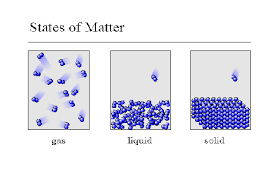
A ____________ substance has a definite volume and shape.

a)

gas

b)

liquid

c)

solid

2.

A ___________ substance has a definite volume but not a definite shape.

a)

gas

b)

liquid

c)

solid

3.
At higher temperatures
a)
particles in an object have less energy
b)
particles in an object move faster
c)
a gas contracts
4.

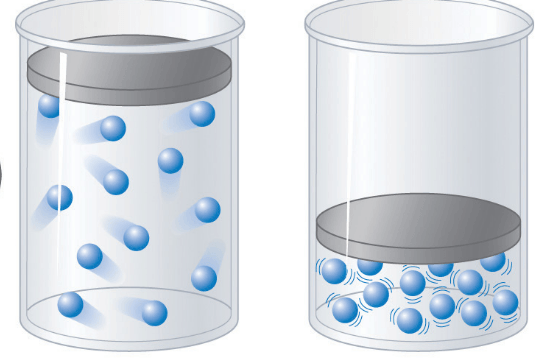
Which container will have a lower pressure?

a)

left

b)

right

c)

they both have the same pressure

5.
all matter is made of what 
a)
energy 
b)
atoms 
c)
electrons 
d)
compounds 
6.
The particles that are found in the nucleus of an atom are
a)
neutrons and electrons
b)
electrons only
c)
protons and neutrons
d)
protons and electrons
7.
The amount of matter something contains is its ______________.
a)
gas
b)
solid
c)
weight
d)
mass
8.
What cannot be broken down into other substances?
a)
Compound
b)
Mixture
c)
Solids
d)
Element
9.

Two or more atoms joined together for a(n)...

a)

Element

b)

Compound

c)

Molecule

d)

Mixture

10.

any characteristic of matter that you can observe without changing the identity of the substances that make it up

a)

physical property

b)

chemical property

c)

periodic table

d)

conglomerate

11.

a characteristic of matter you observe as it reacts or changes into a different substance

a)

physical property

b)

chemical property

c)

periodic table

d)

conglomerate

12.

the gravitational pull on the mass of an object

a)

mass

b)

weight

c)

volume

d)

density

13.

the temperature at which a solid changes to a liquid

a)

solubility

b)

boiling point

c)

melting point

d)

state of matter

14.

the temperature at which a liquid changes to a gas

a)

solubility

b)

boiling point

c)

melting point

d)

state of matter

15.
Which of these is NOT an indicator of a chemical change?
a)
a change in color
b)
giving off or taking in of heat
c)
the release of gases
d)
a change in shape
16.
Which type of energy transformation occurs when a flashlight shines?
a)
chemical → thermal → electrical
b)
chemical → electrical → light
c)
thermal → chemical → light
d)
chemical → electrical → chemical
17.
When water falls through a dam and turns a turbine connected to a generator, electricity is produced. This electricity is often used to light our homes and offices. Which of the following shows the energy transformations that occurs?
a)
electrical → light → mechanical
b)
chemical → mechanical → electrical
c)
mechanical → chemical → light
d)
mechanical → electrical → light
18.
When there are several path for the current to follow
a)
Pathway
b)
Conductor
c)
Series circuit
d)
Parallel circuit
19.
The flow of electricity through a conductor
a)
Battery
b)
Current
c)
Static electricity
d)
Switch
20.
a)
Power source
b)
Closed circuit
c)
Insulator
d)
Open circuit
21.
a)
Parallel circuit
b)
Series circuit
c)
Incomplete circuit
d)
Switch
22.
What will happen when these magnets are brought close together?
a)
They will attract each other.
b)
They will repel each other.
c)
Both magnets will turn to the left
d)
Both magnets will turn to the right
23.
Where is the strongest attraction force of the magnet?
a)
at the poles
b)
in the middle
c)
above the magnet
d)
below the magnet
24.
Which object would a magnet attract?
a)
a glass bottle
b)
a piece of paper
c)
a metal paper clip
compass
d)
a rubber eraser
magnetic field
25.
How are electromagnets different from magnets?
a)
magnets can be turned on/off
b)
you can turn an electromagnet on/off
c)
magnets are more powerful
d)
magnets have a North and South pole
26.
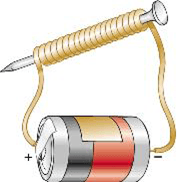
What is the device seen here?
a)
generator
b)
electric motor
c)
electromagnet
d)
magnet
27.
What is the longest wavelength on the EMS (electromagnetic spectrum)?
a)
Radio Waves
b)
Micro Waves
c)
Gamma Rays
d)
X-Rays
28.

Which transverse wave has the highest frequency?

a)

1

b)

2

c)

3

d)

4

29.

What does a wave carry from place to place?

a)

energy

b)

matter

c)

people

30.

A wave that can travel through matter and empty space is a:

a)

electromagnetic wave

b)

longitudinal wavy

c)

transverse wave

d)

mechanical