Wayground logo

Free Printable Worksheets

Font size

S
M
L
XL
Worksheets

AQA C1

Total questions: 175

Worksheet time: 2hrs 5mins

Name
Class
Date
1.
What is the chemical symbol for the element hydrogen
a)
H
b)
He
c)
h
d)
he
2.
What is the chemical symbol for the element Silicon
a)
S
b)
Si
c)
si
d)
Sl
3.
What is the chemical symbol for the element Carbon
a)
ca
b)
co2
c)
C
d)
Cd
4.
What is the chemical symbol for the element copper?
a)
co
b)
c
c)
Cu
d)
cu
5.
What is the chemical symbol for the element Aluminum
a)
A
b)
AL
c)
Al
d)
al
6.
What is the chemical symbol for the element Nitrogen
a)
Ni
b)
N
c)
No
d)
Nb
7.
What is the chemical symbol for the element oxygen
a)
O
b)
Oxy
c)
ox
d)
Oy
8.
What is the chemical symbol for the element Silver
a)
S
b)
Si
c)
Au
d)
Ag
9.
What is the chemical symbol for the element Chlorine
a)
C
b)
Cl
c)
cl
d)
Ch
10.
What is the chemical symbol for the element Gold
a)
G
b)
go
c)
AU
d)
Au
11.
What element is represented by the Chemical symbol Mg
a)
Manganese
b)
Magnesium
c)
Molybdenum
d)
Mitrium
12.
What is the chemical symbol for the element Iron
a)
I
b)
Ir
c)
Fe
d)
fe
13.
What is the chemical symbol for the element Zinc
a)
Z
b)
Zn
c)
Zr
d)
zn
14.
What is the chemical symbol for the element Helium
a)
He
b)
he
c)
H
d)
h
15.
What is the chemical symbol for the element Calcium
a)
C
b)
Ca
c)
Cl
d)
CL
16.
What is the chemical symbol for the element Potassium
a)
K
b)
P
c)
Po
d)
Pt
17.
What is the chemical symbol for the element Phosphorus
a)
p
b)
P
c)
Ph
d)
Ps
18.
What is the chemical symbol for the element Sodium
a)
Na
b)
So
c)
S
d)
Sd
19.
What is the chemical symbol for the element Iodine
a)
I
b)
Io
c)
Id
d)
In
20.
What is the chemical symbol for the element Fluorine
a)
F
b)
Fl
c)
Flu
d)
f
21.
The atomic number tells you what?
a)
number of electrons
b)
number of protons
c)
number of neutrons
d)
both electrons and protons in an atom.
22.
Which is the correct formula for:
one carbon (C)
two oxygen (O)
a)
CO2
b)
CO
c)
C2O
d)
2CO
23.
How many elements are in H2O?
a)
1
b)
2
c)
3
d)
4
24.
What is Fe2O3
(rust) made up of?
a)
1 flourine, 2 einsteinium,
3 oxygen
b)
2 fluorine, 3 oxygen
c)
2 iron, 3 oxygen
d)
2 iron, 3 osmium
25.
________ are the COLUMNS on the periodic table and are organized by similar properties.
a)
Classifications
b)
Groups
c)
Periods
d)
Elements
26.
Air is a compound.
a)
True
b)
False
27.
Compounds are made up of two or more atoms physically combined.
a)
True
b)
False
28.
How many elements are represented in the compound?
Na2CO3
a)
1
b)
2
c)
3
d)
4
29.
Which of the following is not a compound?
a)
HCl
b)
Cl
c)
NaCl
d)
CO2
30.
Which of the substances below is a compound?
a)
ink
b)
air
c)
oxygen
d)
salt
31.
Can compounds be found in the periodic table?
a)
Yes
b)
No
32.
How many carbon atom/s are present in the compounds CaCO3?
a)
1
b)
2
c)
3
d)
4
33.
Is water an element or a compound?
a)
Element
b)
Compound
34.
A compound consists of two or more elements bound together.
a)
True
b)
False
35.
Is Iron (Fe) an element or a compound?
a)
Element
b)
Compound
36.
Which of the following represents an element?
a)
H2O
b)
H2
c)
NaCl
d)
CaCO3
37.

Is the sugar glucose (C6H12O6) an element or a compound?

a)

Element

b)

Compound

38.

CaF2- name?

a)

calcium fluorate

b)

calcium fluoride

c)

fluoride calcite

d)

fluorine calciumate

39.
K20 - name?
a)
potassium dioxide
b)
potassium oxide
c)
potassium oxygen
d)
dipotassium dioxide
40.

HCl- name?

a)

hydrogen chloride

b)

chlorine hydrogen

c)

hydrogen chlorine

d)

hydrogen chlorate

41.

MgO- name?

a)

oxygen magnesium

b)

magnesium oxide

c)

magnesium oxate

d)

magnesium oxygenate

42.

KH- name?

a)

potassium hydrate

b)

potassium hydrogen

c)

potassium hydride

d)

hydrogen potassiate

43.

HI - name?

a)

iodine hydrogenide

b)

hydrogen iodine

c)

hydrogen iodide

d)

hydrogen iodate

44.

Which formula shows potassium iodide?

a)

KI

b)

Ki

c)

KIO3

d)

KIO2

45.
What is the correct name of the compound with the formula MgO?
a)
magnesium oxygen
b)
magnesium oxide
c)
manganese oxygen
d)
manganese oxide
46.
What is the correct name of the compound with the formula KH?
a)
potassium hydrogen
b)
potassium peroxide
c)
potassium hydride
d)
potassium monohydride
47.
What is the correct name of the compound with the formula CaO?
a)
calcium oxide
b)
calcium oxygen
c)
calcium monoxide
d)
monocalcium monoxide
48.
What is the correct name of the compound with the formula KCl?
a)
potassium chloride
b)
potassium chlorine
c)
potassium monochloride
d)
potassium monochlorine
49.
What is krypton?
a)
element
b)
compound
c)
mixture
50.

The positive particles of an atom are

a)

electrons

b)

positrons

c)

neutrons

d)

protons

51.

The central region of an atom where its neutrons and protons are is its

a)

nucleus

b)

electron cloud

c)

core

d)

center

52.

Particles in an atom that are neutral and have no charge are

a)

negatrons

b)

electrons

c)

neutrons

d)

protons

53.
A particle that moves around the nucleus is a(n)...
a)
Proton
b)
Neutron
c)
Electron
d)
Quark
54.

What does the 1.00794 stand for?

a)

Hydrogen

b)

atomic number

c)

atomic mass

d)

atomic explosion

55.

In the modern periodic table, elements are arranged by:

a)

atomic mass

b)

atomic number

c)

valence electrons

d)

number of isotopes

56.

The central region of an atom where its neutrons and protons are is its

a)

nucleus

b)

electron cloud

c)

core

d)

center

57.

An atom with atomic number 6 would have how many protons

a)

6

b)

12

c)

3

d)

cannot be determined

58.

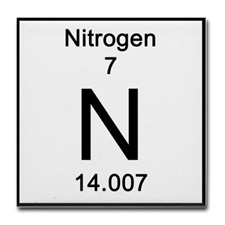
What is the number of protons that the element in this image contain?

a)

14

b)

7

c)

15

d)

18

59.
What is the atomic mass of "F"
a)
9
b)
18
c)
17
d)
19
60.

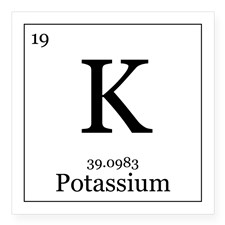
How many neutrons are in the atom "K"?

a)

7

b)

2

c)

39

d)

20

61.
What are the 3 particles that make-up the atom?
a)
protons, neutrons, and isotopes
b)
neutrons, isotopes, and electrons
c)
positives, negatives, and electrons
d)
protons, neutrons, and electrons
62.
Beryllium has how many protons?
a)
4
b)
9.0122
c)
2
d)
13.0122
63.

What type of charge does an electron have?

a)

positive

b)

no charge/neutral

c)

negative

64.

How do you find the atomic number?

a)

by the number of electrons

b)

by the number of protons

c)

by the number of neutrons

65.

The number of neutrons in an atom =

a)

protons - neutrons

b)

mass number - protons

c)

protons + neutrons

d)

mass number + electrons

66.

What is the element symbol?

a)

Argon

b)

Ar

c)

18

d)

39.948

67.

What is the element name?

a)

Argon

b)

Neon

c)

18

d)

Ar

68.

The number 18 represents the

a)

Atomic number

b)

Neutrons

c)

Element Name

d)

Element symbol

69.

The mass number of an atom =

a)

protons + neutrons

b)

protons - neutrons

c)

electrons - neutrons

d)

neutrons + electrons

70.
In an atom, what is the number of protons equal to?
a)
the number of electrons
b)
the number of neutrons
c)
the number of molecules
d)
the number of nuclei
71.
True or False? Neutrons have a negative charge
a)
True
b)
False
72.
Most of the mass in an atom is concentrated in the...
a)
electrons
b)
nucleus
c)
protons
d)
empty space
73.
What subatomic particle is electrically neutral (no charge)?
a)
Proton
b)
Ion
c)
Neutron
d)
Electron
74.
What is the mass of an atom if it has 11 protons, 12 neutrons, and 11 electrons?
a)
22
b)
11
c)
34
d)
23
75.
If an atom has 10 protons, 10 neutrons, and 10 electrons, what is the mass of the atom?
a)
10
b)
20
c)
30
76.
What subatomic particle(s) would be found orbiting the nucleus?
a)
Neutrons only
b)
Electrons only
c)
Protons and Neutrons
d)
Protons and Electrons
77.
Protons and Electrons balance the charge of an atom.
a)
True
b)
False
78.
If an atom has 12 positively charged subatomic particles, which of the following must it also have to be considered a neutral atom?
a)
12 neutrons
b)
12 electrons
c)
12 protons
d)
24 protons and neutrons
79.
What particle uniquely identifies an element?
a)
Number of Valence Electrons
b)
Number of Protons
c)
Number of Electrons
d)
Atomic Mass
80.
What subatomic particle is positively charged and is located inside of the nucleus?
a)
Proton
b)
Neutron
c)
Electron
d)
Ion
81.
What is the atomic number for an element with three protons?
a)
2
b)
1
c)
3
d)
6
82.
What is the electrical charge of a proton?
a)
1+
b)
1-
c)
neutral
d)
2-
83.
Electrons have virtually no mass (weight).
a)
True
b)
False
84.
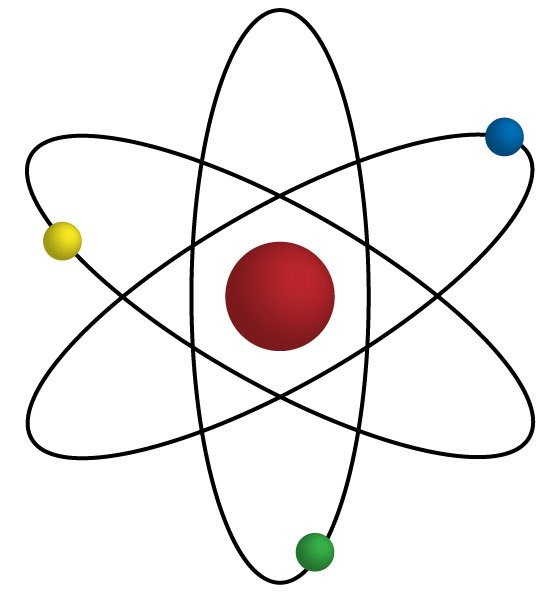
Which is an electron?
a)
A
b)
B
c)
C
85.
Which is a proton?
a)
A
b)
B
c)
C
86.
Which is a neutron?
a)
A
b)
B
c)
C
87.
According to Ernest Rutherford, an atom is made of mostly....
a)
empty space
b)
electrons
c)
the nucleus
d)
protons
88.

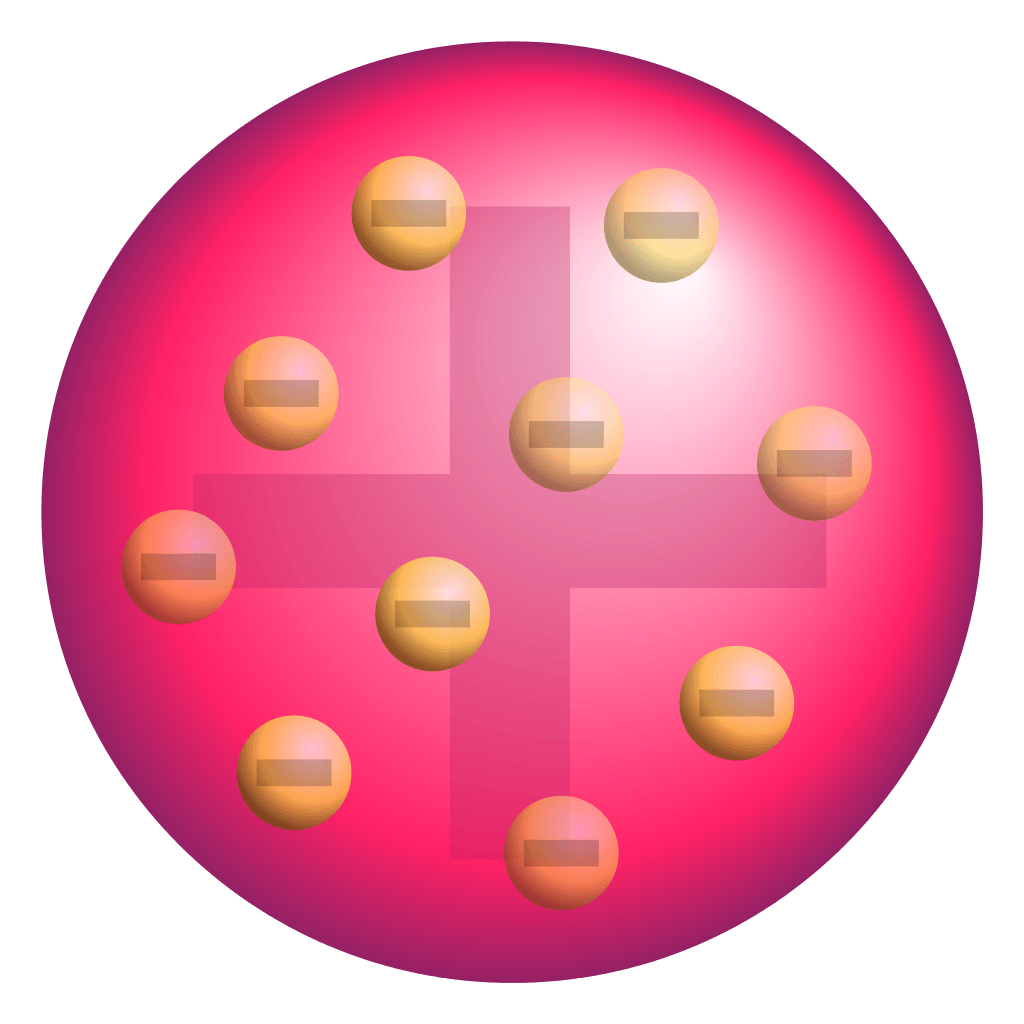
This model was developed after J.J. Thompson discovered electrons, a particle smaller than an atom. It shows electrons floating freely in a positive region.

a)

The "Plum Pudding Model" of the atom

b)

The "Rutherford Model" of the atom

c)

Democritus's model of the atom

d)

The "Quantum Mechanical Model" of the atom

89.
Ernest Rutherford discovered that atoms were mostly _________________. 
a)
negatively charged
b)
positively charged
c)
electrons
d)
empty space. 
90.

In the atomic model nicknamed the "plum pudding" model, what do the plums represent?

a)

the nucleus

b)

the atom

c)

the electrons

d)

the positive material

91.

What sub-atomic particle is labelled A?

a)

Neutron

b)

Electron

c)

Ion

d)

Atom

92.

What sub-atomic particle is labelled B?

a)

Neutron

b)

Electron

c)

Ion

d)

Atom

93.

What is the atomic number of lithium?

a)

7

b)

3

c)

4

d)

10

94.

What is the relative atomic mass of lithium?

a)

7

b)

3

c)

4

d)

10

95.

How many neutrons does a lithium atom have?

a)

7

b)

3

c)

4

d)

10

96.

What is the mass and charge of an electron?

a)

Mass = 1, Charge = Neutral

b)

Mass = 1, Charge = Positive

c)

Mass = 1, Charge = Negative

d)

Mass = almost 0, Charge = negative

97.

What is the mass and charge of an Proton?

a)

Mass = 1, Charge = Neutral

b)

Mass = 1, Charge = Positive

c)

Mass = 1, Charge = Negative

d)

Mass = almost 0, Charge = negative

98.

What is the mass and charge of an Neutron?

a)

Mass = 1, Charge = Neutral

b)

Mass = 1, Charge = Positive

c)

Mass = 1, Charge = Negative

d)

Mass = almost 0, Charge = negative

99.

What is an element?

a)

2 or more substance not chemically combined

b)

substance made of 1 type of atom

c)

substance made of more than one type of atom chemically joined together

d)

atoms of the same element with different number of neutrons

100.

What is an compound?

a)

2 or more substance not chemically combined

b)

substance made of 1 type of atom

c)

substance made of more than one type of atom chemically joined together

d)

atoms of the same element with different number of neutrons

101.

What is an mixture?

a)

2 or more substance not chemically combined

b)

substance made of 1 type of atom

c)

substance made of more than one type of atom chemically joined together

d)

atoms of the same element with different number of neutrons

102.

What is an isotope?

a)

2 or more substance not chemically combined

b)

substance made of 1 type of atom

c)

substance made of more than one type of atom chemically joined together

d)

atoms of the same element with different number of neutrons

103.

How many electrons can you put in the 1st, second and third electron shells?

a)

4,4,8

b)

2,8,8

c)

4,8,8

d)

1,2,8

104.
Is this ionic bond drawn correctly?
a)
Yes
b)
No
105.
Ionic bonds are between...
a)
Metal and Non-metal
b)
Non-metal and Non-metal
c)
Metal and Metal
106.
Atoms are most stable when their outer shell is complete.
a)
true
b)
false
107.
How are ionic bonds formed?
a)
Transfer of electrons
b)
Sharing of electrons
108.
Why do elements bond?
a)
To be friends
b)
To create a new element
c)
To become stable
109.
Atoms that gain electrons become...
a)
negatively charged
b)
positively charged
c)
remain neutrally charged
d)
21
110.

Why do all bonds form?

a)

so the number of protons equals the number of electrons

b)

so an atom can become unstable

c)

to fill the outermost energy level

111.

How many Aluminum atoms are in Al2O3?

a)

3

b)

5

c)

2

d)

1

112.

Write the correct formula for Sodium Chloride.

a)

SC

b)

SCl

c)

NaCl

d)

NaCl2

113.
When the number of electrons equals the number of protons the atom has what charge?
a)
sponge bob
b)
positive charge
c)
negative charge
d)
neutral charge
114.
In the chemical formula for an ionic compound, which item is written first?
a)
positive ion
b)
negative ion
c)
subscript
d)
the female
115.
Magnesium bromide is an ionic compound with the chemical formula MgBr₂.  What does the "2" tell you?
a)
There are 2 bromide ions for every magnesium ion
b)
Bromide has a 2- charge
c)
Bromide has a 2+ charge
d)
There are 2 magnesium ions to every bromide ion
116.
Which is the correct name for CaBr2?
a)
Calcium Bromine
b)
Bromine Calcium
c)
Calcium Bromide
d)
Carbon and Bromine
117.
Metals tend to 
a)
gain electrons
b)
lose electrons
118.
What is the correct formula for the compound, lithium oxide?
a)
LiO
b)
Li2O
c)
LiO2
d)
Li2O2
119.

What is the charge of ion "X" in the formula XF3?

a)

+3

b)

-3

c)

+1

d)

-1

120.

What is the charge of ion "X" in CaX?

a)

+1

b)

-1

c)

+2

d)

-2

121.

Which of the following pairs of elements will NOT form an ionic compound?

a)

sodium and fluorine

b)

phosphorous and aluminum

c)

potassium and magnesium

d)

strontium and oxygen

122.
A charged particle that has gained or lost electrons is called a _____.
a)
molecule
b)
ion
c)
isotope
d)
element
123.
A cation is a ____ ion.
a)
negative
b)
positive
c)
neutral
d)
ficticious
124.
A anion will be a ____ ion.
a)
negative
b)
positive
c)
neutral
d)
ficticious
125.
An ionic bond is the attraction between:
a)
oppositely charged ions
b)
similarly charged ions
c)
neutral ions
d)
neutral atoms
126.
Write the correct chemical formula for Ag +  and  Br -
a)
AgBr
b)
silver bromide
c)
Ag2Br2
d)
gold bromide
127.
Write the correct formula for an ionic compound formed from S2- and Rb1+.
a)
SRb2
b)
SRb
c)
Rb2S
d)
RbS2
128.

What will be the charge of a bromine ion?

a)

+7

b)

-7

c)

-1

d)

+1

129.

Which element below would have a 3+ charge as an ion?

a)

nitrogen (N)

b)

boron (B)

c)

silicon (Si)

d)

argon (Ar)

130.
Mg2+ and Cl- create...
a)
Mg2Cl
b)
MgCl2
c)
Mg2Cl2
d)
MgCl
131.
Ca2+ and N3- create...
a)
Ca2N3
b)
Ca3N2
c)
CaN3
d)
Ca2N
132.

Na+ and Cl- create...

a)

Na2Cl

b)

NaCl2

c)

Na2Cl2

d)

NaCl

133.

Potassium and Sulfur create...

a)

KS

b)

KS2

c)

K2S

d)

K2S2

134.
Fe +2  and  SO4 -2
a)
FeSO4
b)
Fe4(SO4)2
c)
FeSO2
d)
correct answer is not given
135.

Metals tend to

a)

gain electrons

b)

lose electrons

136.

Nonmetals tend to

a)

gain electrons

b)

lose electrons

137.
If my charge becomes 2+ what does that say about me?
a)
I am stealing 2 electrons
b)
I am losing 2 electrons
c)
I am in period 2
d)
I have an atomic # of 2
138.
If I gain electrons I become
a)
Positive because I've added to my atom
b)
negative because I've added electrons
c)
same because i'm balanced
d)
equal because now I have electrons
139.
How do the following two elements bond together?
Na1+  F1-         
a)
NaF
b)
NaF3
c)
Na3F
d)
Na1F2
140.
How do the following two elements bond together?
Cr3+  O2-         
a)
CrO
b)
Cr3O2
c)
Cr2O3
d)
CrO3
141.
How do the following two elements bond together?
K1+  S2- 
a)
KS
b)
K8S
c)
K6S3
d)
K2S
142.
When an ionic compound is formed, its charge is 
a)
negative
b)
neutral (no charge)
c)
positive
143.

How does magnesium become an magnesium ion?

a)

it loses 2 electrons

b)

it gains 2 electrons

144.

How does calcium become an calcium ion?

a)

it loses 2 electrons

b)

it gains 2 electrons

145.

How does oxygen become an oxide ion?

a)

it loses 2 electrons

b)

it gains 2 electrons

146.

Which of the below is an ionic compounds?

a)

Ni

b)

MgCl2

c)

H2O

d)

CH4

147.
What is the atomic number of Rubidium?
a)
37
b)
44
c)
45
d)
86
148.
What is the atomic number of Oxygen?
a)
6
b)
7
c)
8
d)
9
149.
Elements which are shiny, conduct electricity and heat are called
a)
metal
b)
nonmetal
c)
metalloid
d)
nonexistent
150.

If an atom had the same properties as fluorine (F), it would probably be located in

a)

period 1.

b)

period 2.

c)

group 2.

d)

group 7.

151.
When an alkali metal reacts with water, the hydroxide produced dissolves to form and alkaline solution, True or False?
a)
True
b)
False
152.
What is the atomic number of lithium
a)
1
b)
2
c)
3
d)
4
153.
Which is the lightest alkali metal?
a)
Aluminium
b)
Hydrogen
c)
Lithium
d)
Potassium
154.
What is another name for the elements in group 7?
a)
The Halogens
b)
The Noble gases
c)
The Oxides
d)
The Alkali Metals
155.
Which of the following is NOT an alkali metal
a)
Li
b)
Cl
c)
K
d)
Cs
156.
What is formed when sodium reacts with water?
a)
sodium oxide and hydrogen
b)
sodium hydroxide and hydrogen
c)
sodium hydroxide and oxygen
d)
sodium hydroxide and carbon dioxide
157.
Which of the following is the most reactive in water?
a)
Lithium
b)
Sodium
c)
Potassium
158.
Alkali metals are found in which group of the periodic table?
a)
Group 1
b)
Group 2
c)
Group 7
d)
group 8 
159.

Group 1 elements only form ….. Ion

a)

1+

b)

1-

c)

2+

d)

2-

160.

What gas is given off when group 1 elements reacts with water?

a)

Hydrogen

b)

Oxygen

c)

Carbon dioxide

d)

Helium

161.

When a group 1 element reacts with water, a hydroxide is formed. What colour would Universal Indicator turn in this solution?

a)

Green

b)

Blue

c)

Yellow

d)

Red

162.

How many electrons are in the outer shell of group 1 elements?

a)

0

b)

1

c)

2

d)

3

163.

Why does the reactivity of group 1 elements increases down the group?

a)

It becomes more reactive

b)

It becomes easier to accept an electron

c)

It becomes easier to lose an electron

d)

It becomes less reactive

164.

what is your vallue leval

a)

10000

b)

3000

c)

9000

d)

5000

e)

20000

165.

As you move down the group, halogens' reactivity...

a)

increases

b)

decreases

c)

doesn't change

d)

shows no trend.

166.
What type of ions do the Group 7 elements make?
a)
positive 2 (+2)
b)
positive 1 (+1)
c)
negative 1 (-1)
d)
negative 2 (-2)
167.

How many electrons do the halogens all have in their outer shells?

a)

1

b)

2

c)

7

d)

8

168.

The Halogens are found in which group number?

a)

5

b)

6

c)

7

d)

0

169.

As you go down the group, how does the boiling point of the halogen elements change?

a)

Increases

b)

Decreases

c)

They're all about the same

170.

As you move down the group, halogens' reactivity...

a)

increases

b)

decreases

c)

doesn't change

d)

shows no trend.

171.

Which Halogen is the most reactive?

a)

Bromine

b)

Fluorine

c)

Iodine

d)

Chlorine

172.

In order to become stable do the halogens need to.....

a)

Gain an electron

b)

Lose an electron

173.

Which statement is true about halogens?

a)

Form covalent compounds with other non-metallic elements

b)

A less reactive halogen will displace a more reactive element form its ionic salt

c)

Form ionic compound with hydrogen

d)

form negative ion of charge -2

174.

The process by which solid iodine particles change directly to gas without first becoming a liquid is called ____.

a)

evaporation

b)

ionization

c)

condensation

d)

sublimation

175.

Which of the following is explosive

a)

fluorine and hydrogen

b)

chlorine and hydrogen

c)

iodine and hydrogen

d)

bromine and hydrogen