
 Worksheets
Chapter 5- Metabolism and Enzyme
Total questions: 20
Worksheet time: 17mins
Which of the following helps enzyme to function well?
Product
Cofactor
Inhibitor
Substrate
Which of the following helps enzyme to function well?
Product
Cofactor
Inhibitor
Substrate

Diagram 5 shows the action of an enzyme on a substrate.
What is S if P is lactase, Q is lactose and R is glucose?
maltose
glucose
fructose
galactose

Diagram 6 shows a traditional method practised by some Malaysian to marinate meat.
What is the purpose of using papaya leaves?
To trap heat
To soften the meat
To digest the fat in the meat
To add flavour to the meat
Which of the following is an enzyme inhibitor?
Iron
Mercury
Penicillin
Vitamin B
Which equation shows the enzymatic reaction in stomach?
Starch + water --Amylase----> Maltose
Protein + water --Pepsin--> Polypeptide
Fat+ water --Lipase---> Fatty acids + Glycerol
Lactose+ water --Lactase---> Glucose + Galactose

Which of the following enzymes helps in removing the stains?
lipase
amylase
protease
cellulase
Enzymes are
Protiens
Lipids
Carbohydrates
DNA
On an enzyme, the site that attaches to a substrate
Polypeptide
Base
Substrate
Active site

Diagram is a graph which shows the relationship between the rate of reaction and the substrate concentration when factor Y is varied.
What is factor Y?
pH
Time
Inhibitor
Enzyme concentration
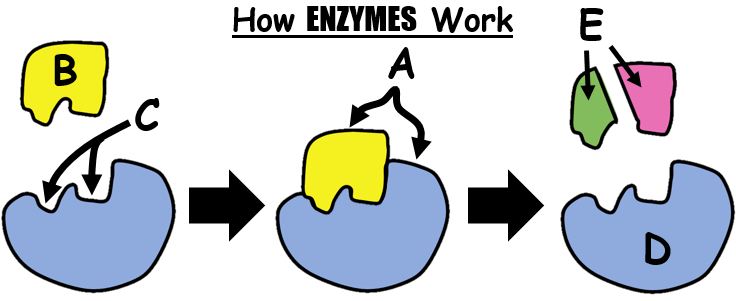
Which of the following is an enzyme inhibitor?
Iron
Mercury
Penicillin
Vitamin B
Which of the following is the correct sequence of the organelles in the production of lipase enzyme?
ribosome--> Golgi apparatus --> Transport vesicles---> secretory vesicles
ribosome--> Transport vesicles --> Golgi apparatus---> secretory vesicles
secretory vesicles -->ribosome---> Transport vesicles --> Golgi apparatus
secretory vesicles -->Transport vesicles--->ribosome --> Golgi apparatus

