wayground logo

Free Printable Worksheets

Font size

S
M
L
XL
Worksheets

Final Review

Total questions: 183

Worksheet time: 5hrs 45mins

Name
Class
Date
1.
Which of the following is a producer?
a)
Lion
b)
Cow
c)
Bee
d)
Grass
2.
Animal and Plant cells are both this type of cell.
a)
Eukaryote
b)
Prokaryote
3.
Bacteria cells are this type of cell.
a)
Eukaryote
b)
Prokaryote
4.
This type of cell has no nucleus, but it has a cell wall and ribosomes, but no other organelles.
a)
Plant cells
b)
Animals Cells
c)
Bacteria
5.
The powerhouse of the cell is the...It converts energy from food into energy the cell can use
a)
Mitochondrion
b)
Golgi body
c)
Nucleus
d)
Ribosomes
6.
This organelle is in both plants and animals. It is a barrier between the cell and the environment.  It controls what goes in and out of a cell.
a)
cell wall
b)
cell membrane
c)
cell organelles
d)
mitochondria
7.
Tissues work together to make the following.
a)
cells
b)
organs
c)
organ systems
d)
organism
8.
This cell part is in ALL cells. It is the gel-like substance that provides cell shape.
a)
Chloroplasts
b)
Chromosomes
c)
Cytoplasm
d)
Mitochondria
9.
This organelle is in all eukaryotic cells. It is the control center of the cell because it holds the DNA.
a)
Mitochondria
b)
Nucleus
c)
Chloroplasts
d)
Ribosomes
10.
This example of passive transport is the diffusion of water.
a)
osmosis
b)
concentration gradient
c)
isotonic
d)
facilitated diffusion
11.
Controlling what goes into or out of the cell without energy is called
a)
active transport
b)
endocytosis
c)
passive transport
d)
exocytosis
12.
Controlling what goes into or out of the cell with the help of energy is called
a)
active transport
b)
endocytosis
c)
passive transport
d)
exocytosis
13.
The raw materials or reactants of photosynthesis are
a)
sugar and water.
b)
sugar and oxygen.
c)
carbon dioxide and water.
d)
carbon dioxide and oxygen.
14.
What are the products of photosynthesis?
a)
Carbon dioxide and water
b)
Carbon dioxide and oxygen
c)
Glucose and oxygen
d)
Glucose and water
15.
What reactants are there in cellular respiration?
a)
Water and Glucose
b)
Oxygen and Glucose
c)
Carbon Dioxide and Water
d)
Twenty One Pilots
16.
What are the products of cellular respiration?
a)
Energy (ATP), Water, and Carbon DIoxide.
b)
Water and Oxygen
c)
Oxygen and Carbon Dioxide
d)
Water and Energy (ATP)
17.
Where does cellular respiration take place in the cell?
a)
Cell Membrane
b)
Nucleus
c)
Mitochondria
d)
Vacuole
18.
What type of organism makes its own food?
a)
consumer
b)
carnivore
c)
producer
d)
animal
19.
A living organism that puts materials from dead  plants and animals back to the soil is called a ____________?
a)
carnivore
b)
decomposer
c)
herbivore
d)
omnivore
20.
Blood vessels that take oxygen-rich blood from the heart to the rest of the body
a)
 Veins
b)
Capillaries
c)
Arteries
21.
Blood cells that carry nutrients/oxygen through the body
a)
Red blood cells
b)
White blood cells
c)
Platelets
22.
what does a arteries do?
a)
take blood away from the heart 
b)
takes blood to the heart
c)
make a body road map 
d)
makes blood clots
23.
The main function of the _________________ is to break down food into chemicals that provide energy and nutrients to the body.
a)
stomach
b)
digestive system
c)
respiratory system
d)
eyes
24.
the passing of genetic traits from parent to offspring.
a)
heredity
b)
trait
c)
gene
d)
allele
25.
An allele whose trait only shows up when no dominant allele is present.
a)
hidden allele
b)
dominant allele
c)
recessive allele
d)
present allele
26.
An organism's appearance is known as it's....
a)
genotype
b)
allele
c)
gene
d)
phenotype
27.
What is a genotype? 
a)
The genetic make up (code)
b)
The physical trait
28.
What is a dominant allele?
a)
A trait that is always shown (capital letter)
b)
A trait that can be hidden (lower case letter)
c)
Alleles that are the same
d)
Alleles that are different
29.
Jackie is homozygous recessive  for having dimples (D). What is her genotype?
a)
pp
b)
Dd
c)
dd
d)
DD
30.
having two of the same genes for the trait (sometimes called purebred).
a)
homozygous
b)
hetrozygous
c)
protein
d)
chromosome
31.
having two different genes for a trait (sometimes called hybrid).
a)
protein
b)
homozygous
c)
heterozygous
d)
genotype
32.
The efficiency of energy transfer from a lower trophic level to the next highest level is roughly
a)
1%
b)
10%
c)
100%
d)
1000%
33.
What is the original source of almost all energy in most ecosystems?
a)
carbohydrates
b)
sunlight
c)
water
d)
carbon
34.
A relationship between two organisms in which both organisms benefit. 
a)
Mutualism 
b)
Competition
c)
Parasitsm 
d)
Commensalism 
35.
Mistletoe extracts water and nutrients from the spruce tree to the tree's detriment (harm). 
a)
Mutualsim 
b)
Parasitism 
c)
Commensalism 
36.
A relationship between two organisms in which one organism benefits and the other is unharmed.
a)
Mutualism 
b)
Competition
c)
Parasitsm 
d)
Commensalism 
37.
An illustration that uses arrows to show the many possible directions in which matter and energy can pass through the organisms in an ecosystem.
a)
Food chain
b)
Food web
c)
Energy Pyramid
d)
Succession Map
38.
Water temperature would be an example of ...
a)
A biotic factor
b)
An abiotic factor
39.
What are the Abiotic factors in this image? 
a)
water, sunlight, dirt, air
b)
birds and plants
c)
birds, water, dirt
d)
plants, water
40.
What are the Biotic factors in this image?
a)
There are none
b)
Sunlight, water, air
c)
Elephants, plants, trees 
d)
Air, elephants, humidity
41.
relationship in which two species live closely together
a)
commensalism
b)
mutualism
c)
parasitism
d)
symbiosis
42.
The shrew provides energy for the _______?
a)
cricket
b)
grasshopper
c)
frog
d)
snake
43.
In the food web shown, the smaller bird would be considered....
a)
primary consumer
b)
secondary consumer
c)
tertiary consumer
d)
producer
44.
In the food web shown, the snail would be considered...
a)
primary consumer
b)
secondary consumer
c)
tertiary consumer
d)
producer
45.
What are the functions of the respiratory System?
a)
The respiratory system moves oxygen from the outside environment into the body; It also removes carbon dioxide and water from the body.
b)
The respiratory system moves carbon dioxide from the outside environment into the body; It also removes oxygen and water from the body.
c)
The respiratory system removes carbon dioxide and oxygen from the body.
d)
The respiratory system moves oxygen from the outside environment into the body through the nose.
46.
What is respiration?
a)
The process in which oxygen and glucose undergo a complex series of chemical reactions inside cells.
b)
The movement of air in and out of the lungs.
47.
What three substances are exchanged in the alveoli?
a)
Oxygen, carbon dioxide, water
b)
Water, oxygen, blood
c)
Oxygen, water, trachea
d)
Oxygen, saliva, mucus
48.
The _________ are the main organs of the respiratory system.
a)
Lungs
b)
Capillaries  
c)
Bronchi
d)
Vocal chords
49.
___________ are tiny sacs of lung tissue specialized for the movement of gases between air and blood.
a)
Alveoli
b)
Capillaries
c)
Bronchi
50.
What consumer eats only meat?
a)
producers
b)
carnivores
c)
herbivores
d)
omnivores
51.
What consumer eats only plants?
a)
carnivores
b)
herbivores
c)
producers
d)
omnivores
52.
What consumer eats both meat and plants?
a)
carnivores
b)
herbivores
c)
omnivores
d)
plants
53.
Anything that can change in an experiment.  There are three types of these in an experiment.
a)
variables
b)
constant
c)
independent
d)
dependent
54.
The variable that is being measured or observed is called the _______________. Hint: this is the variable that is the result or effect 
a)
independent variable
b)
dependent variable
c)
control variable
55.
An experiment is performed on plants to see how different liquids affect plant growth. Each plant in the experiment is given a different liquid: water, apple juice, or milk. What variables should be kept constant/controlled? 
a)
type of plant, flower pot,  soil, and amount of sunlight
b)
water, apple juice, milk
c)
only the amount of sunlight
d)
type of plant only
56.
Mr. S. sets up an experiment to see how the mass of a ball affects the distance it rolls off a ramp.  Identify the dependent variable.
a)
height of the ramp
b)
 distance traveled by the ball
c)
mass of the ball
d)
weight of the ball
57.
Mr. S. sets up an experiment to see how the mass of a ball affects the distance it rolls off a ramp.  Identify the independent variable.
a)
distance traveled by the ball
b)
height of the ramp
c)
mass of the ball
d)
weight of the ball
58.
All living things ____ to make more living things.
a)
adapt
b)
develop
c)
grow
d)
reproduce
59.
Which of the following is the smallest unit of life that can carry out all life functions?
a)
the mitochondria
b)
the vacuoles
c)
the nucleus
d)
the cell
60.
Which structures are found in every living cell?
a)
cell membrane and cytoplasm
b)
chloroplasts and mitochondria
c)
a cell wall and nucleus
d)
chloroplasts and cell wall
61.
Chloroplasts in plant cells allow the plant to perform a function that animal cells cannot do.  What is the main function of the chloroplasts found in plant cells?
a)
to absorb light energy and manufacture food
b)
to remove waste materials by active transport
c)
to manufacture chemical energy from food
d)
to control the shape of the cell
62.
What is the function of a cell wall?
a)
to protect and support the cell
b)
to perform different functions in each cell
c)
to prevent water from passing through it
d)
to prevent oxygen from entering the cell
63.

A Teacher created this model with her class. Which statement is best explained by the model?

a)

how the cell membrane controls what enters and exits the cell

b)

how the cell membrane protects the cell from harmful chemicals

c)

the aisles allowing customers to move between shelves of products

64.
This organelle is in all eukaryotic cells. It is the control center of the cell because it holds the DNA.
a)
Mitochondria
b)
Nucleus
c)
Chloroplasts
d)
Ribosomes
65.
This example of passive transport is the diffusion of water.
a)
osmosis
b)
concentration gradient
c)
isotonic
d)
facilitated diffusion
66.
Controlling what goes into or out of the cell with the help of energy is called
a)
active transport
b)
endocytosis
c)
passive transport
d)
exocytosis
67.
The raw materials or reactants of photosynthesis are
a)
sugar and water.
b)
sugar and oxygen.
c)
carbon dioxide and water.
d)
carbon dioxide and oxygen.
68.
What are the products of photosynthesis?
a)
Carbon dioxide and water
b)
Carbon dioxide and oxygen
c)
Glucose and oxygen
d)
Glucose and water
69.
What reactants are there in cellular respiration?
a)
Water and Glucose
b)
Oxygen and Glucose
c)
Carbon Dioxide and Water
d)
Twenty One Pilots
70.
What are the products of cellular respiration?
a)
Energy (ATP), Water, and Carbon DIoxide.
b)
Water and Oxygen
c)
Oxygen and Carbon Dioxide
d)
Water and Energy (ATP)
71.
Where does cellular respiration take place in the cell?
a)
Cell Membrane
b)
Nucleus
c)
Mitochondria
d)
Vacuole
72.
What type of organism makes its own food?
a)
consumer
b)
carnivore
c)
producer
d)
animal
73.
A living organism that puts materials from dead  plants and animals back to the soil is called a ____________?
a)
carnivore
b)
decomposer
c)
herbivore
d)
omnivore
74.
The body system you use for movement is the ____________
a)
muscular system
b)
nervous system
c)
respiratory system
d)
urinary system
75.
Blood vessels that take oxygen-rich blood from the heart to the rest of the body
a)
 Veins
b)
Capillaries
c)
Arteries
76.
Blood cells that carry nutrients/oxygen through the body
a)
Red blood cells
b)
White blood cells
c)
Platelets
77.
what does a arteries do?
a)
take blood away from the heart 
b)
takes blood to the heart
c)
make a body road map 
d)
makes blood clots
78.
what does a vein do 
a)
take blood to the heart 
b)
take the blood away from the heart
c)
makes blood clots 
d)
makes capillaries 
79.
The _________________ gives the body its shape and supports and protects the internal organs.
a)
urinary system
b)
skeletal system
c)
lympthatic/immune system
d)
endocrine system
80.
The main function of the _________________ is to break down food into chemicals that provide energy and nutrients to the body.
a)
stomach
b)
digestive system
c)
respiratory system
d)
eyes
81.
The _________________ includes two kidneys that filter waste from the blood and a bladder that holds urine. 
a)
endocrine system
b)
urinary system
c)
cardiovascular system
d)
nervous system
82.
the passing of genetic traits from parent to offspring.
a)
heredity
b)
trait
c)
gene
d)
allele
83.
An allele whose trait only shows up when no dominant allele is present.
a)
hidden allele
b)
dominant allele
c)
recessive allele
d)
present allele
84.
An organism's appearance is known as it's....
a)
genotype
b)
allele
c)
gene
d)
phenotype
85.
What is a genotype? 
a)
The genetic make up (code)
b)
The physical trait
86.
What is a dominant allele?
a)
A trait that is always shown (capital letter)
b)
A trait that can be hidden (lower case letter)
c)
Alleles that are the same
d)
Alleles that are different
87.
Jackie is homozygous recessive  for having dimples (D). What is her genotype?
a)
pp
b)
Dd
c)
dd
d)
DD
88.
having two of the same genes for the trait (sometimes called purebred).
a)
homozygous
b)
hetrozygous
c)
protein
d)
chromosome
89.
having two different genes for a trait (sometimes called hybrid).
a)
protein
b)
homozygous
c)
heterozygous
d)
genotype
90.
The efficiency of energy transfer from a lower trophic level to the next highest level is roughly
a)
1%
b)
10%
c)
100%
d)
1000%
91.
What is the original source of almost all energy in most ecosystems?
a)
carbohydrates
b)
sunlight
c)
water
d)
carbon
92.
A relationship between two organisms in which both organisms benefit. 
a)
Mutualism 
b)
Competition
c)
Parasitsm 
d)
Commensalism 
93.
Mistletoe extracts water and nutrients from the spruce tree to the tree's detriment (harm). 
a)
Mutualsim 
b)
Parasitism 
c)
Commensalism 
94.
A relationship between two organisms in which one organism benefits and the other is unharmed.
a)
Mutualism 
b)
Competition
c)
Parasitsm 
d)
Commensalism 
95.
An illustration that uses arrows to show the many possible directions in which matter and energy can pass through the organisms in an ecosystem.
a)
Food chain
b)
Food web
c)
Energy Pyramid
d)
Succession Map
96.
Water temperature would be an example of ...
a)
A biotic factor
b)
An abiotic factor
97.
What are the Abiotic factors in this image? 
a)
water, sunlight, dirt, air
b)
birds and plants
c)
birds, water, dirt
d)
plants, water
98.
What are the Biotic factors in this image?
a)
There are none
b)
Sunlight, water, air
c)
Elephants, plants, trees 
d)
Air, elephants, humidity
99.
relationship in which two species live closely together
a)
commensalism
b)
mutualism
c)
parasitism
d)
symbiosis
100.
The shrew provides energy for the _______?
a)
cricket
b)
grasshopper
c)
frog
d)
snake
101.
In the food web shown, the smaller bird would be considered....
a)
primary consumer
b)
secondary consumer
c)
tertiary consumer
d)
producer
102.
In the food web shown, the snail would be considered...
a)
primary consumer
b)
secondary consumer
c)
tertiary consumer
d)
producer
103.
Ecology is the study of? 
a)
Ecosytems
b)
Species
c)
Population
d)
Producers
104.

What is the relationship between the mitochondria and the chloroplast?

a)

Chloroplasts use glucose to make energy, and mitochondria use energy to make glucose

b)

Chloroplasts use energy to make glucose, and mitochondria use glucose to make energy

c)

Chloroplasts and mitochondria transform solar energy into chemical energy for the cell

d)

Chloroplasts and mitochondria both make and store chemical energy in their structures

105.

Which of these BEST describes the relationship between tissues and organs?

a)

Tissues make up different types of cells.

b)

Organs make up different types of tissues.

c)

Cells are made of different types of organs.

d)

Organs are made of different types of tissues.

106.

Which body system transports materials such as nutrients and oxygen throughout the human body?

a)

respiratory system

b)

circulatory system

c)

digestive system

d)

nervous system

107.

The mice in the prairie have died due to disease and are no longer available in this food web. How will removing mice from the food web MOST LIKELY affect the other organisms?

a)

Prairie dogs will eat the insects that the mice once ate

b)

The coyotes will rely on antelope, snakes and prairie dogs for energy

c)

Shrews will have no food and die

d)

There will definitely be an overproduction of grasses and other plants turning the prairie into a forest

108.

Ecological organization is represented correctly in which option?

a)

organism, community, population, ecosystem, biome, biosphere

b)

organism, population, community, biome, ecosytem

c)

organism, population, community, ecosystem, biome, biosphere

d)

organism, population, ecosystem, community, biome, biosphere

109.

Which biome is known for having the greatest diversity of plants and animals?

a)

Tundra

b)

Temperate Forest

c)

Taiga

d)

Tropical Rainforest

110.

An example of an adaptation is

a)

a change in climate that increases plant growth

b)

the movement of a group of animals to an area that has more food and water

c)

a change in location of a squirrel's nest

d)

the ability of a plant to resist fungal disease better than other plants

111.

Which of the following BEST describes the effect that natural selection might have on a species over time?

a)

The fur color of a species will always change over time because of natural selection

b)

Predator species will always increase due to natural selection, while prey species will always die out

c)

Members of a species with traits that allow them to survive and reproduce in an environment will increase in population

d)

Bigger members of a species always have an advantage over small members. Therefore, over time, a species will eventually include larger organisms only.

112.

Scientists find animal fossils in Rock Layers A, B, C, and D. The fossil in Layer B is similar to the fossil found in Layer C. Which conclusion is BEST supported by the order of the layers?

a)

The species in Layer C may have evolved from the species in Layer B

b)

The species in Layer B may have evolved from the species in Layer C

c)

The two fossils are different species because they are in different layers

d)

The two fossils are definitely the same species because they are in adjacent layers

113.

Jack makes a hypothesis: Acid rain prevents corn seeds from sprouting. To test this, he waters one corn seed with tap water and a second corn seed with acidic water. Identify the independent variable in this experiment.

a)

tap water

b)

corn seeds

c)

sprouting

d)

acidic water

114.

Jack makes a hypothesis: Acid rain prevents corn seeds from sprouting. To test this, he waters one corn seed with tap water and a second corn seed with acidic water. Identify the dependent variable.

a)

tap water

b)

corn seeds

c)

sprouting

d)

acidic water

115.

Jack makes a hypothesis: Acid rain prevents corn seeds from sprouting. To test this, he waters one corn seed with tap water and a second corn seed with acidic water. Identify the control group in this experiment.

a)

The corn seed given tap water

b)

The corn seed given acidic water

116.
What step does every scientific experiment begin with?
a)
hypothesis
b)
question/problem
c)
procedures
d)
conclusion
117.
If plants are exposed to sunlight, then they will grow taller.
What part of the scientific method is this an example of?
a)
Procedure
b)
Hypothesis
c)
Question
d)
Results
118.
Why do scientists use the scientific method?
a)
To make sure they get credit for their discoveries.
b)
To make sure their results are valid and can be performed by other scientists.
c)
So that other scientist don't get mad at them
119.
Observations made during an experiment are considered:
a)
data
b)
problems
c)
conclusions
d)
questions
120.
The variable that is being measured or observed is called the _______________. Hint: this is the variable that is the result or effect 
a)
independent variable
b)
dependent variable
c)
control variable
121.
An experiment is performed on plants to see how different liquids affect plant growth. Each plant in the experiment is given a different liquid: water, apple juice, or milk. What variables should be kept constant/controlled? 
a)
type of plant, flower pot,  soil, and amount of sunlight
b)
water, apple juice, milk
c)
only the amount of sunlight
d)
type of plant only
122.
Why do we want to test one variable at a time?
a)
Because it is hard to setup a data table with more
b)
To know what is causing the changes. This helps us understand cause and effect.
c)
It is what has always been done
123.
Mr. S. sets up an experiment to see how the mass of a ball affects the distance it rolls off a ramp.  Identify the independent variable.
a)
distance traveled by the ball
b)
height of the ramp
c)
mass of the ball
d)
weight of the ball
124.
Temperature and sunlight would be examples of ____________ factors within an environment.
a)
biotic
b)
abiotic
125.
Which of the following is the smallest unit of life that can carry out all life functions?
a)
the mitochondria
b)
the vacuoles
c)
the nucleus
d)
the cell
126.
Which structures are found in every living cell?
a)
cell membrane and cytoplasm
b)
chloroplasts and mitochondria
c)
a cell wall and nucleus
d)
chloroplasts and cell wall
127.
Which cell structure is found in plant and animals cells and controls what can come into or leave a cell?
a)
cell membrane
b)
cytoplasm
c)
nucleus
d)
vacuole
128.
All cells need energy to function.  Which cell organelle is responsible for producing energy in the cell?
a)
chloroplasts
b)
mitochondria
c)
nucleus
d)
vacuoles
129.
What is the function of a cell wall?
a)
to protect and support the cell
b)
to perform different functions in each cell
c)
to prevent water from passing through it
d)
to prevent oxygen from entering the cell
130.
In what part of the plant cell does the process of photosynthesis take place?
a)
nucleus
b)
mitochondria
c)
chloroplasts
d)
vacuoles
131.
Which of the following is not part of the cell theory?
a)
cells must contain DNA 
b)
all living things are made from cells
c)
cells can only come from other cells
d)
cells are the basic unit of life
132.
The diffusion of WATER across a semi-permeable membrane is
a)
osmosis
b)
diffusion
c)
endocytosis
d)
exocytosis
133.
The movement of molecules from higher concentration to lower concentration is
a)
diffusion
b)
cell division
active transport
c)
active transport
d)
tonicity
134.
Active transport requires
a)
energy
b)
the nucleus
c)
chloroplasts
d)
lysosomes
135.
What organelles are only found in PLANT cells
a)
lysosomes & centrioles
b)
cell wall & chloroplasts
c)
nucleus & nucleolus
d)
mitochondria & ribosomes
136.
What organelles is NOT found in a PROkaryote
a)
nucleus
b)
cell membrane
c)
Chromosomes (DNA)
DNA
d)
ribosomes
137.
What organelle PRODUCES proteins?
a)
ribosomes
b)
centrioles
c)
lysosomes
d)
nucleus
138.
All living things do which of the following?
a)
Chemosynthesis
b)
Respiration
c)
photosynthesis
d)
all of the answers
139.
What is one of the reactants of cellular respiration?
a)
energy
b)
glucose
c)
carbon dioxide
d)
water
140.
Which organ excretes carbon dioxide?
a)
Lungs
b)
Liver
c)
Heart
d)
Kidney
141.
Cellular Respiration's goal is to
a)
make water
b)
make ATP
c)
make glucose
d)
make  oxygen
142.
Which type of organisms perform photosynthesis?
a)
Only Autotrophs
b)
Only Heterotrophs
c)
Autotrophs and Heterotrophs
143.
Plants need ________ for photosynthesis
a)
Oxygen
b)
Soil
c)
Carbon dioxide
d)
Sugar
144.
Why do plants conduct photosynthesis?
a)
To make light
b)
To make mitochondria
c)
To make glucose
d)
To release carbon dioxide
145.
An organism that needs to eat other organisms to obtain energy is known as a:
a)
Autotroph
b)
Producer
c)
Consumer
d)
Mutualist
146.
Consumer that eats plants
a)
heterotroph
b)
herbivore
c)
producer
d)
community
147.
What does a food web represent?
a)
All connections of energy flow throughout all organisms in a habitat.
b)
The specific ways that mutualism is carried out.
c)
A single pathway or energy flow between organisms. 
d)
How carnivores get their food. 
148.
Where an organism lives
a)
habitat
b)
niche 
c)
heterotrogh
d)
biosphere
149.
In this Food Web Pyramid Which type of consumer gets only 10% of the energy stored in plants?
a)
Herbivore
b)
Carnivore
c)
Omnivore
d)
Secondary Consumer
150.
A collection of organisms that make up a community as well as all of the nonliving aspects of the environment.
a)
Population
b)
Community
c)
Habitat
d)
Ecosystem
151.
The science of the environment, its components, and the interactions between these components is called
a)
geology
b)
ecology
c)
biology
d)
physiology
152.
What is made up of all populations in an area?
a)
niche
b)
habitat
c)
community
d)
ecosystem
153.
What is the symbiotic relationship called in which the organism is helped and the other organism is harmed?
a)
mutualism
b)
parasitism
c)
commensalism
d)
consumer
154.
What is the symbiotic relationship called which one organism is helped and the other organism is unharmed?
a)
mutualism
b)
parasitism
c)
commensalism
d)
consumer
155.
Which of the following organisms are typical decomposers?
a)
grasses and ferns
b)
bacteria and mushrooms
c)
mice and deer
d)
lions and snakes
156.
An organism's specific role in its habitat is called its
a)
consumer
b)
niche
c)
birth right 
d)
mutalism
157.
Who is the father of evolution?
a)
Darwin
b)
Mendel
c)
Newton
d)
Einstein
158.
Which layer is the oldest?
a)
1
b)
2
c)
3
d)
4
159.
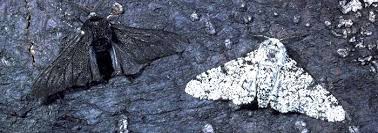
Predict which moth would increase in population
a)
light 
b)
dark
160.
When the DNA of an organism is altered it is referred to as…
a)
Mutation
b)
Gene Flow
c)
Genetic Drift
d)
Sexual Selection
161.
Darwin wrote that organisms with traits that are best suited to the environment will ________________
a)
increase in number
b)
become extinct
162.
Which term refers to the process by which individuals that are better suited to the environment survive and reproduce therefore passing down their genes to their offspring? 
a)
Evolution 
b)
Variation 
c)
Adaptation
d)
Natural Selection 
163.
Inherited trait that helps an organism survive is a(n) __________.
a)
Fossil
b)
Adaptation
c)
Ancestor
d)
Natural selection
164.
True or False: All cells have DNA.
a)
True
b)
False
165.
Which sequence of DNA bases would pair with this partial strand
ATG TGA CAG
a)
ATG TGA CAG
b)
TAC ACT GTC
c)
GTA AGT GAC
d)
CAT TCA CTG
166.
Which of the following best describes a DNA molecule?
a)
double helix
b)
contains ribose
c)
made of amino acids
d)
contains Uracil
167.
Which of the following units are repeatedly joined together to form a strand of DNA?
a)
amino acids
b)
nucleotides
c)
fatty acids
d)
polysaccharides
168.
In a molecule of double-stranded DNA, the amount of Adenine present is always equal to the amount of
a)
cytosine
b)
guanine
c)
thymine
d)
uracil
169.
Guanine bonds with ______________.
a)
Adenine
b)
Guanine
c)
Cytosine
d)
Thymine
170.
What determines the code, or information, of a DNA molecule?
a)
the shape (structure) of the nitrogen bases
b)
the order (sequence) of the nitrogen bases
c)
the color of the nitrogen bases
d)
the frequency (number) of nitrogen bases
171.
Which 2 molecules form the sides (backbone) of the DNA ladder?
a)
deoxyribose sugar and adenine
b)
deoxyribose sugar and a hydrogen bond
c)
deoxyribose sugar and the nucleus
d)
deoxyribose sugar and phosphate
172.
Which organelle is DNA usually found in?
a)
cell membrane
b)
vacuole
c)
chloroplast
d)
nucleus
173.
What are the three components of a nucleotide?
a)
sugar, hydrogen, nitrogen base
b)
sugar, oxygen, nitrogen base
c)
sugar, phosphate, nitrogen base
d)
sugar, phosphate, protein
174.
Another name for a sex cell is a:
a)
gamete
b)
embryo
c)
bone cell
d)
muscle cell
175.
If a parent cell has 24 chromosomes, following MEIOSIS, the daughter cells will have ___ chromosomes.
a)
12
b)
24
c)
48
d)
0
176.

Two __________ make up a gene.

a)

chromosomes

b)

alleles

c)

eggs

d)

sperm

177.

This type of reproduction involves two parents.

a)

Asexual reproduction

b)

Sexual reproduction

178.

Which answer choice is NOT a type of asexual reproduction?

a)

budding

b)

fragmentation

c)

fertilization

d)

binary fission

179.

Which type of reproduction produces an identical copy of the parent?

a)

Sexual reproduction

b)

Asexual reproduction

180.

What is the purpose of MITOSIS?

a)

to create sex cells

b)

to kill off body cells

c)

to repair or replace body cells

181.

Which statement does NOT describe asexual reproduction?

a)

takes a short amount of time

b)

provides genetic variation - all offspring are different

c)

no mate required in order to reproduce

d)

provides no genetic variation - all offspring are the same

182.

In sexual reproduction, how much DNA is given by each parent?

a)

10%

b)

30%

c)

100%

d)

50%

183.

Environmental conditions determine the reproductive success of a species because they possess...

a)

an extra chromosome that allows them to survive

b)

a trait that allows them an advantage in that environment

Similar Resources on Wayground