
 Worksheets
Chapter 4.7 Plant Reproduction (Part 2)
Total questions: 28
Worksheet time: 15mins

This is when a pollen grain combines with a female gamete in the plant's ovary.
Fertilization
Pollination
Reproduction
Germination

Fertilization is the process by which a _____________________.
male gamete and female gamete combine
embryo grows into a plant
animal carries pollen between plants
seed breaks out of testa

Pollen comes from the male or female parts of the flower?
male
female
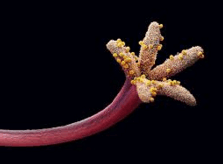

There are two types of pollination which are :
cross pollination
sexual pollination
self pollination
animal pollination
water pollination

Pollen tube carrying male gametes grow down through the style and into _______________________.
ovule in the ovary
ovary of the flower
ovule in the petal
ovule in the sepal

When pollen grains land on the stigma, each pollen grain produces a _________________.
sugary fluid
pollen tube
micropyle
style

_________________ is the process in which a fruit falls to the ground when it's ripe, the seeds go into the soil and a new plant begins to grow.
nutrition
germination
fertilisation
solidification

Top of the pistil which catches the pollen grains
ovary
style
stigma
ovule

Why are some flowers scented?
To attract insects for pollination
To attract wind for pollination
To attract humans for pollination
So we grow more

Where is pollen grain made?
The filament
The stigma
The pistil
The anther

What is a pollen grain?
The female gamete in plants
The male gamete in plants
The male gamete in humans
The female gamete in plants

What are stamens?
The female parts of the animal
The female parts of the plant
The male parts of the animal
The male parts of the plant

Where are the female gametes made in plants?
The testis
The ovary
The anther
The heart

The part of a flower that has the female reproductive cells.
anther
stigma
ovary
ovules

What is fertilisation?
The growing of a seed into a young plant.
The transfer of pollen grains from the anther to the stigma.
The fusion of male and female reproductive cells to form a zygote.
The female reproductive part of a flower.

What happens after fertilisation?
The ovules become a fruit and the ovary becomes seed.
The ovules becomes seeds and the ovary becomes a fruit.

Fertilisation happens before pollination.
True
False

Which part gives the seed energy to grow?
hilum
testa
cotyledon or endosperm
embryo

Which part of the seed grows in to a new plant?
embryo
testa
cotyledon
endosperm

What does an ovule become when it has been fertilised?
a seed
a sprout
a fruit
it stays an ovule

It is the development of a seed into a plant.
seed dispersal
germination
fertilisation
pollination

Joshua planted some beans in a pot. After 5 days his pot looked like this. Why?
He watered the seeds but placed the pot in the dark.
He did not water the seeds.
He used yellow-coloured soil.
He put the seeds in the refrigerator.

Which condition is NOT needed for germination?
Water
Oxygen
Light
Suitable temperature

The seed is protected by an outer covering called:
cotyledon
embryo
testa
micropyle

What is the part of the seed that grows downwards and become roots?
Radicle
Plumule
Testa
Cotyledon

A seed germinated with its cotyledon UNDER the soil. The seed underwent...
Hypogeal germination
Epigeal germination

A seed germinated with its cotyledon growing OUT of the soil. The seed underwent...
Hypogeal germination
Epigeal germination

