
 Worksheets
FINAL ASSESSMENT IN SCIENCE 10
Total questions: 30
Worksheet time: 16mins
Name
Class
Date
1.
What components or variables are measured in gases?
a)
Pressure and Volume
b)
Temperature, Volume, and Pressure
c)
Volume and Temperature
d)
Pressure, Temperature, Volume, and Moles
2.
Which of the following has the lowest density?
a)
Gasses
b)
Solids
c)
Liquids
d)
All mater is the same density
3.
How do you convert Celsius to Kelvin?
a)
Add 273
b)
Subtract 273
c)
You can't convert those
d)
They are the same thing
4.
If you increase the pressure of a constant volume of gas, what will happen to the temperature?
a)
Increase
b)
Decrease
c)
Stay the same
d)
It will Blow Up
5.
What will happen to the volume of a gas under constant temperature if the pressure increases?
a)
Increase
b)
Decrease
c)
Nothing
d)
Explosion!
6.
Which of the following has the greatest amount of movement at a given temperature?
a)
Gas
b)
Liquid
c)
Solid
d)
They all have the same movement
7.
What is 50 C in Kelvin?
a)
223
b)
323
c)
100
d)
50
8.
You have a gas that has a pressure of 2 ATM and a volume of 10L. What would be the new volume if the pressure was changed to 1 ATM?
a)
5 L
b)
20 L
c)
It would stay at 10L
d)
1 L
9.
What law combines all 3 factors (pressure, temperature, and volume)
a)
Combined Gas Law
b)
Charle's Law
c)
Boyle's Law
d)
Avagadros Ideal Gas Law
10.
How are pressure and volume related?
a)
Directly
b)
Indirectly
c)
They aren't related
11.
In order to solve problems using Charles’s Law or the Combined Gas Law the temperature must be measured in:
a)
Fahrenheit
b)
Celsius
c)
Kelvin
d)
Kitzmann
12.

A sample of sulfur dioxide occupies a volume of 652 mL at 313 K and 150 kPa. What volume will the sulfur dioxide occupy at STP?
STP = 273 K, 101.3 kPa
a)
1682.6 mL
b)
20.7 mL
c)
492.3 mL
d)
842.1 mL
13.
Determine the Kelvin temperature required for 0.0470 mol of gas to fill a balloon to 1.20 L under .998 atm pressure.
a)
0 K
b)
107 K
c)
207 K
d)
307 K
14.
Which biomolecule is made of nucleotides and contain you DNA?
a)
Carbohydrate
b)
Lipids
c)
Protein
d)
Nucleic Acid
15.
Which biomolecule functions include enzymes which speeds the rate of chemical reactions, structural components in cells, mechanical functions in muscles and cytoskeleton, cell signaling, and immune response; provides structure and helps with chemical reactions
a)
Protein
b)
Lipids
c)
Carbohydrate
d)
Nucleic Acid
16.
Which biomolecule includes fats, such as triglycerides, oils, waxes, and steroids (cholesterol); insoluble in water; provides energy storage, insulation, part of cell membrane, and hormones
a)
Nucleic Acid
b)
Lipids
c)
Carbohydrate
d)
Protein
17.
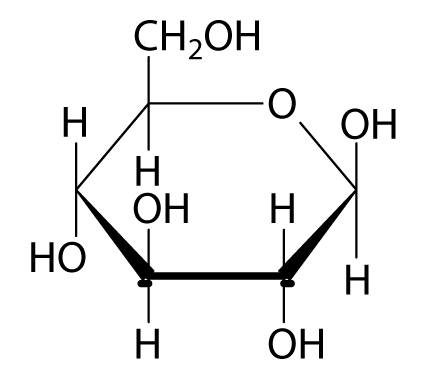
Identify the biomolecule
a)
Carbohydrate
b)
Lipid
c)
Protein
d)
Nucleic Acid
18.
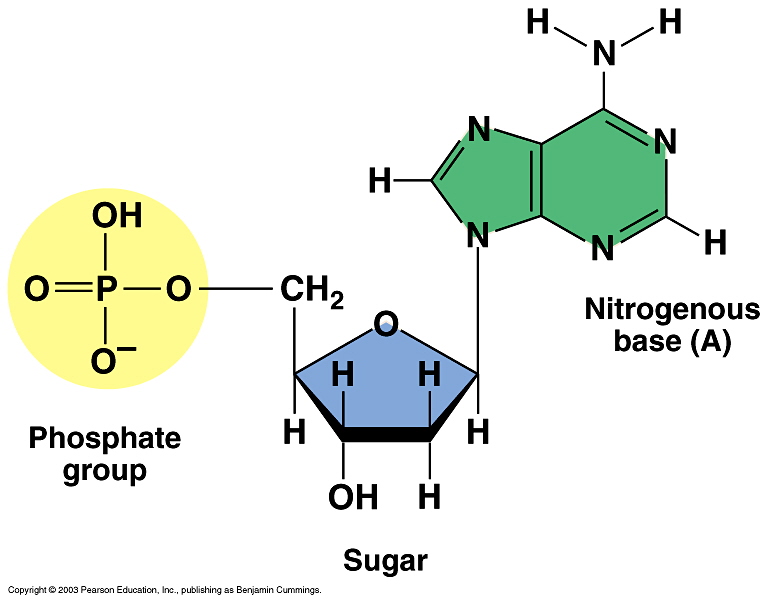
Identify the biomolecule
a)
Lipid
b)
Protein
c)
Carbohydrate
d)
Nucleic Acid
19.
What is the monomer for a protein?
a)
Monosaccharide
b)
Triglyceride
c)
Amino Acid
d)
Nucleotide
20.
The arrangement of which three components is used to distinguish one molecule from another?
a)
carbon, hydrogen, and oxygen
b)
glucose, fructose, and ribose
c)
peptide, fatty acid, and purine
d)
water, carbon dioxide, and notrogen
21.

a)
Carbohydrates
b)
Lipids
c)
Proteins
d)
Nucleic Acid
22.

a)
Carbohydrates
b)
Lipids
c)
Proteins
d)
Nucleic Acid
23.
What is the smallest unit of matter that cannot be broken down by chemical means?
a)
Atom
b)
Element
c)
Ion
d)
Isotope
24.
The four most common elements found in biomolecules are:
a)
Carbon, Nitrogen, Phosphorus, Bromine
b)
Sulfur, Nitrogen, Iron, Carbon
c)
Sulfur, Phosphorus, Carbon, Oxygen
d)
Carbon, Oxygen, Nitrogen, Hydrogen
25.
Fats and oils are composed of what two groups of molecules?
a)
glucose and fructose
b)
starch and sugar
c)
water and cellulose
d)
fatty acids and glycerol
26.

What type of biomolecule this picture represents?
a)
lipid
b)
carbohydrate
c)
nucleic acid
d)
protein
27.

What type of biomolecule is this?
a)
lipid
b)
carbohydrate
c)
nucleic acid
d)
protein
28.
In DNA, adenine forms a complementary pair with ___________
a)
cytosine
b)
guanine
c)
thymine
d)
uracil
29.
Which biomolecule includes fats, such as triglycerides, oils, waxes, and steroids (cholesterol); insoluble in water; provides energy storage, insulation, part of cell membrane, and hormones
a)
Nucleic Acid
b)
Lipids
c)
Carbohydrate
d)
Protein
30.
What is a key difference between carbohydrates and proteins?
a)
Carbohydrates contain carbon; proteins do not.
b)
Proteins contain nitrogen; carbohydrates do not.
c)
Carbohydrates are biomolecules; proteins are not.
d)
Proteins contain covalent bonds; carbohydrates do not.
100 %

