
 Worksheets
Fun for Macroeconomics
Total questions: 54
Worksheet time: 28mins
All of these are functions of money EXCEPT
Medium of exchange
Store of value
Commodity money
unit of measurement
It is the measure of a country's total production of final goods and services in a given period of time.
Gross National Product
Gross Domestic Product
Exports
Imports
What do you call an economic policy that is designed to influence the aggregate demand in order to control the economy?
Spending policy
National policy
Fiscal policy
Monetary policy
It is the continuing increase of the general price level in the market.
Inflation
Deflation
Stagflation
Recession
It shows the cycle of goods and services in an economy.
Circular flow of goods
Circular flow of money
Circular flow of the economy
Circular flow of resources
This happens when there is an increase in the production of goods and services.
Economic Development
Economic Progress
Economic Growth
Economic efficiency
It is the measure of national output that adjusts GNP to account for price changes.
nominal GNP
potential GNP
real GNP
actual GNP
What would be the effect on the demand for money curve (L) of a rise in the bond prices?
L would shift to the left
There would not be an effect
L would shift to the right
There would be a movement down along L
The process by which banks increase the money supply is known as money creation. The amount by which the money supply can increase depends on their liquidity ratio. If the bank decides to hold a lower liquidity ratiom the bank multiplier will ____________________.
increase
reduce
stay the same
Consumption of domestically produced goods and services plus injections (Cd + J) is known as:
aggregate supply
aggregate income
national expenditure
total consumption
The crucial difference between the Keynesian and classical theories of money demand is that
Keynes believed that money demand fluctuates with the return on other assets while the classical economists did not.
Keynes took account of the transactions motive for money demand while the classical economists did not.
Keynes assumed that velocity was constant while the classical economists did not.
the classical economists considered income as a systematic influence on money demand and Keynes did not.
According to Tobin's theory of the asset demand for money, an increase in uncertainty concerning bond prices would be expected to cause the demand for
money to fall and the demand for bonds to rise.
bonds to fall and the demand for money to rise.
both money and bonds to rise.
both money and bonds to fall.
The Keynesian money demand function expressed money demand as a function of (the)
income only.
income and nominal return on durable goods
nominal return on durable goods and equities.
income and the interest rate.
nominal return on equities and the interest rate.
Purchases and sales of government securities by the Federal Reserve are called
discount loans.
federal fund transfers.
swap transactions.
open market operations
When banks borrow money from the Federal Reserve, these funds are called
discount loans.
federal funds.
federal loans.
Treasury funds.
If the required reserve ratio is 25 percent, the simple deposit multiplier is
5.0
2.5
4.0
8.0
Everything else held constant, a decrease in holdings of excess reserves will mean
a decrease in the money supply.
an increase in the money supply.
a decrease in checkable deposits.
an increase in discount loans.
Everything else held constant, an increase in the required reserve ratio on checkable deposits causes the M1 money multiplier to ________ and the money supply to ________.
decrease; increase
increase; increase
decrease; decrease
increase; decrease

Which of the following statements is true?
Contractionary monetary policy would increase government revenue & slow down the economy.
Contractionary fiscal policy would decrease the reserve requirement & slow down the economy.
Contractionary fiscal policy would lead to a decrease in national debt.
Contractionary monetary policy leads to a budget deficit.
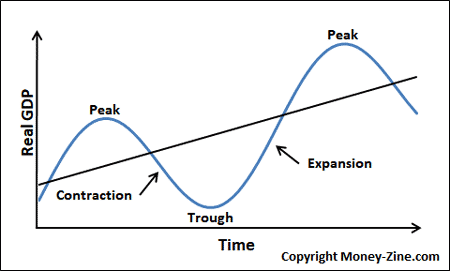
Which fiscal policy tool would be used if the economy were in a trough?
decrease reserve requirement
increase individual tax rate
sell bonds through open market operations
increase government spending

Which of the following are fiscal policy tools (select more than one)?
adjusting the reserve requirement
adjusting the discount rate
changing government spending
changing income taxes
buying/selling bonds via open market operations
Which monetary policy tool would speed up the economy?
increasing reserve requirement
decreasing income taxes
increasing government spending
decreasing interest paid on reserves
Choose the tools that the government would use to increase economic activity. (SELECT MORE THAN ONE.)
increase taxes
decrease taxes
increase spending
decrease spending
decrease discount rate
If the government is concerned about unemployment, which tool would they use?
increase spending
increase taxes
increase reserve requirement
increase discount rate
Who among the following would be considered as unemployed?
A college student of legal age to work but who is still in school full time.
An entrepreneur in the process of starting a new business.
A secretary who was laid-off from work & is looking at job ads
A housewife taking care of three children.
_______ occurs when people are in between jobs, entering and reentering the labour force.
Cyclical unemployment
Technological unemployment
Frictional unemployment
Seasonal unemployment

In which type of unemployment workers find it hard to obtain new jobs without retraining, gaining additional education, or relocating??
cyclical
frictional
structural
all of them
4. The national income is
a. NNP at factor cost
b. NNP at market price
c. GNP at market price
d. GNP at factor cost
5.The value of the output of all goods and services produced within a country in a year.
total output
Gross Domestic Product
national income
net domestic product
7.When a nation's imports exceed its exports and is calculated as imports -exports
inventory
gross domestic product
trade surplus
trade deficit
In a circular flow of income in a closed economy with government intervention, leakage consists of _________________.
Investment and savings
Savings only
Savings and taxes
Savings, taxes and imports
Net national product does not include_______________.
Interest on consumer loans
Undistributed corporate profit
Taxes on corporate profits
Depreciation
measuring the sum total of all factor payments will be called,
product method
expenditure method
output method
income method
NDP at factor cost =
Net domestic product at market price - indirect tax
Net Domestic Product at market price+ Subsidies
Net Domestic Product at market price at market price -Net indirect tax
Net Domestic product at market price + Depreciation
GDP at FC =
GDP at MP – Net indirect taxes
GDP at MP + Net indirect taxes
GDP at MP + Subsidies
GDP at MP – Indirect taxes
Accounting of National Income at constant prices is known as ________
Money income
Real income
Current income
Domestic income
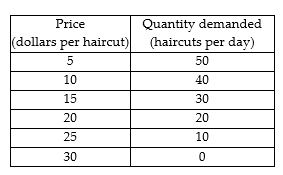
Christy's Haircuts, the sole supplier of haircuts in a small town, faces the demand schedule shown in the table above. What is Christy's marginal revenue from the 25th haircut?
zero
$5
$7
$5.50
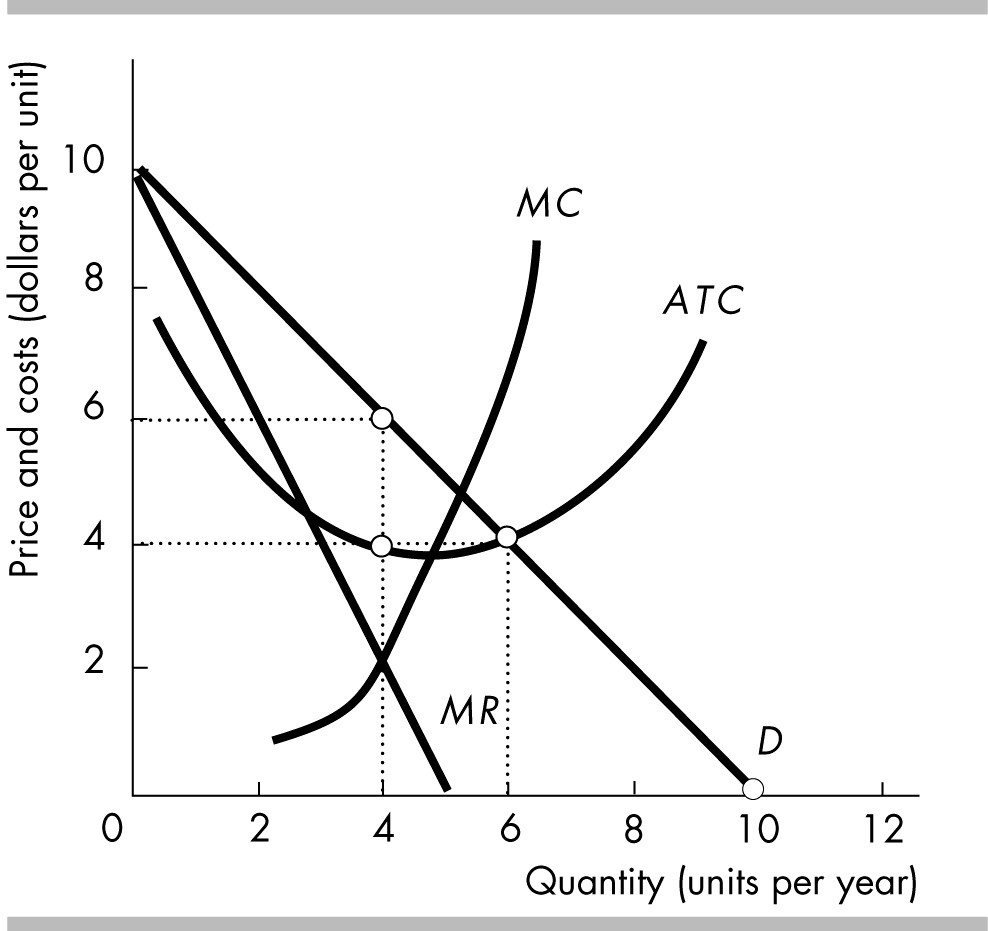
For the unregulated, single-price monopoly shown in the figure above, when its profit is maximized, output will be
4 units per year and the price will be $6.
4 units per year and the price will be $4.
6 units per year and the price will be $4.
None of the above answers is correct.

In the above figure, what price will a single-price monopoly set?
P1
P2
P3
P4
P5
For the unregulated, single-price monopoly shown in the figure above, when its profit is maximized, output will be
4 units per year and the price will be $6.
4 units per year and the price will be $4.
6 units per year and the price will be $4.
None of the above answers is correct.

