
 Worksheets
thermnal equilibrium
Total questions: 34
Worksheet time: 1hrs 8mins
The condition where two substances in physical contact with each other exchange no heat energy. They are said to be the same temperature.
Thermal Energy
Cooler to Warmer
Energy Transfer
Thermal Equilibrium
Two objects have different temperatures. Object A has a temperature of 42 degrees and Object B is 37 degrees. Which direction should the energy transfer between Objects A and B?
From Object A to Object B
From Object B to Object A
Energy will not transfer
Energy will transfer both directions

What happens to the temperature if I add ice cubes to a glass of soda
The heat transfers from the coke to the ice
The heat transfers from the ice to the coke
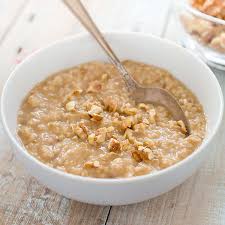
You leave your cold spoon in a hot bowl of oatmeal. What happens after an hour?
The temperature of both the oatmeal and the spoon stay the same
The spoon and the oatmeal become the same temperature
Only the temperature of the oatmeal will change
Only the temperature of the spoon will change
Heating will continue until what is reached?
Energizers
Equilibrium
Equality
Energy

The sensitivity of a liquid-in-glass thermometer can be increased by
having a thick-walled bulb
increasing the diameter of the column
decreasing the size of the bulb
increasing the length of the column

Which statement is correct when V and W are at thermal equilibrium?


Nik Nazim uses an uncalibrated laboratory thermometer to determine the temperature of a liquid. Calculate the temperature of the
13.3
23.3
51.4
43.3
An earth-monitoring satellite falls into the earth’s atmosphere at a high velocity and reaches at the sea surface with a high temperature. After a while the temperature of the satellite is same as the temperature of the sea water. This is caused by
The heat is released by the satellite
The satellite is cooled by the sea water
The satellite and the sea water are in thermal equilibrium

The diagram shows a metal sphere P at 80oC is immersed in a cooler liquid Q. Thermal equilibrium is reached when
temperature of P = temperature of Q
mass of Q displaced = mass of P
volume of Q = volume of P
specific heat capacity of P = specific heat capacity of Q
The diagram shows object A and object B are of temperatures T1 and T2. The heat flows from A to B until the thermal equilibrium is reached at a temperature T. Which relationship between T1 , T2 and T is true?
T1 > T2 > T
T2 > T1 > T
T1 > T > T2
T2 > T > T1

6. Diagram shows a metal sphere at temperature of 90°C immersed in a liquid at temperature of 40°C.
What is the temperature of the metal sphere when thermal equilibrium is achieved between the sphere and the liquid?
More than 90 °C
Same as room temperature
Less than 40 °C
Between 40 °C and 90°C

Diagram shows hot water being added to cold water. Which of the following statements is correct if there are no heat losses to the surrounding?
Heat lost by hot water is greater than heat gained by cold water.
Heat lost by hot water is greater than heat gained by cold water.
Heat lost by hot water is equal to heat gained by cold water.

What happens when the coffee and the cup are in thermal equilibrium?
The temperature of the cup is increasing
The temperature of the coffee is decreasing
There is no net heat flow from the coffee to the cup
There is a net flow from the coffee to the cup
6. The lengths of the mercury column in a thermometer at the ice point and the steam point are 5 cm and 25 cm respectively. When the thermometer is placed in a liquid , the length of the mercury column is 12 cm. What is the temperature of the liquid?
A 30 o C
B 35 o C
C 55 o C
D 70 o C
30 o C
35 o C
55 o C
70 o C
At thermal equilibrium, heat absorbed by cool object is________ to the heat released by the heat object
equal
larger
smaller
not equal
Temperature is .... quantity
Scalar
Vector
What is the unit of heat?
celcius degree
joule
pascal
metre
To calibrate a thermometer, without using another thermometer, fixed points are required. Which statement is correct?
Any temperatures can be used as fixed points.
Only a lower fixed point is required.
Only an upper fixed point is required.
Both a lower fixed point and an upper fixed point are required.
Heat travels from cooler objects to warmer objects.
True
False
What happens to the mercury (liquid) in a thermometer when it is hot?
It explodes
It expands
It contracts
It disappears
NAME THE ELEMENT USED IN THERMOMETER
MAGNESIUM
CALCIUM
MERCURY
ALUMINIUM
How can you make the thermometer more sensitive?
Large bulb
Wide tube
How to increase linearity in thermometer?
Choose liquid that expand uniformly with tempearture
non uniform bore
The liquid -in-glass thermometer contains mercury.Which physical property of the mercury varies with temperature, enabling the thermometer to operate?
mass
melting point
resistance
volume

