
Font size
 Worksheets
satellite communcation 3
Total questions: 35
Worksheet time: 26mins
INTELSAT stands for -
International Telecommunications Satellite
India Telecommunications Satellite
Inter Telecommunications Satellite
None of the other mentioned options
What are the types of satellites?
Artificial & Homemade
Natural & Organic
Natural & Artificial
A satellite goes round the earth in 90 minutes in a circular orbit. What will be the height of the satellite above the earth(radius 6370 km).
7865 km
7235 km
865 km
6370 km
Mass of the earth is
6400 kg
5.972 × 1024 kg
20000 kg
05 kg

What word describes a trip around a planet, and may be circular, elliptical, or hyperbolic in shape?
Orbit
Period
Satellite
What word describes how long it takes a satellite to orbit a planet (or sun)?
Orbit
Period
Satellite
The Earth's _________ is about 365 days.
Orbit
Period
Satellite

The space shuttle is orbiting the Earth clockwise. Which vector shows the direction of the gravitational force acting on the shuttle?
a
b
c
d
Which diagram best shows the gravitational interaction between Earth and a satellite?


First experimental remote sensing satellite built in India.
Aryabhatta
GSAT-4
BHASKARA I
ROHINI(RS1)
which of the following not a Modulation/Multiple Access Method?
FDMA
CDWA
TDMA
CDMA
Each user has their own frequency slot
TDMA
FDMA
CDMA
All stations transmit data on same frequency, but at different times
TDMA
FDMA
CDMA
Users use same frequency at the same time.
TDMA
FDMA
CDMA
_______ allowing them to utilize the allocated radio spectrum without interfering with each other.
TDMA
FDMA
CDMA
In CDMA, ___________ used to differentiate signals are designed and generated at a much higher rate than the baseband information
bit
code
frequency
time
All Earth stations can receive the entire sequence and extract the signal of their interest.
TDMA
FDMA
CDMA
Each user has its own Pseudorandom Noise (PN) or pseudo-codeword (orthogonal to others).
TDMA
FDMA
CDMA
______ is most practical for digital data only, because of the burst nature of the transmissions.
TDMA
FDMA
CDMA
Name a natural satellite.
moon
saturn
sun

Name the satellite which Google map uses.
Navigation satellite
Communication satellite
Weather satellite
T/F: The point in a satellite's orbit that is closest to Earth is called the apogee.
True
False
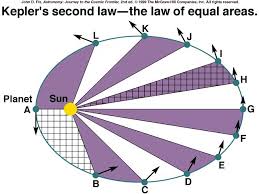
Where is the planet moving faster?
Position A to B
Position B to C
Position H to I
Position I to J
What has an eccentricity of zero?
a straight line
a large ellipse
a circle
a small ellipse
Which two factors determine the gravitational force between two objects?
Shape
Mass
Orbital Speed
Distance

