
 Worksheets
Confident Chemist - Post Test
Total questions: 21
Worksheet time: 2hrs 37mins
Name
Class
Date
1.
How many significant figures: 216 m
a)
1
b)
2
c)
3
d)
0
2.
Convert 17 m to cm:
a)
0.17 cm
b)
0.017 cm
c)
1,700 cm
d)
170 cm
3.
You know that 12 inches = 1 foot. Convert 60 inches to feet.
a)
720 feet
b)
5 feet
c)
5 inches
d)
72 feet
4.

What is the number of protons that the element in this image contain?
a)
14
b)
7
c)
15
d)
18
5.
Particles in an atom that are neutral and have no charge are ______.
a)
Negatrons
b)
Electrons
c)
Neutrons
d)
Protons
6.

What are the 3 particles that make-up the atom?
a)
Protons, neutrons, and isotopes
b)
Neutrons, isotopes, and electrons
c)
Positives, negatives, and electrons
d)
Protons, neutrons, and electrons
7.
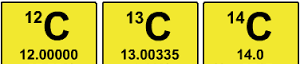
What do these isotopes of carbon all have in common?
a)
neutrons & mass number
b)
atomic number and neutrons
c)
atomic number and electrons
d)
protons, atomic number, and mass number
8.
What quantities vary between isotopes of an element?
a)
protons, electrons, and atomic mass
b)
protons, electrons, and atomic number
c)
neutrons and electrons
d)
neutrons and atomic mass
9.
How many neutrons in C-14?
a)
6
b)
7
c)
14
d)
8
10.
Which scientist developed the atomic theory?
a)
JJ Thomson
b)
Ernest Rutherford
c)
John Dalton
d)
James Chadwick
11.
He developed the planetary model of the atom.
a)
Rutherford
b)
Bohr
c)
Chadwick
d)
Dalton
12.
He claimed that matter was made of small, hard particles that he called “atomos.”
a)
Democritis
b)
Dalton
c)
Moseley
d)
Einstein
13.
Ionization energy is the...
a)
energy needed to remove the outermost electron.
b)
ability of an atom to attract electrons from another atom.
14.
As you move down a group, atomic radius increases because -
a)
you add more and more neutrons
b)
you add more and more protons
c)
you add more and more shells (energy levels)
d)
you add more atomic mass
15.
Electronegativity is...
a)
the ability of an atom to attract/ accept electrons
b)
the ability of an atom to lose electrons
c)
the energy required to remove an electron from a specific atom
d)
how easy it is to make friends.
16.

Which orbital has the least amount of energy?
a)
p orbital
b)
d orbital
c)
s orbital
d)
What is an orbital?
17.
Electrons fill energy levels and sublevels _____ in energy first.
a)
lower
b)
higher
18.
What atom matches this electron configuration?
1s2 2s2 2p6 3s2
1s2 2s2 2p6 3s2
a)
Neon
b)
Magnesium
c)
Aluminum
d)
Potassium
19.
A helium nucleus with two protons and two neutrons is called a(n) ____.
a)
alpha particle
b)
electroscope
c)
beta particle
d)
gamma ray
20.
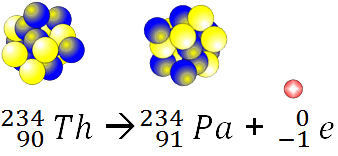
Which type of nuclear radiation is being emitted here?
a)
Alpha
b)
beta
c)
gamma
d)
none
21.
Gamma rays have
a)
no mass
b)
a huge mass
c)
a small mass
d)
an average mass
100 %

