
 Worksheets
Forces 1.3 and 1.4
Total questions: 20
Worksheet time: 13mins
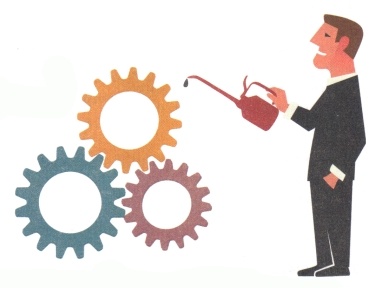
How can friction be reduced?
reduce the force acting between the 2 surfaces
reduce the roughness of the 2 surfaces coming in contact
use wax, grease or oil
all of the above are ways of reducing friction
Which of the following is an example of friction that is helpful?
Brakes used on a bike
Tyres from a car on the road
Bike chain rubbing against the gears
A person moving down a slide.

What is the extension of the spring?
4 cm
7 cm
3 cm
11 cm
What happens when the stretching force on an elastic material is released?
The material breaks.
The material remains stretched out.
It does nothing
The material returns back to its original shape.

Which type of deformation is shown in the graph?
Elastic deformation
Inelastic deformation
The moment of a force causes an object to
move forward
move backward
stop moving
turn about a fixed point
What is a lever?
a rigid bar that is free to move around a fixed point, called a fulcrum or pivot.
a rigid bar that cannot move around a fixed point, called a fulcrum or pivot.
What is the centre of mass?
The point where an object's mass acts.
The middle of an object.

In which of the images will the person be balanced on the chair?
A
B
C
In which of the images will the person topple over?
A
B
C
Gas pressure is caused by
Gas molecules heating up
Gas molecules reacting with other gas molecules
Gas molecules hitting the walls of a container
Gas molecules hitting other gas molecules
Why Mountain climbers takes oxygen tank with them ?
Because there is less pressure
Because there are less gas particles at high altitudes
Because they cant breath properly
All of the Above
How do you calculate pressure?
Pressure = force ÷ area
Force = pressure ÷ area
Area = pressure ÷ force
The pressure exerted by a liquid
increases with depth.
decreases with depth.
is constant
first increases and then decreases.
If an object's surface area is smaller does it create more or less pressure?
More
Less
The same
What is pressure?
The amount of force exerted on a surface
The surface area of an object
The weight of an object
What is the unit used to measure force?
Newtons
Joules
Pascals
Minutes
Liquids and gases are fluid, what does this mean?
They have no fixed shape.
They have particles that are very spread out.
They have particles that are arranged in a regular shape
They can be compressed.

