
 Worksheets
plant 2
Total questions: 172
Worksheet time: 2hrs 55mins
Ammonium sulphate is a __________________.
Insecticide
Fertilizer
pesticide
Some agents in nature carry the seeds or fruits away from their parent plant. This process is called
crops
seed dispersal
germination
Some agents in nature carry the seeds or fruits away from their parent plant. This process is called
crops
seed dispersal
germination
Some agents in nature carry the seeds or fruits away from their parent plant. This process is called
crops
seed dispersal
germination
Besides growing from seeds new plants also grow from certain other parts such as roots stem and leaves of the parent plant. This is called
Vegetative propagation.
seed dispersal
germination
Some agents in nature carry the seeds or fruits away from their parent plant. This process is called
crops
seed dispersal
germination
Besides growing from seeds new plants also grow from certain other parts such as roots stem and leaves of the parent plant. This is called
Vegetative propagation.
seed dispersal
germination
Plants of one kind grown in a particular area or region during a particular period are called
(a)
The practice of growing plants on a large scale is called
agriculture.
crop
vegetative propagation
Jowar and Bajra grow well in __________ soil of Rajasthan.
clayey
sandy
moist
____________ and _________ need well - drained sandy soil.
Onion, Ground nut
Onion, Maize
Ground nut, Jowar
Bajra is a (a) crop. (Rabi/ Kharif)
cabbage grows well in ___________ season.
summer
winter
rainy
Sweet potato is a ___________.
stem
root
leaf

What tree/plant is this?
sweet birch
sassafras
black walnut
American Chestnut
What does the sweet birch attract?
many species of birds
many animals
alligators
many birds and animals
What other tree is it similar to?
red birch
white birch
black birch
yellow birch
How large are the cones on the sweet birch?
1-1.5 inches
3/4 of an inch
5 inches
3 inches
What is the average height of the sweet birch?
20 feet
60 feet
80 feet
150 feet
What color are the leaves on the sweet birch?
dark green
light green
yellowish-green
red
What fruit appears on the sweet birch?
berries
2 winged nutlets
cones
red berries
Pick two: What are two parts of a flower?
stamen
pollen
pistils
branches

Part of plant that pointed to D is __________.
fruits
leaves
roots
stem
The part of plant that function to absorb water and minerals from the soil is __________.
buds
flowers
leaves
roots
The function of the leaves is to __________.
make foods for the plant
transport foods from the leaves
anchor the plant to the soil
grow new plants
The name of process when leaves making foods for the plant is __________.
chlorophyll
fertilization
photosynthesis
pollination
The name of process when leaves making foods for the plant is __________.
chlorophyll
fertilization
photosynthesis
pollination
Chlorophyll is the __________ substance that appear on the leaves.
blue
green
orange
red

Based on the picture, in which plant that shows us the xylem direction?
Plant A
Plant B

Based on the picture, plant B shows us about food-transport direction. The vascular bundles that give the foods from leaves to other parts of plant is __________.
dicots
floem
monocots
xylem

The type of roots as shown on the picture is __________.
fibrous root
taproot
Wheat and grass are the example of plant that have many thin roots growing from the end of the stem. That type of roots is called __________.
fibrous root
taproot
I am a part of plant. My function is to anchor the plant to the soil. Who am I?
flowers
leaves
roots
stem

Leaf blade is pointed to __________.
1
2
3
4

Part of leaf that pointed to number 2 is __________.
leaf blade
midrib
petiole
veins
Below are things that needed by the leaf to do photosynthesis, except __________.
carbon dioxide
water
chlorophyll
sugar

Based on the picture, the male part of flower is __________
D
G
H
I

Female part of flower is pointed to __________.
D
G
H
I
Female part of flower is pointed to __________.
D
G
H
I

The part of plant that function to attract insect is __________.
A
C
E
H

Part I is __________.
Filament
Style
Sepal
Ovary
A seed produces a new plant through a process called __________.
Fertilization
Germination
Photosynthesis
Pollination
Below are the things that needed by the seed to germinate into seedling, except __________.
air
water
warmth
soil

Part of seed that function to store food for baby plant is __________B
A
B
C
D
How many types of plants are there?
6
2
4
8
Which of the following is an example of a tree?
Rose
Jasmine
Tulsi
Neem
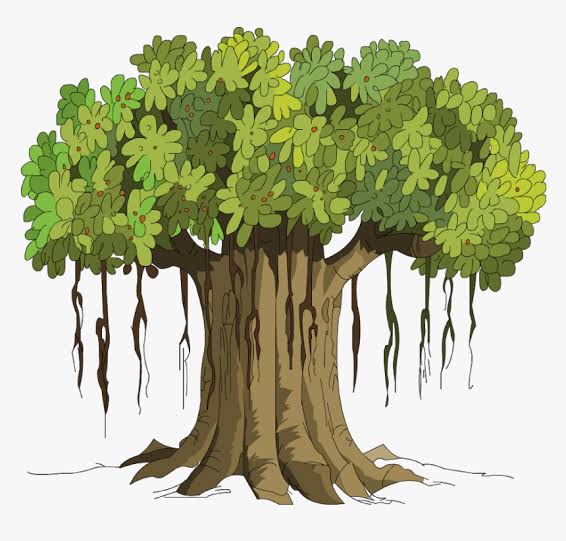
Identify the given picture
Banyan tree
Mango tree
Neem tree
Fir tree
Choose the correct option
Spinach and coriander are called herbs
Carrot and radish have fibrous root system
choose the correct option for the following statement
Climbers have...
Weak stem
Cannot stand straight
Needs support
All of the above
Which part of the plant grows above the ground?
Root system
Shoot system
Plant system
Fruit system
Which of the following is an example of shrub?
Hibiscus
Mint
Grape vine
Money plant
Which part of the plant grows under the ground?
Shoot system
Root system
Which part of the plant we can eat?
Fruit
Leaf
Root
All of the above
Which part of the plant prepare food?
Stem
Root
Flower
Leaf
Part 1
Which do all plants need to grow?
Air
Rocks
Darkness
Hot temperatures
Why do plants need air to grow?
Plants must anchor themselves
Plants cannot keep cool on their own
Plants need heat to release their energy
Plants use carbon dioxide to make food

The model above shows the ingredients that an apple tree uses to make fruit.
Which best identifies where the apple tree gets the matter it uses to make fruit?
Soil and sunlight
Oxygen and soil
Oxygen and water
Water and carbon dioxide
Which do plants need for photosynthesis?
Water
Soil
Flowers
Carbon monoxide
Which best identifies what plants receive from sunlight?
Energy
Nitrogen
Oxygen
Sugars
Which do seeds need to germinate?
Soil
Water
Minerals
Sunlight
Why do plants need water to germinate?
It keeps the seed cool and dark
It releases energy stored in the seed
It causes the seed to swell and break open
It allows the seed to make food for the young plant
Which best identifies how plants use carbon dioxide?
For energy
To take in light
For keeping cool
To make food
Which do plants need for photosynthesis?
Sunlight
Oxygen
Pollen
Bees
Which do plants get most of their matter from?
Air
Soil
Fungi
Other plants
Why do plants need air to receive matter?
It supplies energy
It supplies sugar
It supplies minerals
It supplies carbon and oxygen

"Lettuce Seed Experiment"
The table shows the results of an experiment. The same number of lettuce seeds was planted in three pots of soil and in the holes of three sponges. Each set of seeds was given different conditions. Some seeds received water, some received sunlight, and some received both water and sunlight.
Which do lettuce seeds require to sprout?
Soil
Water
Sponge
Sunlight
Which do plant cells break down for energy?
Salt
Sugar
Pollen
Carbon Dioxide
Which recycles matter from dead plants and animals?
Bird
Snake
Tree
Mushroom
In a desert food web, which of the following is a consumer?
Cactus
Snake
Shrub
Tree

The diagram shows a simple food web that has not been completed.
Where does the plant belong?
1
2
3
4
Which two describe plants?
They make their own light
They put oxygen into the air
They eat insects and ungi
They make their own food
They break down dead organisms

Which identifies the role of the squirrel in this food web?
Carnivore
Omnivore
Herbivore
Producer

Which identifies the role of the coyote in this food web?
Carnivore
Omnivore
Herbivore
Producer
In an ocean food web, which of the following is a decomposer?
Lobster
Shark
Sponge
Bacteria
What is a role seaweed plays in an ocean ecosystem?
It stops waves from eroding beaches
It releases carbon dioxide for fish to breathe
I adds salt and other minerals into the water
It changes sunlight to usable energy for animals
What is a role seaweed plays in an ocean ecosystem?
It stops waves from eroding beaches
It releases carbon dioxide for fish to breathe
I adds salt and other minerals into the water
It changes sunlight to usable energy for animals
Plants are _________________.
non-living things
living things


Which of these does a plant need to grow?
juice
soil
food

Some plants have thorns أشواك on them. Why?
To make their food
To protect them from animals
To take in sunlight
To take up the water

Cactus store water inside their:
Spines شوك
Roots
Flowers
Thick stem
Desert plants do not have leaves.
True
False

Rocks, water, air, sun and soil are ___ .
living
non-living
Find a non-living thing.


What does a plant need to grow?
Light
Water
Light and water

Which part of a plant keeps it from breaking or falling?
The seeds
The leaves
The roots
The flowers

What is this part of a plant?
Roots
Leaf
Stem
Fruit

Plants need the following: select more than one
air
water
pizza
space
sunlight
Plants can move.
True
False

Banana leaves are big because:
They live in dark forests
They have so much water
They do not need a lot of sunlight
Which of these is not a need of a plant?


Pollen grains are produced by ?
the anther
the stigma
the flowers
the leaves

Which number or numbers identify the stamen?
3,4
5, 6, 7
2
8, 9
Which group is by far the largest?
conifers
ferns
flowering plants
mosses


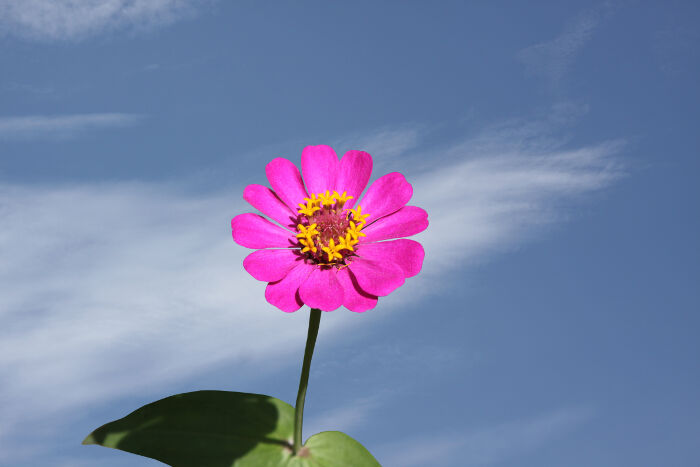


Which plant below would scientist group with watermelon plants?
fern
rose
pine tree
apple tree

Classify the plant.
Flowering
Non-Flowering
Identifies plants according to physical characteristics
Plant Classification
Descriptive Classifcation
Botanical Classification
None of the Above
The plant kingdom is divided into two main groups:
flowering & non-flowering
spores & seeds
trees & plants
conifers & flowering plants
Flowering plants are called:
pretty
monocotyledons
dicotyledons
angiosperms
Flowering plants are called:
pretty
monocotyledons
dicotyledons
angiosperms
Plants that reproduce from seeds can be further divided into:
monocots & dicots
angiosperms & dicotyledons
conifers & flowering plants
spores & conifers
What is a minute, typically single-cell reproductive unit capable of giving rise to a new individual without sexual fusion?
embryo
seed
spore
angiosperm
Conifers (pine trees) reproduce by making:
male & female cones
spores
angiosperms
runners
Flowering plants (angiosperms) are split into two further categories called:
monocotyledons & tricotyledons
dicotyledons & monocotyledons
protists & spores
seeding & seedless
What is NOT a characteristic of a monocot plant?
parallel veins
flowers in multiples of three
Fibrous Roots
Taproots
What is a characteristic of a dicot plant?
leaf veins resemble a net of web
leaf veins are parallel
Fibrous root system
flowers in multiples of three
What is a characteristic of a monocot plant?
Fibrous root system
taproot
leaf veins resemble a net/web
Embryo has 2 cotyledons
What is the difference between a monocot (corn) plant seed & a dicot (bean) plant seed?
(monocot) corn seed is bigger then a (dicot) bean seed
(monocot) corn seed is always yellow where a (dicot) bean seed can be many different colors
(monocot) corn seed has a single cotyledon, while a (dicot) bean seed has two cotyledons
(monocot) corn seed germinates at a lower temperature than a dicot (bean) seed
The vascular structure of a dicot (bean) plant is:
vascular bundles in a ring
vascular bundles are scattered
no noticeable vascular pattern
vascular pattern varies by species
Monocot leaf structures have:
veins resembling a net or web
veins parallel to each other
are non-vascular
veins perpendicular to each other
Which of the following plants do NOT reproduce using spores?
Algae
Strawberries
Ferns
Mosses
taproot system, vascular bundles in a ring, net like leaf veins, and an embryo with two cotyledons are all characteristics of a ___________.
monocot
dicot
angiosperm
tricot
1. This part of the plant holds it in the ground
leaf
flower
root
seed
2. Which part of the plant soaks in the sun to help feed the plant?
stem
leaf
fruit
flower
3. This part of the plant supports it and carries water.
root
stem
leaf
seed
4. Plants need food, air and water to stay healthy
true
false
5. Which part of the plant makes the food?
root
leaf
stem
flower

6. What is this?
root
stem

7. What is this?
flower
fruit

8. What is this?
leaves
roots

9. What part of the plant is #5?
flower
seed

10. What part of the plant is #2?
flower
root
10. What part of the plant is #2?
flower
root
Which is a definition for photosynthesis?
Releasing energy from nutrients
The breaking down of large insoluble molecules into small soluble molecules
The process by which plants make carbohydrates from raw materials using energy from light
The movement of particles from a high concentration to a low concentration
Which is the word equation for photosynthesis?
glucose + oxygen -> carbon dioxide + water
methane + oxygen -> carbon dioxide + water
glucose + carbon dioxide -> oxygen + water
carbon dioxide + water -> oxygen + glucose
Which is the word equation for photosynthesis?
glucose + oxygen -> carbon dioxide + water
methane + oxygen -> carbon dioxide + water
glucose + carbon dioxide -> oxygen + water
carbon dioxide + water -> oxygen + glucose
Which molecule transfers light energy into chemical energy for the synthesis of carbohydrates
Chloroplast
Chlorophyll
Mitochondria
Vacuole
In plants the glucose produced in photosynthesis gets stored as which molecule?
Starch
Glycogen
Lipids
Protein

State the name of structure A
Vascular bundle
Upper epidermis
Palisade mesophyll
Spongy mesophyll
What is the name of the water proof layer on the top of the leaf?
Vascular bundle
Cuticle
Palisade mesophyll
Spongy mesophyll
What are the cells in layer B called?
Vascular bundle
Cuticle
Palisade mesophyll
Spongy mesophyll
What are the cells in layer C called?
Vascular bundle
Cuticle
Palisade mesophyll
Spongy mesophyll
What structures are found in the vascular bundle? (pick 2 options)
Xylem
Phleom
Palisade mesophyll
Spongy mesophyll
What is the role of the xylem?
transports water and help supports the plant
transports sugars
where photosynthesis happens
where respiration happens
What is the role of the phloem?
transports water and help supports the plant
transports sugars
where photosynthesis happens
where respiration happens
What is the name of layer D called?
Vascular bundle
Cuticle
Palisade mesophyll
Spongy mesophyll
What is structure F called?
Vascular bundle
Cuticle
Palisade mesophyll
Stomata
What is the role of stomata?
Openings in the leaf that allows gas in and out of the plant
Transports water and supports the plant
transports sugars
Where photosynthesis happens
The stomata are openings in the leaf which allow for gas exchange. Which cells found either side of the opening control the stomata?
Guard Cells
Palisade Cells
Spongy mesophyll
What does the plant need nitrate for?
For the production of chlorophyll
For the production of amino acids
For the production of glucose
For the production of starch
What does the plant need magnesium for?
For the production of chlorophyll
For the production of amino acids
For the production of glucose
For the production of starch
What is structure E called?
Vascular bundle
Cuticle
Palisade mesophyll
Lower epidermis
What is the role of the spongy mesophyl?
It allows gas to move through the leaf
It transports water
It transports sugars
It is where photosynthesis happens

