
 Worksheets
G10 Climatology Test
Total questions: 80
Worksheet time: 1hrs 10mins
Temperature in Troposphere
Increase with Height
Decrease with Height
Stable with Height
First Decrease then Increase
What is weather?
described through the direct measurement of particular atmosphere properties such as temperature, precipitation, humidity, wind direction, wind speed, cloud cover, and cloud type.
the study of weather-- the overall instantaneous condition of the atmosphere at a certain place and time.
state of the atmosphere for a give place over time.
the rate of incidence of a particular phenomenon at a particular place over a long period of time.
ozone layer is present in
troposphere
stratosphere
mesosphere
thermosphere
Incoming Solar Radiation is called
Radiation
Insolation
Isolation
Convection

Where ALL weather takes place.
Troposphere
Stratosphere
Mesosphere
Thermosphere
All of the above.
Located CLOSEST to Earth's surface.
Troposphere
Stratosphere
Mesosphere
Thermosphere
All of the above.
Where most water vapor is found.
Troposphere
Stratosphere
Mesosphere
Thermosphere
All of the above.
Meteors burn up in this layer.
Troposphere
Stratosphere
Mesosphere
Thermosphere
All of the above.
Coldest layer.
Troposphere
Stratosphere
Mesosphere
Thermosphere
All of the above.
Contains molecules that absorb harmful ultraviolet rays.
Troposphere
Stratosphere
Mesosphere
Thermosphere
All of the above.
Hottest layer, thinnest air.
Troposphere
Stratosphere
Mesosphere
Thermosphere
All of the above.
Auroras and Northern Lights occur here.
Troposphere
Stratosphere
Mesosphere
Thermosphere
All of the above.
Auroras and Northern Lights occur here.
Troposphere
Stratosphere
Mesosphere
Thermosphere
All of the above.
Air pressure decreases as altitude increases.
Troposphere
Stratosphere
Mesosphere
Thermosphere
All of the above.
Temperature increases with altitude (height). PICK TWO.
Troposphere
Stratosphere
Mesosphere
Thermosphere
All of the above.

What results from livestock and other agricultural practices and by the decay of organic waste in municipal solid waste landfills?
Carbon Dioxide
Methane
Water Vapor
Fluorinated Gases
Nitrous Oxide
Which of the following natural events is NOT a source of carbon dioxide?
Wildfire
Decomposing plants and animals
Volcanic eruption
Earthquake
Cutting down large forests (deforestation) can result in:
little to no changes
more homes for animals
less plants to absorb carbon dioxide, a greenhouse gas
Which of the following is NOT a greenhouse gas?
Carbon dioxide
Methane
Water vapor
nitrogen

In the Greenhouse Model what part of the model is the same as the Atmosphere around Earth?
The Ground in the Greenhouse
The plants in the Greenhouse
The glass walls of the Greenhouse
The magnetic waves from the sun
The majority of Earth's energy comes from...
the Earth's core
the Sun
hydroelectric power
burning fossil fuels
How are humans adding more greenhouse gases to the atmosphere? Check all that apply.
Burning fossil fuels such as oil and natural gas
Animal agriculture produces large amounts of methane gas
Clearing land for agriculture ==> Deforestation
Melting the polar ice caps
What is the term used to describe when greenhouse gases trap the sun's heat, increasing the temperature of the planet?
Tragedy of the Commons
Global Warming
Ecological Footprint
Ozone Hole in the Atmosphere
True or False - the Greenhouse Effect is a bad thing for the environment
True
False

Which of Earth’s spheres is composed primarily of gases?
the Atmosphere
the Asthenosphere
the Hydrosphere
the Biosphere
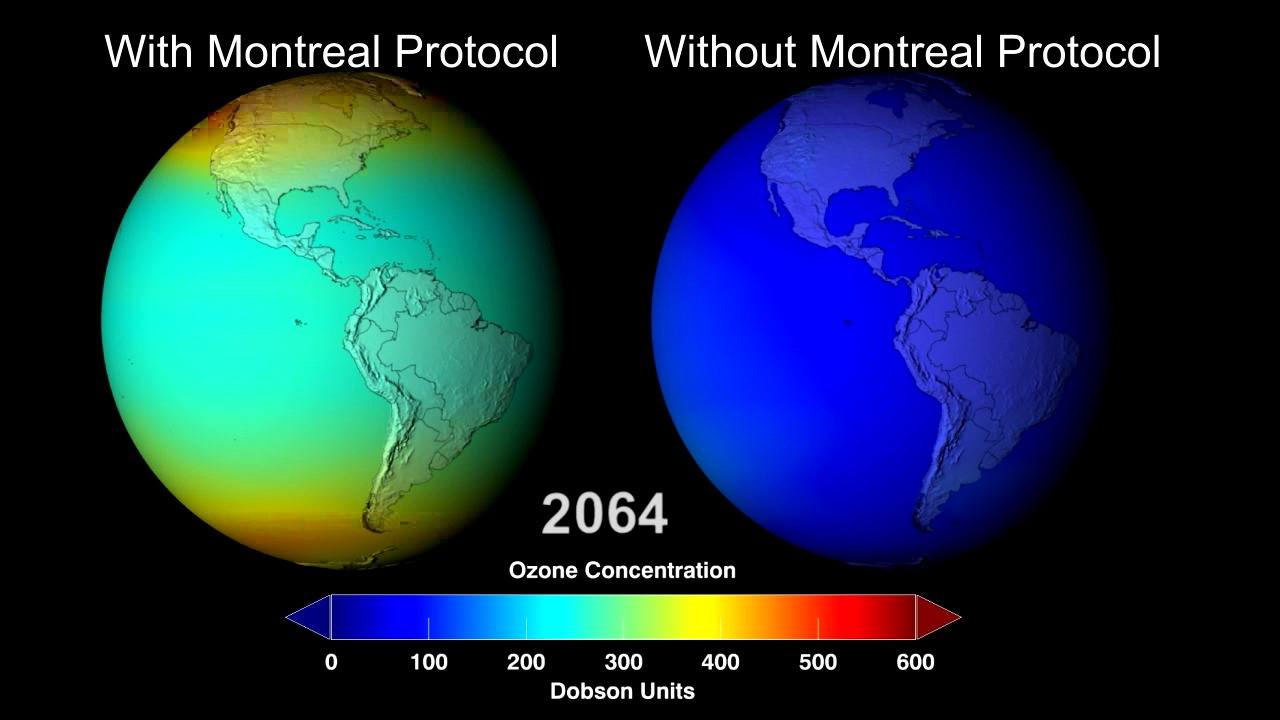
Which is NOT a result of the reduction in stratospheric ozone?
reduced photosynthetic activity
increased skin cancer
increased likelihood of cataracts
increased birth defects
UV rays can cause obvious short term damage, such as sunburn, as well as long term damage that accumulates with each exposure to the sun.
True
False
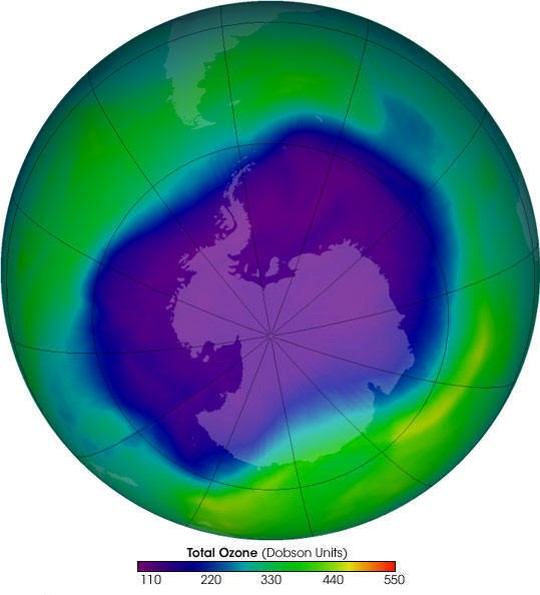
Location of the large whole in the ozone.
Antarctica
Artic
Iceland
Africa
The direct transfer of heat from one substance to another by touching.
heat
convection
temperature
conduction
Process by which, in a fluid being heated, the warmer part of the mass will rise and the cooler portions will sink.
conduction
convection
radiation
temperature
Energy that is radiated or transmitted in the form of rays or (electromagnetic) waves or particles.
conduction
convection
radiation
temperature
When light bounces off an object with the same intensity.
reflection
refraction
scattering
radiation
Produces a larger number of weaker waves.
reflection
refraction
scattering
radiation
The mechanisms that operate to transfer energy between Earth's surface and the atmosphere
conducion, convection, radiation
conduction, convection, radiotion
conduction, convection, radiation
nuclear fusion

What has the highest albedo?
the oceans
Ice in the Arctic or Antarctic
the ground
roads

You walked outside today - and it was snowing.
Weather
Climate
Seasonal Change

What heats faster, land or water?
Land
Water

Which would you expect to have the lowest albedo?
dark soil
white sand
ice and snow
deep sea water
If you want to keep your house cool all year, should you design the house roof to have a high or a low albedo?
High
Low

Which of the following has the longest wavelength?
microwaves
UV rays
Infrared
Gamma rays

Which of the following would have the highest frequency?
Gamma rays
The color red
X-rays
UV rays

the weather conditions prevailing in an area in general or over a long period.
Climate
Latitude
Hadley Cell
Greenhouse effect

when matter captures electromagnetic radiation
Solar radiation
Reflection
Absorption
Radiate

the phenomenon in which light rays get deviated from its straight path on striking an obstacle like dust or gas molecules
Absorption
Refraction
Reflection
Scattering
By how many degrees does the Earth's axis of rotation is tilted?
23.5o
27.5o
25.6o
24.6o
There's not enough ozone in the upper atmosphere, and this is why we talk about the ozone hole.
True
False
The layer of greenhouse gases is situated above the ozone layer.
True
False
The greenhouse effect is human-induced.
True
False
The ozone holes will always be there, they cannot be restored.
True
False

Which is NOT true about ozone formation and destruction?
Its formation and destruction is an example of a dynamic process in nature.
It forms when a free oxygen atom reacts with a molecule of oxygen.
UV radiation breaks up ozone by splitting off an oxygen atom.
Ozone cannot reform once it absorbs UV radiation.

Effects of U.V. radiation on the human eyes,
Cataracts
Skin cancer
disruption of photosynthesis
Premature aging of skin.

