
Font size
 Worksheets
gravitation
Total questions: 30
Worksheet time: 34mins
The value of acceleration due to gravity
(a) is same on equator and poles
(b) is least on poles
(c) is least on equator
(d) increases from pole to equator
Law of gravitation gives the gravitational force between
(a) the earth and a point mass only
(b) the earth and Sun only
(c) any two bodies having some mass
(d) two charged bodies only
The value of quantity G in the law of gravitation
(a) depends on mass of earth only
(b) depends on radius of earth only
(c) depends on both mass and radius of earth
(a) is independent of mass and radius of the earth
The earth attracts a body of mass 1 kg on its surface with a force of
(a) 9.8 N
(b) 19.6 N
(c) 6.67 x 10⁻¹¹ N
(d) 2 x 6.67 x 10–11 N
The weight of an object at the centre of the earth of radius R is
(a) zero
(b) infinite
(c) R times the weight at the surface of the earth
(d) 1/R2 times the weight at surface of the earth
The mass of a body on the surface of earth is 12 kg. If acceleration due to gravity on moon is 1/6 of acceleration due to gravity on earth, then its mass on moon will be
(a) 2kgf
(b) 72kg
(c) 12kg
(d) zero

A person on the Earth weighs 180 pounds. How much will they weigh on the moon? ( Note: The moons "g" is 61 times that of Earth)
30 lbs
360 lbs
0- you are weightless in space
18 lbs
If I double the mass of one object without changing anything else, What would happen to the gravitational force between that object and any other object?
Doubles
Quadruples
Cut in Half
41 as much
What happens to Gravitational force if I double both of the masses but don't change their distance?
doubles
half as big
4 times bigger
41 as much or 4 time smaller
Calculate the force of gravity (F) between two objects whose masses are m1 = 100 kg and m2 = 1000 kg if they are separared by a distance of d = 500 m.
2.67 * 10-11 N
0.4 N
6.67 * 10-11 N
1.3 * 10-8 N
Find the distance between two objects whose masses are m1 = 4,500 kg, and m2 = 8,700 kg; if the gravitational force between them is F = 2.0 x 10⁻⁸ N.
130565.25 m
361.34 m
0.19575 m
0.783 m
The reason why ocean tides happen is
Electrical forces between the sun and the moon
gravitational forces between the Earth and the moon.
Magnetic forces between the Earth and the moon
Motion of the moon around the earth
I man who weighs 1000N on the surface of the earth will weigh how much at twice the distance in the atmosphere.
500 N
250 N
2000 N
4000N
At what point is the force of gravity on an object greatest
At the center of the earth (Core of the earth)
At twice the distance from the surface of the earth
At the surface of the earth
The force of gravity ios the same irrespective of distance from the center of the earth
why does a bungee jumper feel weightless on their way down?
Because of Lack of support force as they fall
because they are really weightless
because their mass is negligible as they fall
because they are falling at constant velocity
Is it true that the moon falls?
No, it could have fallen by now.
No, there is no good explanation as to why
Yes, the moon is falling around the earth due to its tangential velocity.
Yes, the moon is falling straight down.

which scientist are related to gravitation ?
Newton
je purkinje
Galileo
Haeckel
The force that keeps the body in a circular path and is acting towards the center is called?
Central force
Frictional Force
Centripetal Force
The motion of the moon around the the earth is due to which force ?
Gravitational force
Frictional force
Centripetal force
Option 1 and 3
Choose the correct definition of Universal law of gravitation
Every object in the universe attracts every other object with a force which is proportional to the product of the distance between them and inversely proportional to their masses
Every object in the Universe attracts every other object with a force which is inversely proportional to the square of the distance between them and proportional to the product of their masses
Every object in the universe attracts every other object with a force which is proportional to their masses and inversely proportional to the square of distance between them

which scientist found the value of G?
Newton
Albert Einstein
Henry Cavendish
The SI unit of G is ?
Nm1Kg1
Mm2 Kg2
Nm2kg2
The correct equation to show relation between G and g is :
g=Mm/d2
G=Mm/R2
g=G Mm/d2
g= Gm/R2
which is a correct statement about mass ?
Mass can be zero
mass is vector quantity
mass is constant everywhere
mass is derived quantity
Why do we weight less on moon as compared to earth ?
because moons gravitational force is less
because moon weight less
because moon has less mass compared to earth
because is space our weight is reduced
The mass of moon is about 0.012 times that of the earth and its diameter is about 0.25 times that of earth. The value of G on the moon will be
Same as that on the earth
About one-fifth of that on the earth
About one-sixth of that on the earth
About one-fourth of that on the earth
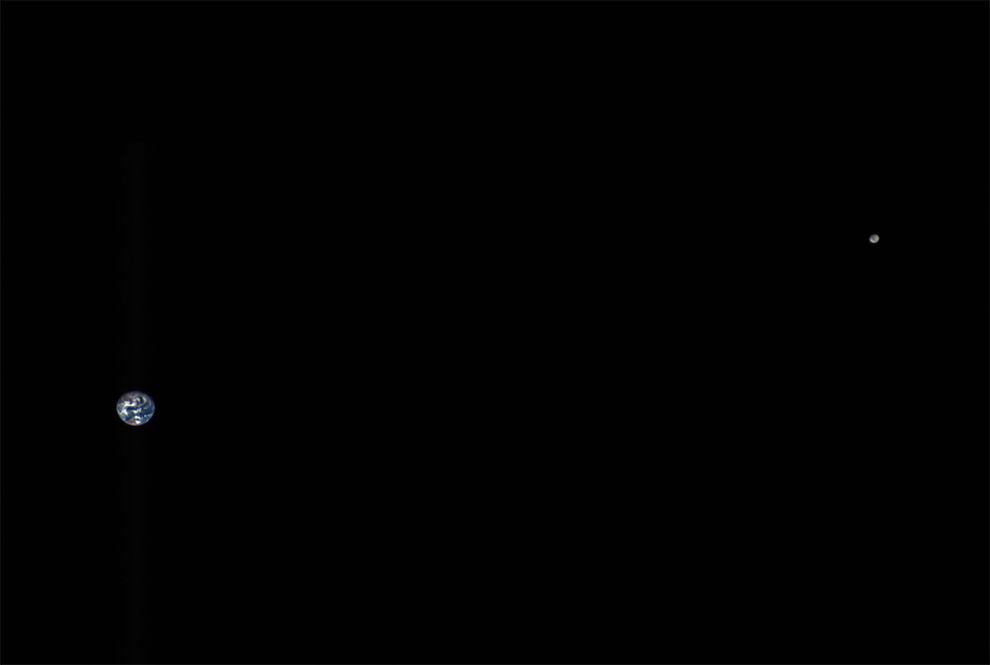
According to Newton's law of gravitation, the Earth and the Moon are gravitationally attracted to each other. The more massive Earth attracts the Moon with...
a stronger force than the Moon attracts the Earth.
a weaker force than the Moon attracts the Earth.
the same force as the Moon attracts the Earth.
a force that is sometimes stronger and other times weaker than the Moon attracts the Earth.
The acceleration due to gravity at pole and equator can be related as:
gp < ge
gp = ge = g
gp < ge = g
gp > ge
An iron ball and a wooden ball of the same radius are released from a height h in vacuum. They both take same time to reach the ground. The correct answer to above statement is based on :
Acceleration due to gravity in vacuum is same irrespective of size and mass of the body
Acceleration due to gravity in vacuum depends on the mass of the body
There is no acceleration due to gravity in vacuum
In vacuum there is resistance offered to the motion of the body and this resistance depends on the mass of the body
A stone is released from the top of a tower of height 19.6 m. Then its final velocity just before touching the ground will be:
384.16 m/ s
196 m/s
19.6 m/s
3841.4 m/s

