
 Worksheets
Earth Movements and Major Landforms
Total questions: 60
Worksheet time: 30mins

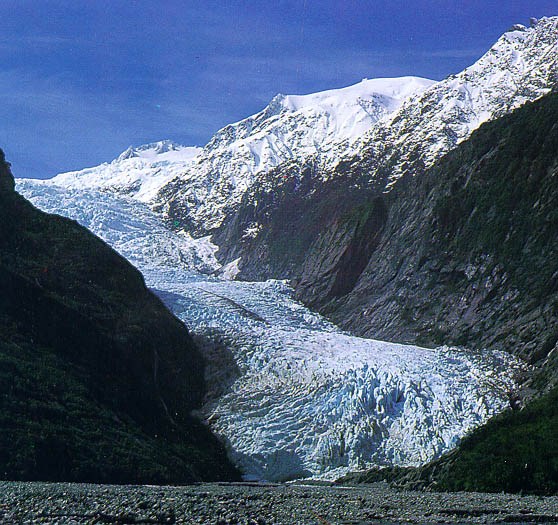
How is the mountain in the picture formed?
accumulation of magma, ash and cinder
formation of cracks and fissures
when land between two fault lines subsides
wrapping of Earth's crust
What is a dormant volcano?
molten rock
the center of a volcano
will never erupt again
a volcano that is sleeping, but could erupt agian
What is magma?
pieces of the Earth's crust
molten rock inside of a volcano
small rock
plates that meet
What is lava?
Molten rocks inside a volcano
Molten rock outside a volcano
small rocks
magma

Which is not the work of wind as an agent of erosion and deposition?
Mushroom rocks
Sand dunes
Loess
Arches
Which is not an erosional feature of sea waves?
Sea cave
Beaches
Cliff
Sea stacks
He proposed the Theory of Continental Drift
Alfred Wegener
Charles Richter
Thomas Richter
Issac Newton
The Experts who study the pattern of the Earthquakes are called ...........................
Scientists
Seismologists
Artists
Geologists
According to the Theory , A super continent called ............... broke into different continents
Permian
Jurassic
Pangaea
Cretaceous
Weathering . . .
breaks it
takes it
drops it
Our Earth always stays the same.
True
False
Select the slow changes to Earth's surface
weathering
landslides
erosion
floods
deposition
Which force acts in the Interior of the Earth
Endogenic Force
Exogenic Force
None of these
Both (A) and (B)
Which forces work on the surface of the Earth
Endogenic Force
Exogenic Force
None of these
Both (A) and (B)
Mt .......................... is a dormant volcano
Etna
Vesuvies
Kilmanjaro
none of these
................... is an Instruments which records the intensity of the Earthquake waves
Richter Scale
Seimograph
Barometer
none of these
The Richter scale was Invented in
1945
1935
1947
2006
Richter Scale was Invented by .........................
Charles Richter
Thomas Richter
Bobby Richter
The place of origin of an Earthquake is called
Epicentre
Focus
Waves
It is an Active Volcano
Mt Etna
Mt Vesuvius
Crater Lake
Active Volcanoes are
They erupt frequently and hurl out gases,ashes,lava and rocks
Those volcanoes which have not erupted from a long period
They are in-active and therefore called Dead volcanoes
Movement of the plates occur due to the various forces acting upon it Two broad caregories of these forces are .......................... and ..........................
Endogenic
Primary Waves
Exogenic
Surface Waves
......................... is the sudden shaking of the Earth's crust
Surface Waves
Earth Quake
Exogenic Shake
none of these
In 2001 massive Earthquake occured in
Bhuj (Gujarat)
Jammu and Kashmir
Chamoli (Uttarakhand)
Latur (Maharashtra)

WHERE IS THE RING OF FIRE LOCATED?
AROUND AFRICAN PLATE
AROUND PHILIPPINE PLATE
AROUND EURASIAN PLATE
AROUND PACIFIC PLATE

Study the picture
Below are the names of the plates found on the picture, put a check mark if you think the plate is a major plate (big in size).
Note: there are only seven major plates
Nazca Plate
Pacific Plate
Antarctic Plate
Indian Plate
Eurasian Plate

Study the picture
Below are the names of the plates found on the picture, put a check mark if you think the plate is a major plate (big in size).
Note: there are only seven major plates
North American Plate
Filipino Plate
South American Plate
Arabian Plate
Juan de Fuca Plate
Which of the following is an example of a major plate?
Caribbean Plate
Pacific Plate
Scotia Plate
Nazca plate

What causes the movement of plates?
Density and composition of rocks
Heat and Pressure underneath the Earth
Thickness of the crust
Age of rocks
Occurs when two tectonic plates move toward each other and collide
convergent boundary
subduction
volcanic eruptions
divergent boundary
the place where two different plates have contact.
Pacific Plate
Mountains
Earthquakes
Plate Boundaries
Major geological events that occur when plates shift suddenly and release stored energy; frequent occurrences along all types of plate boundaries
Volcano
Earthquakes
Tsunami
Tornado

The convergent movement happens when...
...2 plates move sideways with respect to each other.
...plates move apart.
...plates move towards each other.

An example of convergent movement is The Himalayas.
True
False

The divergent movement happens when...
...plates move apart.
...plates move towards each other.
...2 plates move sideways with respect to each other.

An example of divergent movement is The Mid-Atlantic Ridge.
True
False

The transform movement happens when...
...plates move towards each other.
...plates move apart.
...2 plates move sideways with respect to each other.

An example of transform movement is an Earthquake.
True
False
The volcanoes which are found in the Mediterranean Sea and Caspian Sea is known as the _______________.
Pacific Belt
Mid-World Mountain Belt
Atlantic Belt
Mediterranean Belt
Volcanoes are also found in convergent plate boundaries such as the __________________.
Mid-Continental Belt
Circum-Pacific Belt
Mid-Atlantic Belt

What part of a Volcano is Number 1?
Crater
Vent
Side vent
Pipe
Magma Chamber

What part of a volcano is number 2?
crater
vent
side vent
pipe
magma chamber

What part of a volcano is number 3?
Vent
side vent
crater
Magma chamber
Pipe
What part of a volcano is number 4?
Vent
Magma chamber
crater
Pipe
Side vent

What material that comes from a volcano is number 6?
Lava flow
Lava
magma
What part of a volcano is number 5?
Vent
Magma chamber
crater
Pipe
Side vent
What material that comes from a volcano is number 7?
Lava flow
Lava
magma

Identify the feature at A
Ash Cloud & Gases
Vent
Lava Flow
Crater
Magma Chamber
About 250 million years ago, the super massive continent was surrounded by a huge ocean called (a) .
Around 220 - 225 the Pangea began to break up and form _____________ and ______________.
(a)

