wayground logo

Free Printable Worksheets

Font size

S
M
L
XL
Worksheets

8.PS2.1 Study Guide

Total questions: 20

Worksheet time: 40mins

Name
Class
Date
1.

The electric force between two charges increases when

a)

both charges become negative.

b)

both charges become positive.

c)

the charges get closer together.

d)

the charges get farther apart.

2.

When the current in an electromagnet increases, what does its magnetic field do?

a)

changes direction

b)

does not change

c)

gets stronger

d)

gets weaker

3.

When a bar magnet moves in a wire loop, what does the wire loop produce?

a)

an electric current

b)

electrical resistance

c)

ferromagnetic elements

d)

magnetic domains

4.

Where on a magnet is the magnetic field the strongest?

a)

both magnetic poles

b)

center of the magnet

c)

magnetic north pole

d)

magnetic south pole

5.

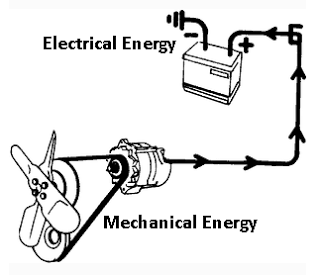
Which energy transformation occurs in a generator?

a)

electric energy to light energy

b)

electric energy to mechanical energy

c)

mechanical energy to electric energy

d)

thermal energy to electric energy
6.
What is formed when a wire in an electric circuit is wrapped around an iron core producing a magnetic field?
a)
electromagnet
b)
generator
c)
magnet
d)
electric motor
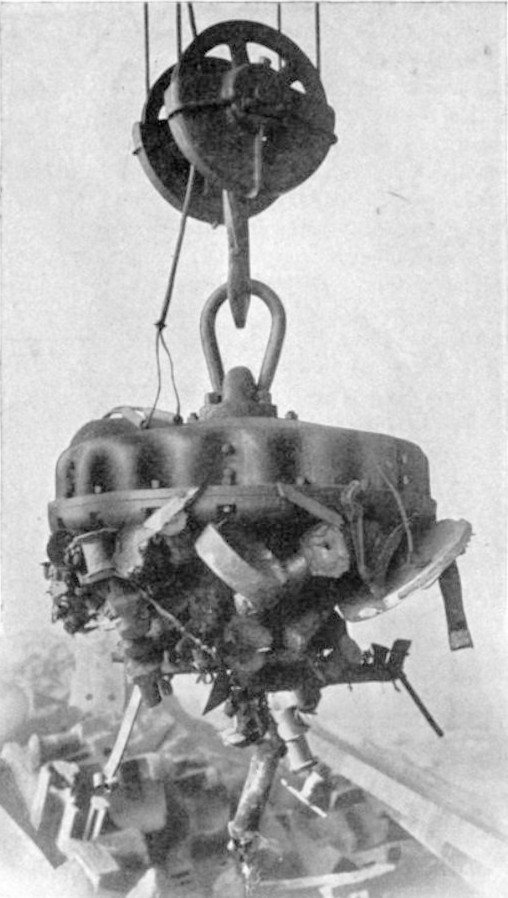
7.
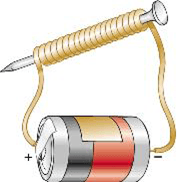
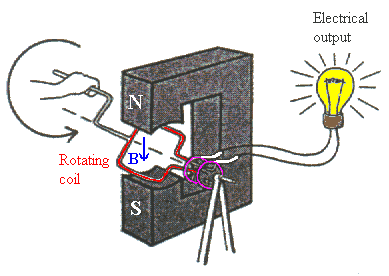
What is the device seen here?
a)
generator
b)
electric motor
c)
electromagnet
d)
magnet
8.
Generators are devices that convert _____ energy into _____ energy.
a)
chemical; mechanical
b)
mechanical; electrical
c)
electrical; mechanical
d)
potential; kinetic
9.
Electric motors are devices that convert _____ energy into  _____ energy.
a)
electrical; mechanical
b)
mechanical; electrical
c)
chemical; potential
d)
mechanical; kinetic
10.
Surrounding every magnet is a __________  __________.
a)
magnetic field
b)
electrical current
c)
another magnet
d)
an enemy
11.
What two forces are required for generators and electric motors to work? 
a)
magnetism and thermal 
b)
electricity and thermal 
c)
electricity and magnetism 
d)
magnetism and radiant 
12.
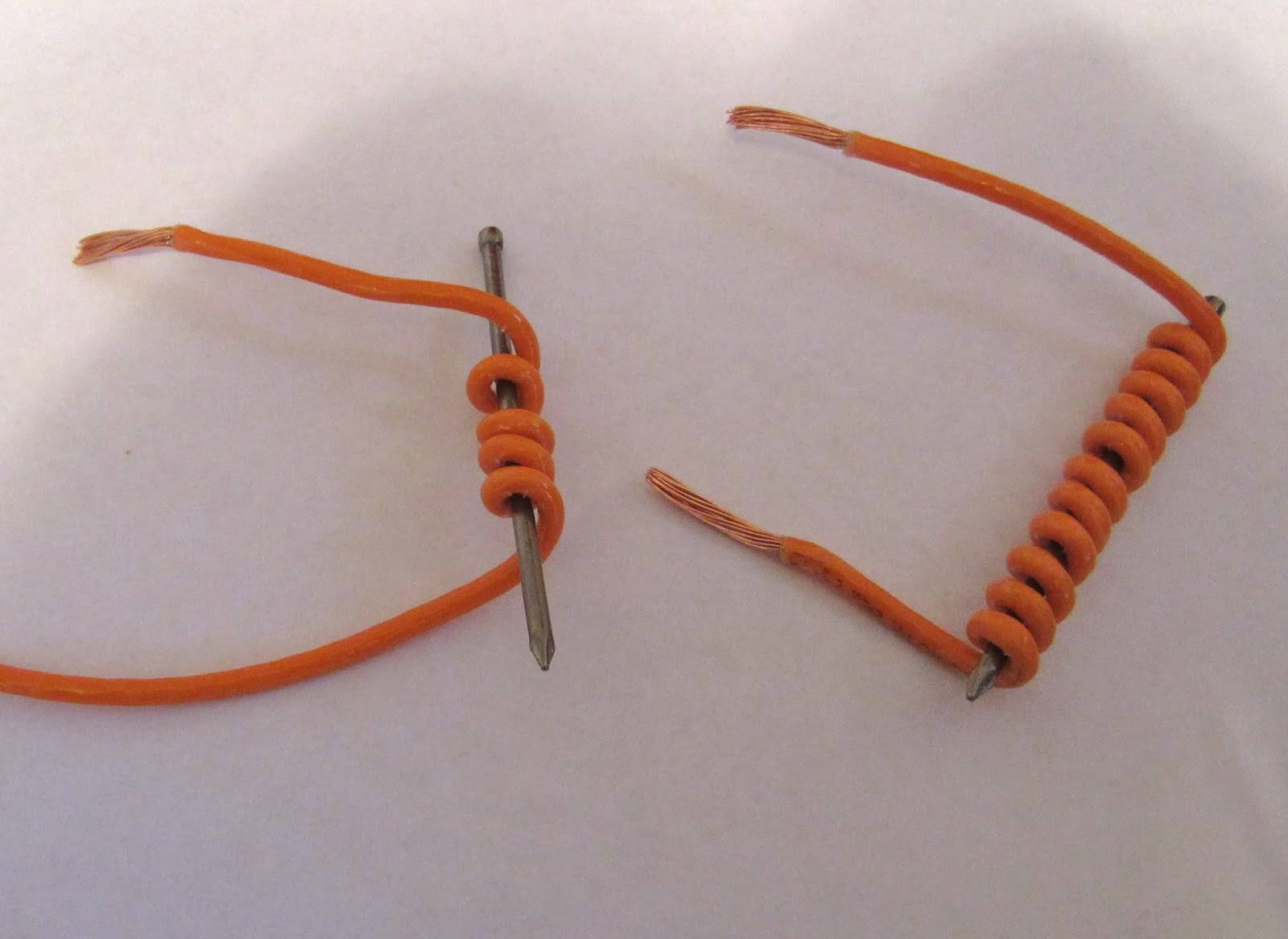
What can you use to make an electromagnet?
a)
Battery, nail and string 
b)
Battery, pencil and wire
c)
Wire, battery and iron ore (nail)
d)
Peanut butter, lampshade, hand sanitizer
13.
What happens to the strength of an electromagnet as you add more coils around it?
a)
Increases
b)
Decreases
c)
Stays the same
d)
Stops completely
14.
How are electromagnets different from magnets?
a)
magnets can be turned on/off
b)
you can turn an electromagnet on/off
c)
magnets are more powerful
d)
magnets have a North and South pole
15.

What is the transfer of energy in when you plug in a motor and it spins?

a)

chemical to mechanical

b)

electrical to mechanical

c)

mechanical to electrical

d)

physical to potential

16.
What energy do you put IN to a generator?
a)
Mechanical
b)
Electrical
c)
Thermal
d)
Potential
17.
What type of energy comes OUT of a generator?
a)
Mechanical
b)
Electrical
c)
Thermal
d)
Potential
18.
Which of these is NOT a part of a DC Generator.
a)
Slip rings
b)
commutator 
c)
brushes
d)
stator
19.

In an electric motor, a force is applied to the electromagnet by

a)

a battery

b)

a commutator

c)

an electric current

d)

a permanent magnet

20.

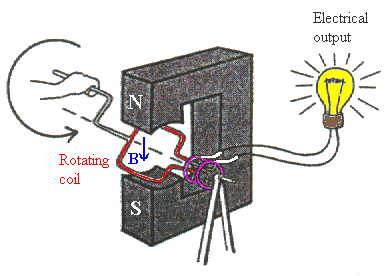
Many bicycles have generators that have a light that can be powered without a battery. Currently, no electric current is flowing through the circuit shown. What needs to happen to cause an electric current to flow through the circuit?

a)

A smaller wire needs to be used.

b)

A bigger light bulb needs to be used.

c)

The magnet's north pole needs to point up.

d)

The magnet needs to be in constant motion.