
 Worksheets
Computer Programming - Algorithm & Flowcharting - 1
Total questions: 45
Worksheet time: 15mins
Algorithm is a
Step by step procedure
difficult procedure
complex
hard steps
Flowchart are ____________________________ in nature.
Easy
Simple
Complex
Hard
We use different boxes in
steps
flowchart
algorithm
quiz
____________________________ must be organized properly.
Puzzle
Quiz
Flowchart
Algorithm
We use this in the beginning of an Algorithm & Flowchart.
Start box
Stop box
Decision
Flowlines
_____________ is used to join the different shapes in a flowchart .
Flowlines
Connectors
Start
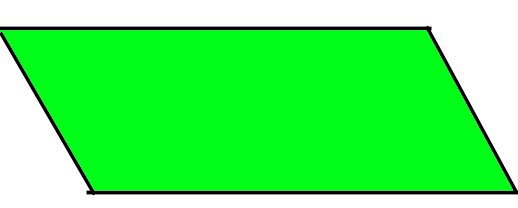
In a Flowchart this symbol is used for which purpose?
Input
Output
Input and Output
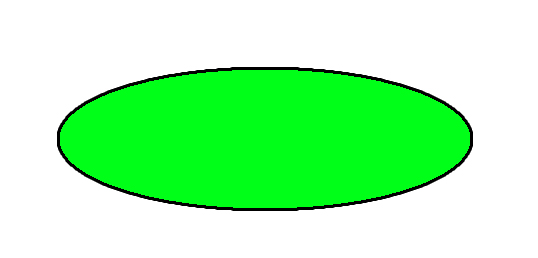
where is this symbol used in a Flowchart?
In the beginning
At the end
Both in the beginning and end

This shape is used to perform__________
Calculations
Processing
Both

Identify the symbol used in flowchart______
Decision box
Comparison box
Both

This symbol can be used for writing______
INPUT A,B
Correct
Incorrect
May be correct

This box can be used to write_____
IS A> B
Correct
Incorrect
May be correct
The diagrammatic representation that illustrates the steps for the solution of a problem is called_______
Algorithm
Flowchart
None
The ________ are used to connect one part of the flowchart to another.
Flow Lines
Arrows
Connectors
This type of algorithm involves repeating instructions.
Sequence
Selection
Iteration/Looping
This type of algorithm involves instructions done one after another.
Sequence
Selection
Iteration/Looping

What type of algorithm is in this story?
Sequence
Selection
Iteration/looping

What type of algorithm is shown in this story?
Sequence
Selection
Iteration/looping
Hammering a nail into the wall would be an example of
Sequence
Selection
Iteration/Looping
Deciding to wear a jacket or not to school would be an example of
Sequence
Selection
Iteration/looping

Keep repeating a part of a flowchart with this construct
loop
algorithm
document
diamond

What are the multiple way algorithms can be represented?
Natural language, like English
Visually, using flowcharts
Actual executable code (a program that runs on the computer)
All of these
The advantages of programmers writing an algorithm in natural language, like English, and/or a flowchart is because
They’re easier to understand.
They’re flexible.
They’re less complex.
All of these
Before a programmer start to solve a computing problem, it’s important to plan by identifying the series of steps that the code needs to follow. This is called
algorithm processing
execution
flowcharting
algorithmic thinking
The information put into computer can be in ___languages
machine languages
assembly language
high-level language
all of these
There are some special languages used to communicate with the computer.
CPU, Keyboard, mouse etc
COBOL, CPU, Keyboard
COBOL, FORTRAN, C++ etc.
A __ language is very difficult to understand
Machine
Assembly
C
C++
Assembly language is a combination of ___ language and ___
high level , mnemonics
assembly, mnemonics
binary, mnemonics
A high-level language is one in which ___ alphabets, numbers and codes are used
Urdu
Persian
Arabic
English
____ is used to deal in business applications
FORTRAN
COBOL
C
C++
I am use to translate High Level Language program into machine language
Interpreter
translator
assembler
___ are certain codes that understand by the computer
code
mnemonics
COBOL
___ is used to deal the science related work.
FORTRAN
COBOL
C++
none
In binary code 0 represents ___ and 1 represents __.
OFF , ON
OPEN , CLOSE
CLOSE, OPEN
ON, OFF
What is Binary Language?
A language made of 1's and 0's
High level and low level language
Assembly Language
None of them
A _______ is a set of instructions, that tells the computer what to do.
Program
Compiler
Assembler
Translator
A program written in high level language is called ______
Object
Assembler
Source program
Java language is the example of _________ languge
First generation
Second generation
High level
________________ is the process of writing specific instructions in a computer language.
Linking
Programming
Processing
Identify the low level languages.
3GL
4GL
Machine language
Assembly Language
__________ translate programs written in Assembly language into Machine Language.
Compilers
Translator
Assemblers

The only language understood by the digital devices is...
assembly language
linking language
translation language
machine language
A/an __________ converts a high level language program into machine language,line by line.
Assembler
Compiler
Interpreter
Which computer language does not require any translation?
Machine Language
Assembly Language
High-Level Language
Fourth-Generation Language

