
 Worksheets
7th Grade Social Studies Marathon!
Total questions: 102
Worksheet time: 36mins
Who was the founder of Islam?
Abraham
Jesus
Muhammad
Gabriel
Before Islam, the region was split into:
Nomadic tribes
Political Parties
Religious tribes
Pagans
After Muhammad died, Islam was split into two main groups. name one.
(a)
The Muslims had to pay a tribute to what city?
Medina
Jerusalem
Mecca
None of the above
What was the first Muslim dynasty?
The Abbasids
The Sasanians
The Umayyads
The Byzantines
Are you sure that you understand this topic?
Yes
No
I'm not sure
What are major areas of Islam?
The Middle East
China
North Africa
Egypt
The Americas
Arabia's climate was very...
(a)
What are the Five Pillars?
The five basic obligations that Muslims are supposed to meet in their lives.
The first five books of the Quran.
The five basic beliefs shared by Jews, Christians, and Muslims.
The five columns that support the roof of the Ka’aba.
What issue led to the split between the Sunni and Shia in Islam?
The Shia believe only Arabs could be Muslims.
They disagreed over who should lead the Muslim community after Muhammad's death.
Arguments began over what should be included in the five pillars.
The Shia wanted to change the direction of prayer to Jerusalem rather than Mecca.
Identify the three main religions that began in the Middle East?
Judaism, Christianity, Islam
Judaism, Christianity, Hinduism
Islam, Hinduism, Buddhism
Buddhism, Shintoism, Hinduism
What city is holy city for Jews, Christians and Muslims?
Mecca
Bethlehem
Jerusalem
Medina

What religion did the Ottoman Empire help spread throughout their empire?
Buddhism
Christianity
Shintoism
Islam
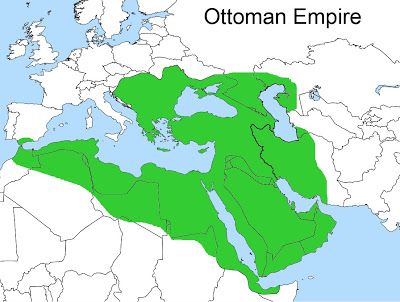
Which continents did the Ottoman Empire have some control over? Click all that apply.
Europe
Asia
Africa
North America
South America
____ were an elite guard of Ottoman soldiers.
Janissaries
Ulema
Uashas
Sinans

Western Europe is made up of rivers and flat land. How did this geography shape people's lives?
Western Europe had excellent farmland and grew many crops
Western Europe only grew oranges and grapes
Western Europe raised only certain types of animals
Western Europe only had trees and woodpeckers

How do missionaries spread Christianity?
Missionaries stay isolated and in a monastery
Missionaries travel from place to place

What physical features made it possible for Vikings to invade?
Access to mountains
Access to rivers and flatlands
None of the above

What were Charlemagne's feelings towards Christianity?
Charlemagne felt everyone should not become Christian
Charlemagne made everyone he conquered become Christian
Charlemagne did not care what religion anyone practiced

Describe Charlemagne's relationship with the church.
The Pope denied Charlemagne entry into the church
Charlemagne heavily disagreed with Christianity
The Pope crowned Charlemagne for spreading Christianity

What does a vassal provide their lord?
A vassal provides their lord crops and services
A vassal provides their lord protection from invaders
A vassal provides their lord with a fief (land)
What makes knights and samurai similar?
Both are paid with land
Both provide protection
Both believe in Christianity
A and B are correct

Which term is similar in its meaning to the Japanese word Bushido?
Vassal
Bravery
Manor
Chivalry

What is life like on the manor? What do we see on a manor?
serfs and peasants who work the land
churches, castles, and villages for workers
nobles protect the peasants
all of the above
What contributed to the spread of Christianity in Europe was by being outpost for missionary work?
The Black Death
Jesus
monasteries
The Great Schism
Roads
The increasing role of Roman Catholicism in Europe was likely a result of---
John the Baptist
the unifying of the Frankish kingdom by King Clovis
the use of Latin in church services
the decline of education
The legal precedent of no leader may be above the law of the land, was established by ---
King Carol, the Magna Carta 1512
King Magma, the Magenta Magic 1492
King Cartel, the Carta of the Magic 1198
King John, the Magna Carta 1215
Two results of the interaction of Jews, Christians and Muslims in medieval Spain
was —
A Golden Age of science and trade
A Golden Age of trade and War
Trade formations and Bibles
The Golden Age of televison and smart phones
Under the manorial system, ____________ were required to provide ___________ with protection.
Vassals : Knights
Serfs: Nobles
Nobles : Serfs
Kings : Nobles
The medieval Church was a unifying force in Europe after the fall of Rome because it offered —
multiple sets of beliefs
redistribution of wealth
stability and security
indulgences for sinners
Which of Justinian’s actions reflects the close connection between church and state in the Byzantine Empire?
He was crowned head of the church by the Pope.
He relocated the capital from Rome to Byzantium.
He developed and published Christian tenets.
He built large churches such as the Hagia Sophia.
Which social group of European feudal society gave knights Fiefs to protect their land?
serfs
vassals
Nobles
Merlin
For early Christians following Church teachings involved observance of —
holy sacraments
eightfold rituals
pillars of faith
golden rules
Which statement BEST describes the role of the emperor of Japan during the feudal period?
The emperor was seen as a god.
The emperor had absolute control of Japan
The emperor was a cruel dictator who ruled harshly.
The emperor had limited control while the shogun ruled the empire.
What item did peasants give to samurai and daimyo in exchange for protection?
crops they grew
money they made
clothing they produced
children they sold into slavery
What did knights receive in exchange for their pledge of loyalty to a lord?
a sword
a holy relic
an indulgence
a fief (land and title)
What caused the growth of feudalism in Europe during the Middle Ages?
the unification of European rulers
the rivalry between the ancient empires
the decline of the Roman Catholic Church
the collapse of a strong central government
What role did monasteries play in Europe during the Middle Ages?
refusing to help the sick and less fortunate
encouraging people to live a life of extravagance
preserving of sacred Islamic writings and knowledge
preserving of sacred Christian writings and knowledge
What item(s) did the monks reproduce in the scriptorium?
armor for Knights
wood-block paintings
hand-made maps of Europe
hand-made copies of the Bible

The First Crusade had the intended goal of capturing which city?
Jerusalem
Cairo
Mecca
Rome

Which of the following was a lasting effect on Europe as a result of the Crusades?
many Muslims moved to Europe
many Europeans converted to Islam
Europe became more isolated
trade between Europe and the East increased

Who was forced to sign the Magna Carta?
King John
Pope Leo III
Charlemagne
Julius Caesar

Who united western Europe after the fall of the Roman Empire?
Justinian
King John
Charlemagne
Henry VIII

What emperor of the Byzantine Empire developed a code of laws and had the Hagia Sophia constructed?
Justinian
Charlemagne
King John
Henry VIII

What did the Magna Carta accomplish?
it limited the power of the lords
it limited the power of knights
it increased the power of peasants and serfs
it limited the power of the monarch (king)

What event divided the early Christian church in Europe into a Western and Catholic half and an Orthodox and Eastern half?
the Protestant Reformation
the Renaissance
the Great Schism
the Plague
Civilization in Ancient China settled and started cultivating rice along what river?
Indus River
Tigris River
Nile River
Huang He / Yellow River
During the Qin Dynasty, the ruler Shi Huang-di began construction of the..
Great Wall
Pyramid of Giza
Ziggurat Temple
Fleet of Zheng he
During the han dynasty, they traded with the roman empire becoming very wealthy and powerful because of what main export?
Cotton
Wheat
Silk
Gold
The rulers of ancient china believed that they were destined to rule by the ___________.
Masters of kung fu
Eightfold Path
Mandate of Heaven
Mandate of Pharaohs
Confucianism focused on
Following the vedas of hinduism
The yin and yang
worshipping more than one god
Respecting rulers and elders
The ancient Chinese were able to flourish independently, and without much interference from outsiders due to...
their reputation and strength as a military power
the outsiders not wanting what the Chinese had
their geography providing many natural barriers
their rivers being very difficult to navigate
What does the word "samurai" mean?
"to protect"
"to serve"
"to defend"
"to forgive"
Why have the Japanese relied on rice and the sea for their food throughout their history?
seafood and rice are important to Buddhism
seafood and rice are high energy foods, needed by the Japanese people
seafood and rice are plentiful in Japan, making inexpensive foods
seafood is easily available to the small island nation of Japan, and rice grows well in the coastal areas
M. Luther nailed a list of 95 theses to the door of Wittenburg Castle Church. What are "theses"?
Doctrines
supplies
questions
M. Luther's intent in posting his theses was:
To start his own religion
To start a political revolution
To force the Church to excommunicate him
To reform the Catholic Church
The removal of penance for sins that have been forgiven:
indulgences
simony
penance
bribery
Selling indulgences was a bad idea because:
Jesus specifically said not to do that.
Only rich people could afford it.
It deprived rich people of genuine reconciliation.
It caused an armed uprising of oppressed serfs.
M. Luther thought people could reach heaven through _____ alone.
deeds
words
scripture
faith
The Church eventually excommunicated M. Luther. That meant:
He could go to Mass, but not receive sacraments.
He was totally kicked out of the Church: no sacraments!
He could receive sacraments privately, but not in public.
He could receive communion, but not reconciliation.
M. Luther translated the Bible into:
Latin
English
French
German
Italian
Invented the printing press:
Gutenberg
Mendel
daVinci
Luther
English King Henry VIII broke away from the Church so he could give himself:
a promotion
a divorce
a better passport
a tax break
The Church of England is also known as the _____ Church.
Presbyterian
Eastern Rite Catholic
Anglican
Saxon
The first book printed on the new printing press?
the Bible
the phone book
the dictionary
the Target Christmas Catalog
The Council of ______ took 18 years to complete, but resulted in good reforms.
Constantinople
Nicea
Trent
Rome
The Catholic Church celebrates ___ sacraments.
3
5
7
9
In response to the Reformation, the Church decided all Masses would be said in:
Latin
Greek
English
Italian
Select all the true facts about the Black Death
Spread by rats and fleas
Boils formed under armpits
People blamed God
Killed 2 thirds of Europeans
Which country did the Renaissance start in?
England
France
Italy
Germany
Who held the most power in Europe?
The emperor
The pope
The king
The people
A government led by a religious leader
Monarchy
Democracy
Republic
Theocracy
Invention that helped spread information
Printing Press
Mail service
Pigeon Carrier
Typewriter
English playwright famous for his stories
Dante
Shakespeare
Machiavelli
Lorenzo Medici
Belief that humans are good and important
Imperialism
Nationalism
Humanism
Individualism
Select all of the Renaissance artists
Leonardo Da Vinci
Michelangelo
Raphael
Donatello
Which of these statements describes a change brought about by the Renaissance?
Society was dominated by the church.
Society began to value individualism.
Society was focused on warfare.
Society was dominated by lords.
Developments in cartography made it easier for explorers in their travels to new lands. Which of the following best describes cartography?
the study of the Earth's natural processes
the study of the Earth's weather patterns
the study and practice of making maps
the study of past human societies

• Venetian explorer who visited the court of Kublai Khan
• One of the first Westerners to travel the Silk Road to China
• Travels increased the interest of Europeans in the lands of the East
Who is described above?
Marco Polo
Ferdinand Magellan
Vasco da Gama
Christopher Columbus
• Botticelli • Michelangelo
• Raphael • Titian
All of the above were famous Renaissance
scientists.
philosophers.
priests.
artists.
During the Renaissance, a new intellectual movement known as humanism evolved. What was the significance of the humanist movement?
Humanists felt formal education was impractical and unnecessary; therefore, many schools were closed.
Humanists spread the teachings of Eastern philosophers such as Confucius throughout Europe.
Humanists were very interested in religious studies and sought to increase the influence of the Church.
Humanists were inspired by classical texts and emphasized the dignity and worth of the individual.
Which of these changes occurred during the Renaissance?
The Church was all-powerful.
The Church’s power declined.
Factories began using electricity.
Women gained equal rights with men.
• Nicolaus Copernicus
• Galileo Galilei
• Tycho Brahe
• Johannes Kepler
All of the above were famous Renaissance
philosophers.
priests.
artists.
scientists.
What was Niccolò Machiavelli's main argument in his work The Prince?
A ruler should do whatever is necessary to maintain power.
A ruler should follow all of the teachings of the Catholic Church.
A ruler should make his subjects as happy as possible.
A ruler should strive to maintain equality and fairness.
Which of these statements reflects an influence of the Renaissance?
dominance of the church
constant feudal warfare
lack of any governance
increased interest in the arts

• Gunpowder
• Printing press
• Compass
All of the above were results of what in the Renaissance?
the move toward using money
a shift from science to religion
an increased interest in the arts
an increase in scientific inquiry

