
Font size
 Worksheets
Open Up Resources Mid-Unit 1 Test Review
Total questions: 40
Worksheet time: 40mins

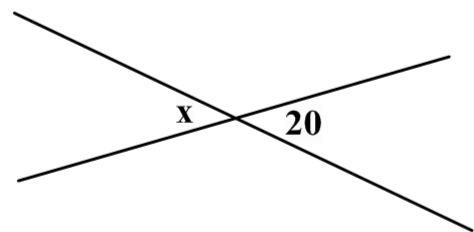

If m∠1 = 30°, then m∠2 =
30°
60°
150°
undetermined

Identify the transformation.
Reflection over the y-axis
Reflection over the x-axis
180 Rotation
Translation 2 units down

Is the picture being reflected across the y-axis or x-axis?
y-axis
x-axis

Which answer shows a reflection across the x-axis?
a (top left)
b (bottom left)
c (top right)
d (bottom right0

What happened to the shape?
Rotation
Reflection
Translation

What type of transformation is this?
Rotation
Reflection
translation

Describe the transformation from the blue triangle onto the red triangle.
Translation 5 units right and 3 units down
Rotation 90° clockwise about the origin (0, 0)
Reflection across the y-axis
Rotation 90° clockwise about point a, then a translation 4 units to the right

What type of transformation is this?
Rotation
Reflection
Translation
Enlargement


Where would A' be if you translated A 3 units to the right and 4 units down?
(-4, 4)
(-1, 0)
(0, -1)
(2, -1)

Is the first figure a rigid transformation of the second figure?
Yes, they maintain side lengths and angle measures.
No, because the transformation didn't maintain side lengths.
No, because the figures didn't maintain angle measures.
Yes, they are the same shape and size.

What sequence of transformations will get you from ΔBCD to ΔB"C"D" ?
Rotation, then rotation
rotation, then dilation
translation, then reflection
reflection, then rotation

Zach and Naomi are studying geometric transformations. Zach is able to move the triangle A to A′ using the following sequence of basic transformations:
1. Reflection across the x-axis.2. Reflection across the y-axis.
3. Translation two units to the right.
Naomi claims that the same three transformations, done in any order will always produce the same result. Zach disagrees. Who is correct?
Zach
Naomi
Both are correct
Both are incorrect
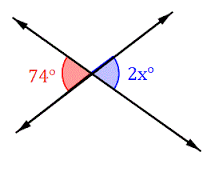

The image shows what type of transformation
Rotation 90° counterclockwise about the origin (0, 0)
Translation 2 units down
Reflection across the x-axis
Reflection across the y-axis

What phrase could you add to the description of the rigid transformation to make it more specific?
"This is a reflection..."
across the x-axis
90° clockwise around the origin
across the y-axis
4 units to the right


The center of rotation is the origin (0, 0). What is the angle of the clockwise rotation?
45°
90°
180°
270°

Triangle A is rotated 270° clockwise with the origin as the center of rotation to create a new figure. Which triangle shows the new location?
A
B
C
D

What type of transformation is this?
Rotation
Reflection
Translation
Enlargement


This point is translated 3 right and 2 down. Which diagram shows the new position of the point?


What sequence of transformations will map trapezoid A to its image A'?
Reflection, then translation
Rotation, then translation
Reflection, then rotation
Rotation, then dilation
Rigid Transformations will always maintain and preserve ALL of the following EXCEPT...
size and shape
angle measurements
location and orientation
area and perimeter
parallel lines

What type of transformation takes quadrilateral B to quadrilateral A?
Translation up and to the right
Reflection across line l
Rotation by 180° around the point between the two quadrilaterals
Rotation by 90° clockwise around the point where A and B touch

If you were to describe a translation of triangle ABC, what information would you need to include in your description? Select ALL that apply.
Direction of the Translation
Number of Units Moved in the Translation
Line of Translation
Degree of Translation

If you were to describe a rotation of triangle ABC, what information would you need to include in your description? Select ALL that apply.
Line of Rotation
Degree Angle of Rotation
Direction of Rotation
Center of Rotation

If you were to describe a reflection of triangle ABC, what information would you need to include in your description? Select ALL that apply.
Direction of Reflection
Degree of Reflection
Point of Reflection
Line of Reflection

Name a segment whose length is the same as segment CO.
Segment AO
Segment B'O
Segment C'O
Segment A'C'

What is the degree measure of angle AOC'?
(a)

Triangle ABC has be reflected across line AC to form quadrilateral ABCD. What is the length of segment CD?
2.7
64.3
3.2
5.9

Triangle ABC has be reflected across line AC to form quadrilateral ABCD. What is the measure of angle CDA?
2.7°
64.3°
3.2°
25.7°

Triangle ABC has been rotated 180 degrees using midpoint M as a center to form quadrilateral ABCE. What is the length of segment EC?
2.7
64.3
3.2
5.9

Triangle ABC has been rotated 180 degrees using midpoint M as a center to form quadrilateral ABCE. What is the measure of angle CEA?
2.7°
64.3°
3.2°
25.7°

