

wayground logo

Free Printable Worksheets

Font size

S
M
L
XL
Worksheets

Heat- Physics

Total questions: 73

Worksheet time: 2hrs 54mins

Name
Class
Date
1.
There are four cups of hot cocoa. The cup sizes are shown. The temperature of the cocoa in each cup is 25 degrees celsius. Which cup has the MOST thermal energy?
a)
Large cup (Trenta)
b)
Small cup (Tall)
c)
Venti
d)
All three are the same temperature so they have same thermal energy
2.
What would be the effect on the particles if more heat is supplied to the system?
a)
They would slow down
b)
They would stop moving
c)
They would speed up
d)
There would be no effect
3.
The specific heat is the amount of energy needed to raise the temperature one degree Celsius of 1 gram of a substance.
a)
True
b)
False
4.
Using the heat equation, what would the formula look like if we were solving for change in temperature?
a)
Q m = ∆T Cp
b)
Q / (m Cp)  =  ∆T
c)
Q m / Cp  =  ∆T
d)
m c Q  =  ∆T
5.
What is the symbol for Thermal Energy?
a)
Q
b)
T
c)
m
d)
Cp
6.
What unit do you use to measure Thermal Energy?
a)
J/Kg ºC
b)
Kg
c)
ºC
d)
J
7.
A high specific heat means...
a)
It heats up quickly with energy added
b)
It requires more energy to change temperature
8.

What is a conductor?

a)

a material that heat moves through easily

b)

a material that heat does not move through easily

c)

a material that turns cold when heated

d)

a tool for measuring temperature

9.

What is an insulator?

a)

a material that heat moves through easily

b)

a material that heat does not move through easily

c)

a material that turns cold when heated

d)

a tool for measuring temperature

10.

Which of these is a measure of how hot or cold something is?

a)

temperature

b)

radiation

c)

insulation

d)

friction

11.

The tool used to measure temperature is called a/an

a)

insulator

b)

conductor

c)

thermometer

d)

radiation

12.
Heat is a form of _______________.  
a)
movement
b)
energy
c)
melting
13.
When things are hot molecules are moving...
a)
Fast
b)
Slow
c)
They are not moving
d)
They are moving by not fast or slow
14.
When things are cold molecules are moving...
a)
Fast
b)
Slow
c)
They are not moving
d)
They are moving by not fast or slow
15.
Everything has heat
a)
True
b)
False
16.
Heat and Temperature are the same thing
a)
True
b)
False
17.
Heat that is transferred because of touching is called...
a)
Radiation
b)
Conduction
c)
Convection
d)
Reflection
18.
Energy that does NOT need a medium to transfer heat is called...
a)
Radiation
b)
Conduction
c)
Convection
d)
Reflection
19.
Energy that does need a medium (usually air or water) to transfer heat is called...
a)
Radiation
b)
Conduction
c)
Convection
d)
Reflection
20.
Heat passes from...
a)
High to low
b)
Cold to hot
c)
Hot to cold
d)
Heat cannot be passed
21.
Why do objects cool down?
a)
All heat will slowly be destroyed.
b)
The cold attacks the heat.
c)
Heat is always transferring so the heat will always move to a cooler place.
d)
The heat disappears.
22.
heat energy traveling through space is an example of _____
a)
convection
b)
density
c)
radiation
d)
conduction
23.

What letter is used to represent specific heat capacity?

a)

H

b)

P

c)

C

d)

T

24.
What is Specific Heat?
a)
The  amount of thermal energy required to increase the temperature of 1kg of a material by 1°C.
b)
The  amount of radiant energy required to increase the temperature of 1kgof a material by 1°C
c)
The  amount of energy required to increase the temperature of 1kgof a material by 1°C.
d)
The  amount of friction  required to increase the temperature of 1kgof a material by 1°C.
25.
A high specific heat means...
a)
It heats up quickly with energy added
b)
It requires more energy to change temperature
26.
What  is the formula to calculate heat energy required to raise the temperature of any substance?
a)
Q=mc∆t
b)
Q=mc
c)
Q= ½mv
d)
m=QC
27.
___________ is measured by the unit Joules.
a)
Heat energy
b)
Temperature
c)
Specific heat
28.
Specific heat of water is  4.18 J/g°C. Specific heat of wood is 1.760 J/g°What material needs more heat energy to raise the temperature?
a)
Water
b)
Wood
c)
Both are same
29.
Copper, Stainless Steel, Carbon Steel, and Zinc were all heated using the same thermal energy.  What material would be the coolest after being heated?
a)
Copper
b)
Carbon Steel
c)
Zinc
d)
Stainless Steel
30.
If an object has greater mass, it has greater
a)
Temperature
b)
Thermal Energy
c)
Heat 
d)
All of the above 
31.
Heat is the movement of ______.
a)
radiation
b)
thermal energy
c)
cold
d)
fire
32.
Thermal energy ALWAYS moves from _____ to _____.
a)
solid to liquid
b)
ice to water
c)
hot to cold
d)
solid to gas
33.
Heat moves by ______ when it travels through waves.
a)
radiation
b)
conduction
c)
insulator
d)
convection
34.
If 200 grams of water is to be heated from 24.0° C to  100.0° C to make a cup of tea, what is the mass and what is the change in temperature?
a)
m=200g
∆t= 66
b)
m=200g
∆t=124
c)
m=200
∆t=100
d)
m=200g
∆t=76
35.

The equation for calculating the energy involved in a substance being heated is Q = mCΔT. The correct expression for calculating ΔT is

a)

=Qm ×C=\frac{Q}{m\ \times C}

b)

= m ×CQ=\ \frac{m\ \times C}{Q}

c)

= m ×QC=\ \frac{m\ \times Q}{C}

d)

= C × Qm=\ \frac{C\ \ \times\ Q}{m}

36.

What are the accepted units for specific heat capacity?

a)

J/g * C

b)

J/g

c)

g/J * C

d)

J

37.

In heat capacity equations, what does the triangle represent?

a)

Temperature

b)

energy

c)

mass

d)

change in

e)

change in temp

38.

The heat absorbed by melting a solid is known as

a)

heat of fusion

b)

heat of solid

c)

heat of liquid

d)

heat of vaporization

39.

The amount of heat needed to change 1 gram of a substance from the liquid phase to the gas phase is ___

a)

Heat of Vaporization

b)

Boiling point

c)

Heat Energy

d)

Phase change

40.

How much heat must be lost to change of 110 grams of water at 0 ºC to 110 grams of ice at 0ºC? Heat of fusion = 334 kJ/kg; Specific heat of water = 4186 J/kgoC

a)

Q = 110 x 4186

b)

Q = 110000 x 4186

c)

Q = 0.110 x 334

d)

Q = 110 x 334

41.

If the specific heat of water is 4,186 J/kg°C, how much heat is required to increase the temperature of 1.2 kg of water from 23 °C to 39 °C?

a)

Q = 1.2 x 4186

b)

Q = 1.2 x 4186 x 7

c)

Q = 1.2 x 4186 x 17

d)

Q = 0.0012 x 4186 x 17

42.

The equation for calculating the energy involved in a substance being heated is Q = mCΔT. The quantity with joules as units is

a)

Q

b)

m

c)

C

d)

ΔT

43.

The equation for calculating the energy involved in a substance being heated is Q = mCΔT. The correct expression for calculating m is

a)

 =QΔT×C=\frac{Q}{\Delta T\times C} 

b)

 = ΔT ×CQ=\ \frac{\Delta T\ \times C}{Q} 

c)

 = ΔT ×QC=\ \frac{\Delta T\ \times Q}{C} 

d)

 = C  × QΔT=\ \frac{C\ \ \times\ Q}{\Delta T} 

44.

The equation for calculating the energy involved in a substance being heated is Q = mCΔT. The correct expression for calculating C is

a)

 =QΔT×m=\frac{Q}{\Delta T\times m} 

b)

 = ΔT ×mQ=\ \frac{\Delta T\ \times m}{Q} 

c)

 = ΔT ×Qm=\ \frac{\Delta T\ \times Q}{m} 

d)

 = m × QΔT=\ \frac{m\ \times\ Q}{\Delta T} 

45.

The equation for calculating the energy involved in a substance being heated is Q = mCΔT. The quantity m has units of

a)

kg

b)

g

c)

J/kg

d)

oC

46.

The equation for calculating the energy involved in a substance being heated is Q = mCΔT. The quantity C has units of

a)

J/kgoC

b)

kg/JoC

c)

J/kg

d)

kJ/kg

47.

The equation for calculating the energy involved in a substance being heated is Q = mCΔT. The quantity T has units of

a)

s

b)

g

c)

J/kg

d)

oC

48.

The equation for calculating the latent involved in a substance being heated is Q = mL. The quantity with joules as units is

a)

Q

b)

m

c)

L

49.

Energy of motion

a)

Thermal

b)

Stored

c)

Kinetic

d)

Potential

50.

Energy that is stored

a)

Electric

b)

Kinetic

c)

Potential

d)

Radiant

51.

Hot air rising is an example of

a)

Conduction

b)

Convection

c)

Radiation

d)

Friction

52.

State of matter where particles are tightly packed and move very little.

a)

Solid

b)

Liquid

c)

Gas

d)

Plasma

53.

State of matter in which particles are free to flow over each other and take the shape of their container

a)

Solid

b)

Liquid

c)

Gas

d)

Plasma

54.

Measure of the average kinetic energy of a substance

a)

Total Thermal Energy

b)

Heat Exchange

c)

Temperature

d)

Total Internal Energy

55.

The United States is one of the few countries that measures heat in degrees Fahrenheit.

a)

True

b)

False

56.

The process of changing a gas to a liquid

a)

Freezing

b)

Boiling

c)

Condensation

d)

Melting

57.

The state of matter that has the most kinetic energy

a)

Soild

b)

Liquid

c)

Gas

58.

Two objects with different temperatures are placed together. Heat transfer will continue until the temperatures are the same. This is called

a)

Balancing equations

b)

Thermal equilibrium

c)

Impossible

d)

Total Heat

59.

The movement of energy from one system to another

a)

Energy Transfer

b)

Radiation

c)

Friction

d)

Temperature

60.

What is the specific heat capacity of water?

a)

1 J/g * C

b)

2.245 J/g * C

c)

8.148 J/g * C

d)

4.184 J/g * C

61.

The condition where two substances in physical contact with each other exchange no heat energy. They are said to be the same temperature.

a)

Thermal Energy

b)

Cooler to Warmer

c)

Energy Transfer

d)

Thermal Equilibrium

62.

Two objects have different temperatures. Object A has a temperature of 42 degrees and Object B is 37 degrees. Which direction should the energy transfer between Objects A and B?

a)

From Object A to Object B

b)

From Object B to Object A

c)

Energy will not transfer

d)

Energy will transfer both directions

63.

What happens to the temperature if I add ice cubes to a glass of soda

a)

The heat transfers from the coke to the ice

b)

The heat transfers from the ice to the coke
64.

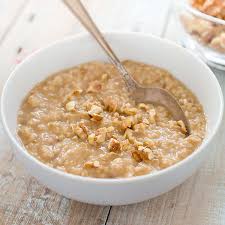
You leave your cold spoon in a hot bowl of oatmeal. What happens after an hour?

a)

The temperature of both the oatmeal and the spoon stay the same

b)

The spoon and the oatmeal become the same temperature

c)

Only the temperature of the oatmeal will change

d)

Only the temperature of the spoon will change

65.

Heating will continue until what is reached?

a)

Energizers

b)

Equilibrium

c)

Equality

d)

Energy

66.
Temperature is a measure of the...
a)
total energy in a substance
b)
total kinetic energy in a substance
c)
average potential energy in a substance
d)
average kinetic energy of molecules in a substance
67.
The unit Joules is for ___________
a)
heat energy
b)
temperature
c)
specific heat
68.

Unit S.I of temperature is

a)

Kelvin (K)

b)

Degree celcius

69.

Two objects are in ________________ when heat energy can be transferred between them.

a)

thermal equilibrium

b)

thermal contact

70.

When an object is heated, it will absorb heat energy and the temperature will

a)

decrease

b)

increase

71.

The net transfer of heat is ___________ when both objects have ______________ temperature.

a)

one, same

b)

one, different

c)

zero, same

d)

zero, different

72.

What is the difference between heat and temperature ?

4 lines
73.
High temperature is connected to:
a)
Low kinetic energy.
b)
High kinetic energy.
c)
Zero net energy.
d)
Equal kinetic energies.
