Wayground logo

Free Printable Worksheets

Font size

S
M
L
XL
Worksheets

B.10C, B.12A, B.11B, B.12B Practice

Total questions: 137

Worksheet time: 4hrs 38mins
Name
Class
Date
1.
Which of the following is the correct order of organization in living things from most basic (simple) to most complex?
a)
a.  Organism, cell, tissue, organ, organ system
b)
a.  Organ system, organ, tissue, cell, organism
c)
a.  Cell, tissue, organ, organ system, organism
d)
a.  Cell, organ, tissue, organ, organism, organ system
2.
A group of similar cells that come together to perform a specific function is a/an
a)
organ
b)
organism
c)
organ system
d)
tissue
3.
When a group of organs work together to perform a particular function they create a/an
a)
organ system
b)
organism
c)
tissue
d)
organ
4.
The smallest level of organization of life in an organism
a)
tissue
b)
cell
c)
organ
d)
organ system
5.
The cell is the building block of all living things.
a)
True
b)
False
6.
A group of organs that work together to perform big jobs for your body is an organ system.
a)
True
b)
False
7.
Which is an example of an organism?
a)
a beetle
b)
a lake
c)
a rock
d)
a shell
8.
What is the difference between a cell and a tissue?
a)
cell is basic unit of life; tissue is group of cells that work as one
b)
cell is group of tissues; tissue is basic unit of life
c)
cell is basic unit of life; tissue is groups of different cells
d)
cell is group of organs; tissue is group of different cells
9.
The basic unit of structure and function in the human body is the....
a)
organ
b)
organ system
c)
cell
d)
tissue
10.
Tissue that works together to perform a function
a)
organ
b)
cell
c)
organ system
d)
organism
11.
What do you have when organ systems work together?
a)
organs
b)
organism
c)
cells
d)
tissue
12.
The heart contains different types of tissue. What level is the heart?
a)
cell
b)
organ system
c)
organ
d)
tissue
13.
The digestive system includes the stomach. What level is the stomach?
a)
organ
b)
tissue
c)
cell
d)
organism
14.
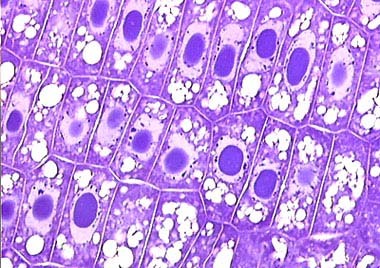
This is a example of........ 
a)
organ system
b)
cells
c)
organ
d)
tissue
15.
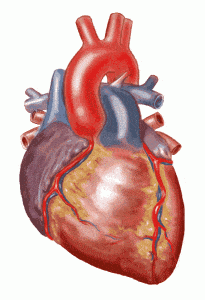
This is a example of ........
a)
cell
b)
tissue
c)
organ 
d)
organ system
16.
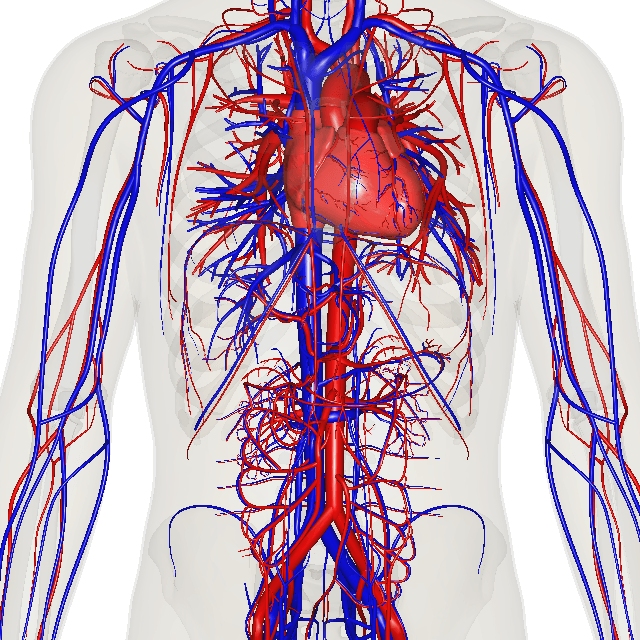
This is a example of ........
a)
cell
b)
organ system
c)
organ
d)
tissue
17.
This is a example of ........
a)
organ
b)
organ system
c)
tissue
d)
cell
18.
Which level of organization is the most complex?
a)
organism
b)
population
c)
community
d)
ecosystem
19.
Multiple organisms of the same species describes a
a)
organism
b)
population
c)
community
d)
ecosystem
20.
A forest full of many kinds of trees and grasses is an example of a
a)
group
b)
organism
c)
population
d)
community
21.
which is the correct order of the levels of organization from simple to complex?
a)
organism, population, community, ecosystem
b)
ecosystem, community, population, organism
22.
Which is the definition of a community
a)
multiple organisms of the same species
b)
all the living and nonliving things in an area
c)
a living thing
d)
multiple organisms of different species
23.

A living thing that is made up of organ systems.

a)

cell

b)

tissue

c)

organ

d)

organ system

e)

organism

24.

The smallest unit of a living thing

a)

cell

b)

tissue

c)

organ

d)

organ system

e)

organism

25.

An organism that is made up of many cells is called:

a)

unicellular

b)

multicellular

c)

pluracellular

26.

In the woods, there are hawks and robins. They both try to occupy the same niche by competing for worms as the only source of food in that same area at that same time. The hawks outcompete the robins, and the robins are forced to leave that area. This is an example of:

a)

Mutualism

b)

The competitive exclusion principle

c)

Commensalism

d)

Neutralism

27.

Barnacles are animals that cannot move. In order to get food, they attach to whales and catch any floating plankton in the water. The whale is neither helped nor harmed in the interaction. What type of symbiosis is this?

a)

Mutualism

b)

Commensalism

c)

Parasitism

d)

Amensalism

28.

In the sea, little fish called pilot fish swim closely to sharks. The pilot fish clean the sharks, and the sharks provide protection for the pilot fish. What type of symbiosis is this?

a)

Mutualism

b)

Commensalism

c)

Parasitism

d)

Amensalism

29.

In an ecosystem, there are populations of deer, rabbits, grass, and pine trees. Suddenly, a fire blazes through the area, which kills all of the populations. As the months go on, new species of grass begin to take root. This attracts animals, and eventually the ecosystem is restored.


What type of ecological succession happened?

a)

Primary succession because it started with rocks.

b)

Primary succession because there was soil to begin with, and plants existed before the disaster.

c)

Secondary succession because it started with rocks.

d)

Secondary succession because there was soil to begin with, and plants existed before the disaster.

30.

In Hawaii, there are volcanoes. Before anything was there, the volcanoes erupted which produced volcanic rock. Lichens were the first species to arrive, and they broke down the rock into soil. Eventually, plants began to grow. Now, the islands are functioning at their climax community.

Is this an example of primary or secondary succession?

a)

Primary succession

b)

Secondary succession

31.

In Hawaii, there are volcanoes. Before anything was there, the volcanoes erupted which produced volcanic rock. Lichens were the first species to arrive, and they broke down the rock into soil. Eventually, plants began to grow. Now, the islands are functioning at their climax community.

What is the pioneer species in this example?

a)

Shrubs

b)

Lichens

c)

Trees

d)

Rock

32.

T/F: Biodiversity is variety of species in an ecosystem.

a)

True

b)

False

33.

A community is composed of

a)

living organisms and their nonliving environment.

b)

one species of organism living in a specific environment on Earth.

c)

the factors that constitute an organism's niche.

d)

potentially interacting populations of different kinds of organisms.

34.

An owl and a hawk both eat mice. Which of these describes the relationship between a hawk and an owl?

a)

parasitism

b)

competition

c)

predation

d)

mutualism

35.

The non-living parts of an organism's environment are called...

a)

community

b)

biotic factors

c)

habitat

d)

abiotic factors

36.

Choose the correct levels of Organization from lowest to highest...

a)

population, community, ecosystem, organism

b)

organism, population, community, ecosystem

c)

organism, population, ecosystem, community

d)

population, organism, community, ecosystem

37.

A community is a level in organization that is....

a)

made of populations of different species that live in the same place and interact.

b)

a single individual species of organisms that are similar.

c)

all the individual organisms of the same species in the same place.

38.

The living or once living parts of an organism's environment are called its...

a)

community

b)

habitat

c)

biotic factors

d)

abiotic factors

39.

An organism is an abiotic factor

a)

True

b)

False

40.

A(n) ______ is a group of organisms that are have similar characteristics and can mate with each other to produce offspring that can also mate and reproduce.

a)

organism

b)

species

c)

biome

d)

community

41.

If farmers use a controlled burn to prevent forest fires, what would most likely be the first plants to return?

a)

trees

b)

shrubs

c)

mosses

d)

grasses

42.

Breaking News! A new island has formed off of Hawaii! What must occur for it to become an ecosystem?

a)

Secondary Succession

b)

Aquatic succession

c)

Primary Succession

d)

Ferns must grow

43.

Which would most likely result in primary succession?

a)

old forest growing

b)

undisturbed prairie

c)

pollution kills mountain lake species

d)

a Newly formed volcanic island

44.

Which would result in primary succession?

a)

volcano destroying habitat leaving only soil and ash

b)

Tornado destroying a crop leaving very little soil

c)

Glacier retreating exposing bare rock

d)

limiting factors

45.

If you visited a forest in 2015 and there was only small plants there when revisited in 2019, what likely happened?

a)

passing of a glacier

b)

preservation of a habitat

c)

occurrence of a forest fire

d)

development of a parking lot

46.

How do pioneer species compare in primary and secondary succession?

a)

primary starts with grass and weeds, secondary starts with mosses

b)

primary starts with forest fire, secondary starts with volcano

c)

primary starts with a volcano, secondary starts with a forest fire

d)

Lichens and moss in primary, and grasses/ ferns in secondary

47.

Primary succession occurs in areas with:

a)

very little soil

b)

lots of soil

c)

no soil

d)

soil that has been disturbed

48.

What best describes the term succession?

a)

rapid changes that create an ecosystem overnight

b)

gradual changes over time to fully create or restore and ecosystem

c)

forest with the tallest trees

d)

the rate species produce offspring

49.
succession that occurs in an area with no soil
a)
ecological succession 
b)
primary succession 
c)
secondary succession
d)
pioneer speciles
50.
succession that occurs in an area where soil is already present
a)
ecological succession 
b)
primary succession 
c)
secondary succession
d)
pioneer speciles
51.
the first organisms that appear in an ecological community
a)
ecological succession 
b)
primary succession 
c)
secondary succession
d)
pioneer speciles
52.
a stable ecological community that has reached equilibrium
a)
ecological succession 
b)
climax community
c)
secondary succession
d)
pioneer speciles
53.
ends in a climax community
a)
primary succession 
b)
secondary succession
c)
both types of succession
54.
species diversity eventually increases
a)
primary succession 
b)
secondary succession
c)
both types of succession
55.
starts with bare rock followed by lichen
a)
primary succession 
b)
secondary succession
c)
both types of succession
56.
occurs over time
a)
primary succession 
b)
secondary succession
c)
both types of succession
57.
reaches a climax community quicker because soil is already present
a)
primary succession 
b)
secondary succession
c)
both types of succession
58.
The picture shows what type of succession?
a)
primary
b)
secondary
c)
tertiary
d)
quadanary
59.
The first organisms that appear in an ecological community
a)
ecological succession 
b)
primary succession 
c)
secondary succession
d)
pioneer speciles
60.
How do lichens contribute to primary succession?
a)
Lichens decompose organic matter from animals and plants
b)
Lichens begin to break down rock to form soil
c)
Lichens are nitrogen fixing bacteria
61.

Natural disasters such as flooding and tornadoes are linked to ________________.

a)

primary succession

b)

secondary succession

c)

old field

d)

ecosystem

62.
What is the order of succession shown in this figure?
a)
A, B, C, D
b)
B, A, D, C
c)
C, D, A, B
d)
D, A, B, C
63.
Cattle egrets forage (feed) in fields among cattle. The egret gets easy access to flying insects stirred up by the cattle, and the cattle don't care if they are there or not.
a)
mutualism
b)
commensalism
c)
competition
d)
parasitism
64.
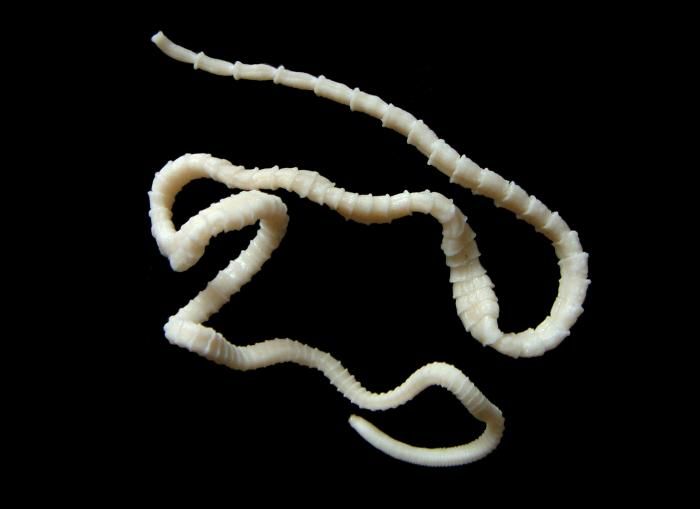
A tapeworm and a cat have this type of relationship.
a)
mutualism
b)
parasitism
c)
commensalism
d)
competition
65.
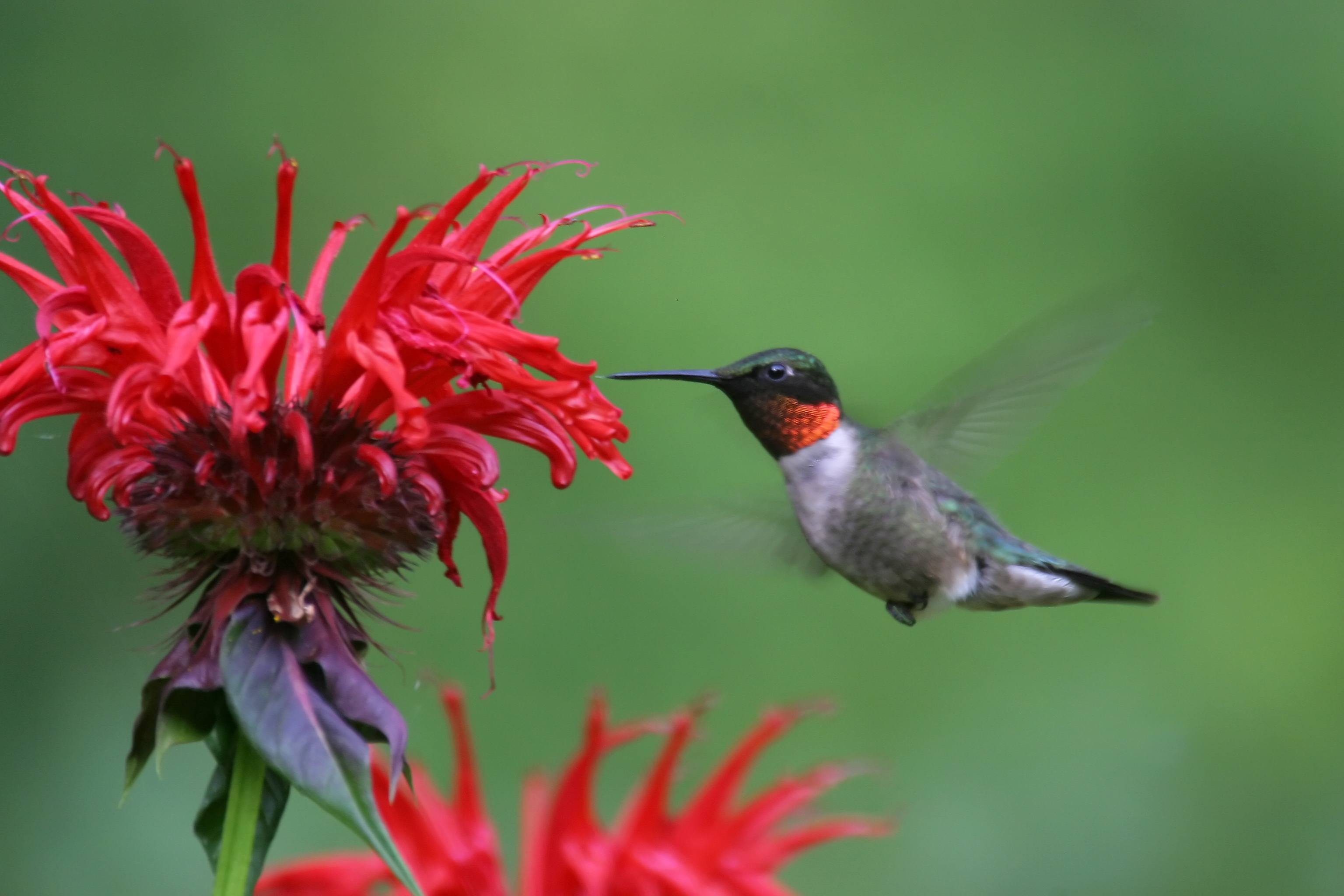
What type of symbiosis?  Hummingbirds feed on nectar from flowers.  The flowers are pollinated by hummingbirds as they move from flower to flower.
a)
commensalism
b)
mutualism
c)
parasitism
d)
predation
66.
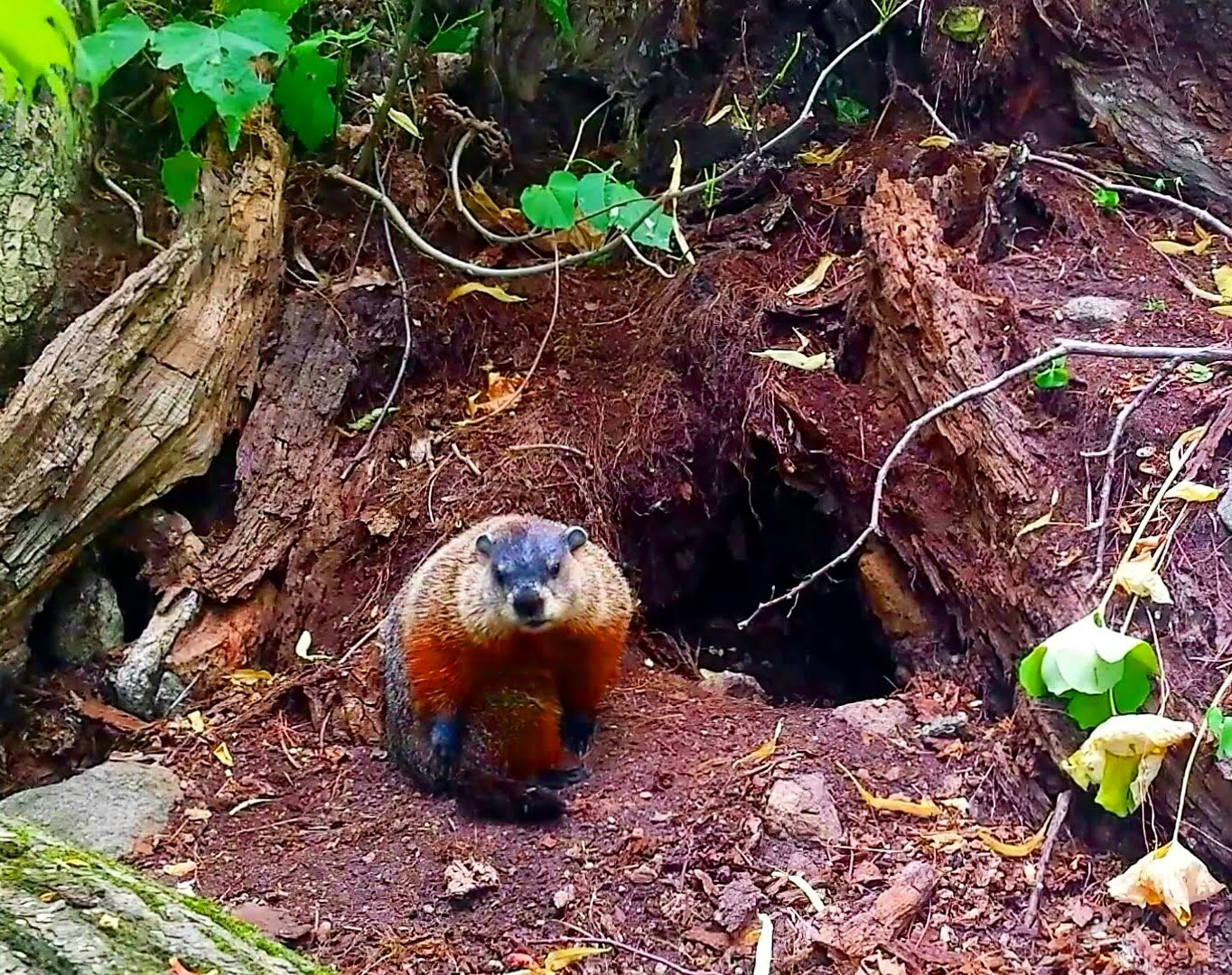
What type of symbiosis?  Skunks often live in burrows that have been dug and abandoned by woodchucks.  
a)
commensalism
b)
mutualism
c)
parasitism
d)
predation
67.
Which symbols best describe parasitism?
a)
+,+
b)
+,-
c)
+,0
d)
-,0
68.

Aphids are tiny insects that live on and eat the leaves of plants, removing vital nutrients from the plants.

a)

Predation

b)

Parasitism

c)

Commensalism

d)

Mutualism

69.
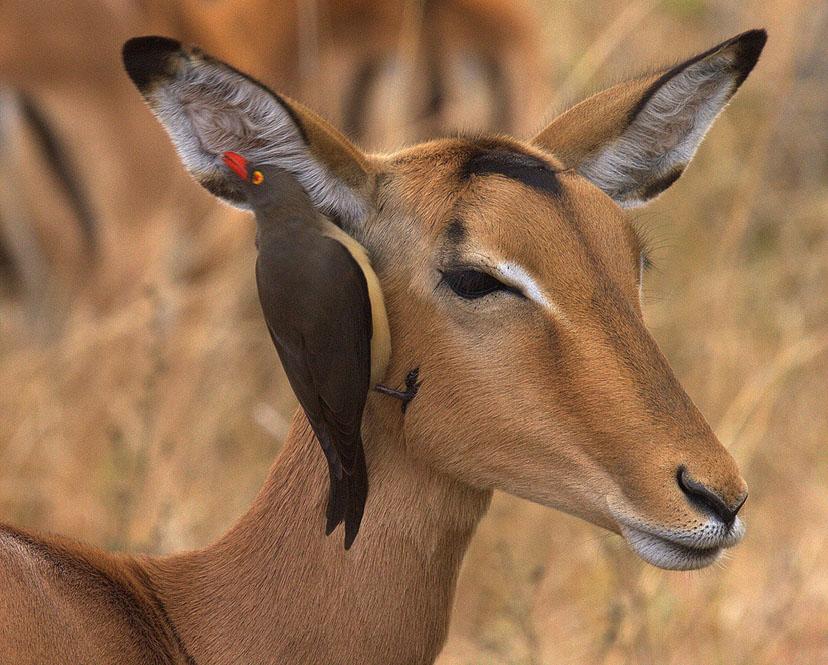
Red-billed oxpeckers are birds that often feed on parasites that infest impala.  This is an example of _______.
a)
commensalism
b)
mutualism
c)
neutralism
d)
competition
70.

A relationship in which two species live closely together.

a)

resource

b)

mutualism

c)

succession

d)

symbiosis

71.
What type of symbiosis is this?
*
Hermit crabs find shells left by snails that have died and move in.
*
  Snails die and leave behind their shells.
a)
commensalism
b)
mutualism
c)
parasitism
d)
predation
72.
Barnacles create home sites by attaching themselves to whales. This neither harms nor benefits the whales.  What kind of relationship is this?
a)
Mutualism 
b)
Parasitism 
c)
Commensalism 
73.
A relationship between two organisms in which both organisms benefit. 
a)
Mutualism 
b)
Competition
c)
Parasitsm 
d)
Commensalism 
74.
A tick and a dog have this type of relationship.
a)
mutualism
b)
commensalism
c)
neutralism
d)
parasitism
75.
A frog eats a fly. The frog and fly are demonstrating ________.
a)
mutualism
b)
competition
c)
predator/prey
d)
parasitism
76.
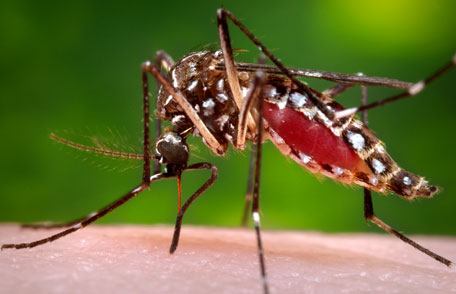
When a mosquito bites you, you are the __________ and the mosquito is the  ____________.
a)
host, hostess
b)
parasite, host
c)
host, parasite
d)
prey, predator
77.

Mockingbirds will push the eggs out of a blue bird's nest and use the nest for it's own babies illustrating...

a)

commensalism

b)

parasitism

c)

mutualism

d)

predation

78.

Clown fish live among anemones, acting as a lure for the sea anemone's prey. The clown fish get protection and shelter from the anemone. This is an example of which type of symbiosis?

a)

Commensalism

b)

Mutualism

c)

Parasitism

79.

Lichens are close associations of fungi and algae. The fungi hold the water supply and the algae perform photosynthesis to manufacture carbohydrates for both organisms.

a)

mutualism

b)

commensalism

c)

parasitism

80.

In the jungles of South America lives a thorn tree call an acacia. A species of ant eats secretions of the acacia, drinks its sap, and raises its young in the hollow thorns. The ants also keep competing vines from growing near the acacia tree and they help repel any insects that would damage the acacia tree.

a)

mutualism

b)

commensalism

c)

parasitism

81.

Lactobacilli are a type of bacteria that live in our lungs and destroy many of the microorganisms that enter our respiratory system. They are highly adapted to living in our lungs and can't survive in many other habitats.

a)

mutualism

b)

commensalism

c)

parasitism

82.
What is an adaptation?
a)
A characteristic that helps an animal survive.
b)
The food that an animal eats.
c)
How energy moves in a food web.
d)
How animals evolve throughout time.
83.
How do adaptations help animals?
a)
to hide from predators
b)
to hunt for food
c)
to survive in their habitats
d)
All of these are correct
84.
The environment in which an animal lives, along with other animals and nutrients including sunlight and rain is called its...
a)
habitat
b)
adaptation
c)
variation
d)
ecosystem
85.
Coloring or another physical characteristic that help an organism blend in with its environment
a)
mimicry
b)
camouflage
c)
hibernation
d)
migration
86.
When an organism copies a characteristic of something else in order to better its chances for survival and reproduction
a)
hibernation
b)
camouflage
c)
mimicry
d)
migration
87.

This is any variation that makes an organism better suited to its environment.

a)

Evolution

b)

Graduation

c)

Species

d)

Adaptation

88.

Plants with spines and waxy leaves are well suited for life in which environment?

a)

Desert

b)

Temperate forest

c)

Grassland

d)

Tropical Rainfroest

89.

A natural process in which new organisms are created and the species continues

a)

population

b)

niche

c)

reproduction

d)

behavior

90.
Which feature of a rose helps it grow without being eaten by large animals?
a)
flowers with bright colors
b)
sharp thorns
c)
small seeds
d)
deep roots
91.
A giraffe has a long neck in order to better reach leaves to eat.  This is an example of _____. 
a)
an adaptation
b)
environment
c)
response
d)
stimulus
92.
Maria and her classmates are observing animals at the pond. They notice that wood storks and ibisies both feed on fish. Which of these describes the relationship between these two birds.
a)
Parasitism
b)
Competition
c)
Predator and prey
d)
Producer and consumer
93.
Which of these describes a mutually beneficial relationship between two organisms?
a)
A dog with worms in its intestine
b)
A turtle and a snail that both eat grass live in a river
c)
A honeybee pollinating a plant and receiving nectar for food
d)
A small fish attached to a shark, eating tiny pieces of the shark's food as it floats
94.
A relationship in which two organisms benefit from the actions of each other.
a)
sharingism
b)
mutualism
c)
parasitism
d)
commensalism
95.
A relationship in which one organism is harmed while the other benefits.
a)
parasitism
b)
commensalism
c)
ouchyism
d)
mutualism 
96.
a)
Parasitism
b)
Mutualism
c)
Commensalism
d)
Predation
97.
a)
Parasitism
b)
Mutualism
c)
Commensalism
d)
Predation
98.
a)
Parasitism
b)
Mutualism
c)
Commensalism
d)
Predation
99.
a)
Parasitism
b)
Mutualism
c)
Commensalism
d)
Predation
100.
a)
Parasitism
b)
Mutualism  
c)
Commensalism 
d)
Predation
101.
a)
Parasitism
b)
Mutualism
c)
Commensalism
d)
Predation
102.
a)
Parasitism
b)
Mutualism
c)
Commensalism
d)
Predation
103.
Which catastrophic event will most likely cause an ecosystem to begin primary succession?
a)
A tornado
b)
A volcanic eruption
c)
A flood
104.
After a volcanic eruption, lava covers the land. What is the order that plants grow to repopulate the area?
a)
Lichens → Shrubs → Grasses → Trees
b)
Shrubs → Trees → Grasses → Lichens
c)
Grasses → Lichens → Shrubs → Trees
d)
Lichens → Grasses → Shrubs → Trees
105.
Where does most primary succession take place in the United States?
a)
Hawaii
b)
Florida
c)
Europe
d)
Old farms
106.
Lichens & mosses are in a ___ relationship with each other as rock is broken down.
a)
 primary
b)
secondary
c)
ecological
d)
mutualistic
107.
Succession that occurs in an area with NO SOIL
a)
ecological succession 
b)
primary succession 
c)
secondary succession
d)
pioneer speciles
108.

_______ occurs when two organisms are trying to acquire or get the same resources.

a)

Symbiosis

b)

Competition

c)

Predation

d)

Collaboration

109.

_______ occurs when 1 organisms kills and eats another for food.

a)

Symbiosis

b)

Competition

c)

Predation

d)

Collaboration

110.

A lion kills and eats a zebra. This is an example of

a)

Symbiosis

b)

Competition

c)

Predation

111.

Two male deer fight over a female. This is an example of

a)

Symbiosis

b)

competition

c)

predation

112.

The Gobi fish and shrimp live closely together. The nearly blind shrimp keeps a burrow for it and the Gobi fish to live. The Gobi warns the shrimp of predators. The shrimp lets the fish live in the burrow. This is an example of

a)

mutualism

b)

commensalism

c)

parasitism

113.

Hermit crabs use the shells of dead snails for homes. What type of interaction is this?

a)

mutualism

b)

commensalism

c)

parasitism

114.

A type of symbiosis in which both species benefit is called...

a)

mutualism

b)

commensalism

c)

parasitism

115.

A type of symbiosis in which one species benefits and the other is not affected is...

a)

mutualism

b)

commensalism

c)

parasitism

116.

A type of symbiosis in which one species benefits and the other is harmed or killed...

a)

mutualism

b)

commensalism

c)

parasitism

117.

Name the Interaction.

a)

Mutualism/Commensalism

b)

Parasitism

c)

Predation

d)

Competition

118.

Honeyguide birds find a bee hive, then chatter loudly to attract the Honey badger. They fly toward the hive making sure the badger is following. Upon arrival at the bee hive, the badger tears open the hive and feasts on the honey. Then the Honeyguide bird feeds on the remaining wax and larvae.

a)

commensalism

b)

mutualism

c)

parasitism

d)

predation

119.

Which faces would represent PARASITISM?

a)

:) :)

b)

:) :(

c)

:) : I

120.
A bird makes a nest  or a HOME in a tree.  The bird gets a house and HELPED, but the tree gets NOTHING.
a)
Commensalism
b)
Mutualism
c)
Parasitism
d)
Animals
121.
What type of symbiosis?
*
Skunks often live in burrows that have  been dug and abandoned by woodchucks.
*
Woodchucks abandon holes which are later used by skunks.
a)
commensalism
b)
mutualism
c)
parasitism
d)
predation
122.
a)
competition
b)
predation
c)
parasitism
d)
commensalism
123.
a)
climax community
b)
pioneer species
c)
commensalism
d)
predation
124.
a)
predation
b)
parasitism
c)
commensalim
d)
competition
125.
a)
competition
b)
commensalism
c)
parasitism
d)
mutualsim
126.
 The stork uses it saw-like bill to cut up the dead animals it eats. As a result, the dead animal carcass is accessible to some bees for food and egg laying. The relationship neither harms nor benefits the stork.
a)
parasitism
b)
commensalism
c)
mutualism
127.
Yucca flowers are pollinated by yucca moths. The moths lay their eggs in the flowers where the larvae hatch and eat some of the developing seeds.  
a)
Mutualism
b)
Commensalism
c)
Parasitism
d)
Competition
128.
Rabbits and sheep both graze on shrubs, grasses, and other plants.  The increase in the population of rabbits in a region may result in a shortage of plants for sheep to graze upon.  After the increase of rabbits the relationship between sheep and rabbits will be __________.
a)
Competition
b)
Predation
c)
Mutualism
d)
Parasitism
129.
Mistletoe extracts water and nutrients from the spruce tree to the trees detriment.  
a)
Parasitism
b)
Mutualism
c)
Commensalism
d)
Predation
130.

Sharks consume (eat) smaller fish they catch in the ocean. Frogs catch and eat flying insects in ponds. What type of relationship is this?

a)

mutulism

b)

predation

c)

parasitism

d)

interspecific

131.
Sloth’s and monkeys share the same tropical habitat.  Deforestation is occurring limiting the space for these two species.  What will now occur between the two species?
a)
Mutualism
b)
Parasitism
c)
Cooperation
d)
Competition
132.
An interaction among species where one organism hunts, kills, and eats another organism.
a)
Predation
b)
Cooperation
c)
Mutualism
d)
Parasitism
133.
A mite lives in the base of the eyelashes of people who use mascara. It feeds on the mascara; it does not seem to harm people. What type of symbiotic relationship is this?
a)
mutualism
b)
commensalism
c)
parasitism
d)
predation
134.
A coyote captures, kills, and eats a rabbit. What type of symbiotic relationship is this?
a)
mutualism
b)
commensalism
c)
parasitism
d)
predation
135.
The flower of the yucca plant provides the only location where the yucca moth can lay her eggs. In the process, the moth pollinates the yucca flower. What type of symbiotic relationship is this?
a)
mutualism
b)
commensalism
c)
parasitism
d)
predation
136.
Cleaner shrimp living in the ocean eat ectoparasites (parasites on the outer surface of the animal) off of fish. What type of symbiotic relationship is this?
a)
mutualism
b)
commensalism
c)
parasitism
d)
predation
137.
NItrogen-fixing bacteria live in the roots of some plants. They provide nitrogen in a form the plants need and obtain a "home" and nourishment from the plants. What type of symbiotic relationship is this?
a)
mutualism
b)
commensalism
c)
parasitism
d)
predation