Wayground logo

Free Printable Worksheets

Font size

S
M
L
XL
Worksheets

Distance time graphs

Total questions: 33

Worksheet time: 1hrs 6mins

Name
Class
Date
1.

Match the description to the graph:

"The car is stopped."

a)
b)
c)
d)
2.

Match the description to the graph:

"The car is traveling at a constant speed."

a)
b)
c)
d)
3.

Match the description to the graph:

"The speed of the car is decreasing."

a)
b)
c)
d)
4.

Match the description to the graph:

"The car is coming back."

a)
b)
c)
d)
5.

Segment A-B The bus is _________________.

a)

at rest

b)

returning (to original position)

c)

moving forward

6.

Segment O-A The bus is _________________.

a)

at rest

b)

returning (to original position)

c)

moving forward

7.

Which runner won the race?

a)

Albert

b)

Bob

c)

Charlie

8.

Which runner stopped for a rest?

a)

Albert

b)

Bob

c)

Charlie

9.

How long did Charlie stop for a rest?

a)

2.5 seconds

b)

2 seconds

c)

3 seconds

d)

5 seconds

10.

What is a force?

a)

the PUSH or PULL on an object

b)

The MOTION an object creates

c)

The objects HITTING one another

d)

Going REALLY FAST

11.

What is the unit for FORCE?

a)

N (Newtons)

b)

lbs (pounds)

c)

g (grams)

d)

m/s (meters per second)

12.

If the net force is 0 the object will ...

a)

CHANGE its motion

b)

STAY the SAME, NOT Move

13.
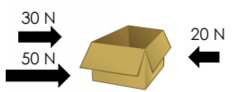
What is the net force?
a)
20 N 
b)
0 N 
c)
400 N 
d)
40 N 
14.

What is the equation to calculate distance?

a)

distance = speed/time

b)

distance = time/speed

c)

distance = speed/distance

d)

distance = speed x time

15.
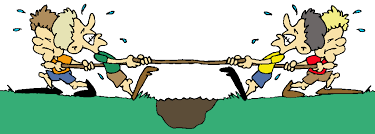
If these teams are pulling with the same amount of force what will happen?
a)
The boy in blue will win.
b)
They will not move at all.
c)
The boy in red will win.
d)
Both will fall down.
16.
Calculate the Net Force. 
a)
60N, Left 
b)
40N, Right 
c)
0N
d)
60N, Right
17.

________ can be calculated if you know the distance an object traveled and the unit of time. (distance ÷ time)

a)

Speed

b)

Motion

c)

Opportunity

d)

Velocity

18.

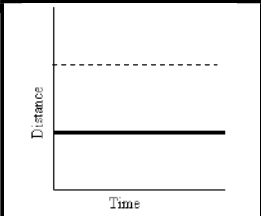
What does the solid line on this graph represent?

a)

Constant speed

b)

Acceleration

c)

At rest

d)

deceleration

19.

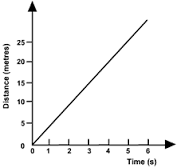
What is the line on this graph showing?

a)

moving away from starting point at a constant speed

b)

moving back towards the starting point at a constant speed

c)

acceleration (getting faster)

d)

deceleration (getting slower)

20.
How long did it take this object to travel 10 m?
a)
0 s
b)
10 s
c)
15 s
d)
20 s
21.
Which force produces a change in motion?
a)
unbalanced force
b)
balanced force
c)
gravitational force
d)
frictional force
22.
At which point is potential energy greatest
a)
W
b)
X
c)
Y
d)
Z
23.
For every action, there is an equal and opposite reaction.
a)
Newton's
1st
Law of Motion
b)
Newton's
2nd
Law of Motion
c)
Newton's
3rd
Law of Motion
24.
An automobile you are riding in suddenly stops, but you continue to go forward.
a)
Newton's
1st
Law of Motion
b)
Newton's
2nd
Law of Motion
c)
Newton's
3rd
Law of Motion
25.
a)
1st
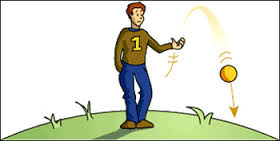
b)
2nd
c)
3rd
26.
One object has twice as much mass as another object. The first object also has also twice as much...
a)
velocity
b)
gravitational acceleration
c)
inertia
d)
all of these
27.
What is the attractive force that exists between all objects that have mass?
a)
Weight
b)
Mass 
c)
Gravity
d)
Viscosity
28.
When you push a boat off from the dock, you are demonstrating Newton's 3rd Law of Motion. It simply states that for every action there is an equal and opposite _______________?
a)
Motion
b)
Change
c)
Reaction
d)
Push
29.

The Law of Inertia

a)

Newtons 1st Law of motion

b)

Newtons 2nd Law of motion

c)

Newtons 3rd Law of motion

30.
What is the net force?
a)
30 N 
b)
25 N 
c)
5 N 
d)
55 N 
31.
Who is the scientist who came up with the Laws of Motion?
a)
Sir Issac Newton
b)
The Greeks
c)
John Dalton
d)
Sir John Newt
32.
When all the forces on an object are equal and opposite, & the net force is zero, that's...
a)
balanced forces
b)
unbalanced forces
c)
terminal velocity
d)
reaction forces
33.
The combination of all the forces acting on an object is the...
a)
net force
b)
action force
c)
reaction force
d)
balance force