Wayground logo

Free Printable Worksheets

Font size

S
M
L
XL
Worksheets

Earth’s Layers and Plate Tectonics Study Guide

Total questions: 57

Worksheet time: 43mins

Name
Class
Date
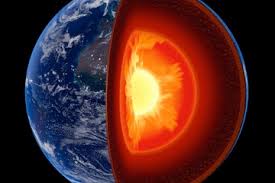
1.
Order the layers of the Earth from the most dense to the least
a)
crust, mantle, outer core, inner core
b)
inner core, outer core, mantle, crust
c)
crust, mantle, inner core, outer core
d)
inner core, outer core, crust, mantle
2.
Which layer of the Earth is the thickest?
a)
Inner Core
b)
Mantle
c)
Crust
d)
Outer Core
3.
What is a difference between oceanic & continental crust?
a)
Continental is thicker
b)
Oceanic is thicker
c)
Continental is made of basalt
d)
Oceanic is made of granite
4.
What is the driving force behind plate tectonics?
a)
convection currents
b)
magnetic reversal
c)
volcanic eruption
d)
subduction zones
5.
This structure rests on top of the asthenosphere:
a)
Lithosphere
b)
Outer Core
c)
Lower Mantle
d)
Oceanic Crust
6.
The lithosphere is subdivided into:
a)
tectonic plates
b)
continents
c)
islands
d)
poles
7.
Which of the following is not a piece of Wegener's evidence?
a)
fossils
b)
glaciers
c)
rocks
d)
rivers
8.
How is new crust made?
a)
sea-floor spreading
b)
continental-oceanic
c)
continental-continental
d)
rift valley
9.
What travels from the mantle in order to form new crust?
a)
magma
b)
outer core
c)
convection currents
d)
asthenosphere
10.

What is Pangea?

a)

a fern that lives close to the equator

b)

a large ice sheet

c)

a supercontinent made of the present-day continents

11.

Seafloor spreading is a process that...

a)

Destroys oceanic crust

b)

Occurs at the mid-ocean ridges

c)

Causes continents to plow through the seafloor

12.

What is the theory of plate tectonics?

a)

Earth’s outer layer is made up of large, moving pieces called plates

b)

Cracks in the Earth's crust cause volcanoes

c)

The Earth was created by meteors crashing into each other

13.

What was the name of the theory that Alfred Wegener proposed explaining why the continents moved?

a)

seafloor spreading

b)

continental drift

c)

land moving

d)

rifting

14.

The evidence to prove continental drift was discovered prior to Wegener's death?

a)

True

b)

False

15.
Oceans, and other bodies of water, are found on which layer of Earth?
a)
Outer core
b)
Mantle
c)
Inner core
d)
Crust
16.
Which of the following would be an accurate feature to include in a model of Earth?
a)
A crust that is the thickest layer
b)
An inner core that contains oceans
c)
A thin mantle in the center of the model
d)
A liquid outer core below the mantle
17.
Which layer of Earth is broken up into giant moving plates?
a)
Asthenosphere
b)
Lithosphere
c)
Inner core
d)
Outer core
18.
Which layer of Earth behaves more like a solid near the top, and more like a liquid near the bottom, where pressure is higher?
a)
Crust
b)
Mantle
c)
Outer core
d)
Inner core
19.
Which of Earth’s layers would be best modeled as a metallic sphere?
a)
Mantle
b)
Inner core
c)
Outer core
d)
Crust
20.
Which of Earth’s layers has the lowest density?
a)
Crust
b)
Inner core
c)
Outer core
d)
Mantle
21.
Which of the following best describes the position of the layer of the earth known as the crust?
a)
Above the mantle, which is above the core
b)
Above the core, and below the mantle
c)
Between the inner core and the outer core
d)
Below all other layers, including the mantle and core
22.
What was the name given to all the continents when they were joined as one super continent? 
a)
Supreme Continent
b)
Eurasia
c)
Plate tectonics
d)
Pangea
23.
Which of these layers is ALL solid iron and nickle?
a)
inner core
b)
outer core
c)
lithosphere
d)
mesosphere
24.
The layer that makes up most of the earth's mass and volume is the
a)
crust
b)
mantle
c)
core
d)
asthenosphere
25.
Which of the following occurs because of convection currents?
a)
Tectonic plates on the crust move.
b)
The mantle increases in size.
c)
Pressure in the crust increases.
d)
Pressure in the crust decreases.
26.
As you travel from the inner core to the crust, how would temperature, pressure and density of the material change?
a)
The would all increase
b)
The would all decrease.
c)
They would stay the same.  
d)
Temperature would decrease, but pressure and density would increase. 
27.
The physical layer of Earth made of solid rock and soil is called the ___________. 
a)
mesosphere
b)
lithosphere
c)
asthenosphere
d)
mantle
28.
Where does the heat come from that drives this convection current in the mantle? 
a)
The sun
b)
The crust
c)
the mantle
d)
the core
29.
What does the theory of continental drift state?
a)
The continents were once joined in a super-continent and have moved over time
b)
Continents are stationary and do not move
c)
The Earth is broken into lithospheric plates that move due to convection currents
d)
none of the above
30.
Earth's plates are...
a)
constantly moving and changing the face of the earth
b)
Never moves
c)
Moves seldom and very fast
d)
Moves when it feels like it
31.
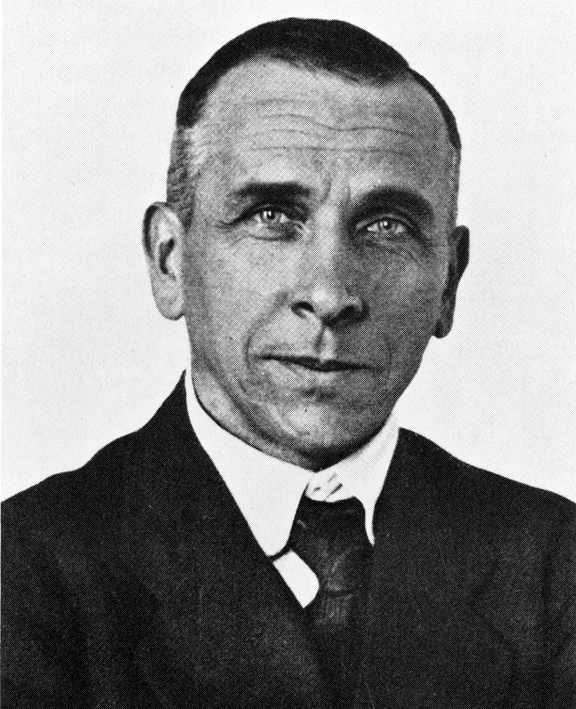
Who is the person credited with developing the theory of continental drift?
a)
Harry Hess
b)
Galileo
c)
Alfred Wegener
d)
Newton
32.
What are the remains of organism noticed by Wegener that are found the same in two continents?
a)
Leaves and flowers
b)
Ice and mountains
c)
Plants and animals
d)
Dinosaurs and reptiles
33.
What causes the continents to move?
a)
Magma
b)
Tectonic Plates
c)
Earthquake
d)
All of the choices
34.
Who is the scientist who proposed Continental Drift Theory?
a)
Albert Einstein
b)
Alfred Wegener
c)
Isaac Newton
d)
John Dalton
35.
The geological theory that states that pieces of Earth's lithosphere are in constant, slow motion is the theory of
a)
subduction
b)
plate tectonics
c)
evolution
d)
seafloor spreading
36.
What type of evidence was NOT used by Alfred Wegener to support his continental drift hypothesis?
a)
evidence from landforms
b)
evidence from fossils
c)
evidence from human remains
d)
evidence from climate
37.
What is Pangaea?
a)
the name of a German scientist
b)
the name of the super-continent that existed millions of years ago
c)
another name for continental drift
d)
the name of an ancient fossil
38.
What are the two types of crust?
a)
continental and oceanic
b)
ocean and basin
c)
lower and upper
d)
thick and thin
39.
What does the word Pangea mean?
a)
big land mass
b)
old land
c)
all land
40.
How long ago is Pangea believed to have existed?
a)
200-300 million years ago
b)
1000-2000 years ago
c)
10,000-20,000 years ago
d)
20-30 billion years ago
41.
What two specific continents fit together most noticeably?
a)
Africa and North America
b)
South America and Europe
c)
South America and Africa
d)
Antartica and Africa
42.
Why did no one believe Wegener's thoery?
a)
He could not explain HOW the continents moved
b)
He didn't have evidence
c)
His data was wrong
d)
He didn't use the right technology to gather data
43.
What evidence did Wegener use in his theory?
a)
Continents and fossils fitting together/matching-up like puzzle pieces 
b)
glacier scars and evidence from temperature
c)
mountain ranges and coal deposits line up across continents
d)
all of the above
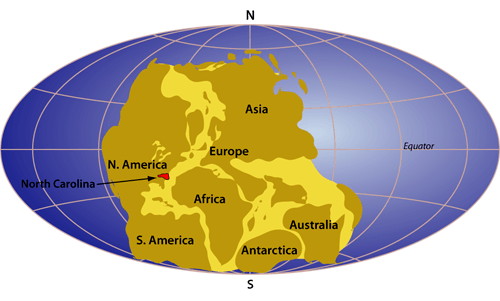
44.
What is this a picture of?
a)
plate tectonics
b)
continental drift
c)
pangea
d)
glacier scaring
45.
Who is the person credited with developing the theory of continental drift?
a)
Harry Hess
b)
Galileo
c)
Alfred Wegener
d)
Newton
46.
Magnets have a north and a south ___________
a)
shape
b)
color
c)
pole
d)
region
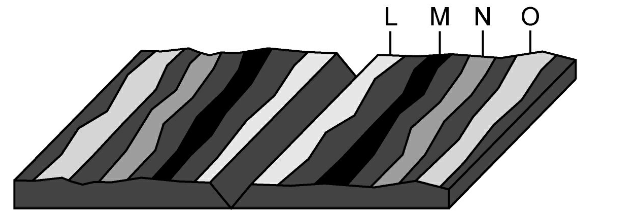
47.
Where would the oldest rock be found?
a)
L
b)
M
c)
N
d)
O
48.
Which of the following objects best represents the movement that occurs during sea-floor spreading?
a)
Elevator
b)
Conveyor belt
c)
Rollercoaster
d)
Hot air balloon
49.

Scientists use ______ to map the ocean floor

a)

radar

b)

pulsar

c)

lidar

d)

sonar

50.

Which of the following supports the theory of seafloor spreading?

a)

Correlation of rock layers

b)

Crustal slab pull

c)

Magnetic reversals recorded in rocks

d)

Continuous mountain chains

51.

The magnetic pattern of ocean-floor rocks on one side of an ocean ridge is_____________.

a)

a mirror image of that on the other side

b)

younger than other side

c)

much different pattern

d)

at right angles to the ridge

52.

The study of the Earth's magnetic record is called

a)

ridge push

b)

convection

c)

paleomagnetism

d)

subduction

53.

A change in Earth' s magnetic field is called a

a)

magnetic reversal

b)

subduction

c)

paleomagnetism

d)

slab pull

54.

Which of Earth's layers produces its magnetic fields?

a)

asthenosphere

b)

mantle

c)

outer core

d)

inner core

55.

What is it called where chains of mountains rise up to form the ocean floor?


a)

Mid-Ocean Ridge

b)

Subduction

c)

Deep-Ocean Trench

d)

Sea-Floor Spreading

e)

Magnetic Striping

56.

Evidence that the Earth's magnetic poles have flipped and is linked to sea-floor spreading is called _________?

a)

Mid-Ocean Ridge

b)

Subduction

c)

Deep-Ocean Trench

d)

Sea-Floor Spreading

e)

Magnetic Striping

57.

Which scientist proposed the theory of sea-floor spreading?

a)

Isaac Newton

b)

Rube Goldberg

c)

Alfred Wegener

d)

Harry Hess