
 Worksheets
G.9 Book 1 Review Topic Quiz
Total questions: 25
Worksheet time: 50mins
Overproduction, Selection, Adaptation and Genetic Variation are the four parts of _________.
Mutation
Nature Selection
Natural Selection
Evolution
Which is the correct order for the four major divisions that make up the history of life on Earth?
Precambrian time, Cenozoic era, Mesozoic era, Paleozoic era
Precambrian era, Paleozoic era, Mesozoic era, Cenozoic era
Precambrian time, Paleozoic era, Mesozoic era, Cenozoic era
Precambrian era, Mesozoic era, Paleozoic era, Cenozoic era
What era is commonly called the Age of Reptiles?
Paleozoic era
Mesozoic era
Cenozoic era
What era are we currently living in?
Mesozoic era
Cenozoic era
Paleozoic era

Which division of geological time would you find these?
Precambrian
Paleozoic
Mesozoic
Cenozoic
An inherited trait that helps an organism survive and reproduce in its environment is an _________________
Selection
Adaptation
Overproduction
Genetic variation
A _________ is defined as a way an animal responds to a stimulus.
response
instinct
attitude
behavior
True or False: The earliest prokaryotes lived without oxygen.
True
False
What are the 8 levels of Classification in order?
Domain, Kingdom, Phylum, Class, Order, Family, Genus, Species
Order, Domain, Phylum, Class, Family, Genus, Species, Kingdom
Family, Domain, Genus, Kingdom, Phylum, Class, Order
Class, Family, Kingdom, Genus, Phylum, Order, Domain
A __________ represents the largest differences among organisms.
domain
country
kingdom
god
What are the 3 Domains of living things?
Plants, Animals, Fungi
Bacteria, Archaea, Eukarya
Living, Non-living, Once-living
Sarah, Joe, Bob
There are four kingdoms of eukaryotes; Kingdom Fungi, Kingdom Plantae....what are the other two?
Kingdom Animals
Kingdom Animalia
Kingdom Plants
Kingdom Protista
________ is a domain of prokaryotes that usually have a cell wall and that usually reproduce by cell division.
Archaea
Bacteria
Fungi
Cell

What is this process of reproduction called?
Splitting
Binary fission
Mitosis
A _________ is a microscopic particle that cannot replicate on its own.
Cell
Host
Virus
Organism
In what organelle does photosynthesis take place in?
chlorophyll
chloroplast
cytoplasm
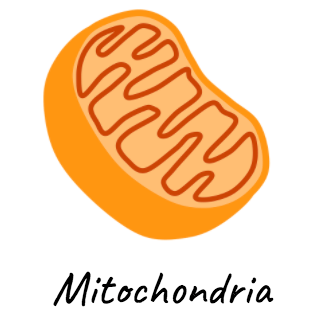
mitochondria
What do plants need to perform photosynthesis?
Love
Soil with a high nitrogen (N) content
Water (H2O) + Carbon Dioxide (CO2) and Sunlight Energy
Pollinators such as bees and hummingbirds
What is created as a result of Photosynthesis
ATP Energy
Water (H2O) and Carbon Dioxide (CO2)
Proteins and lipids
Glucose (C6H12O6) + Oxygen (O2)
What process must cells undergo to convert the energy stored in glucose (C6H12O6) into useable cell energy (ATP)?
Photosynthesis
Cellular respiration
Ketosis
The macarena
What is created as a result of cellular respiration?
Glucose (C6H12O6) + Carbon dioxide (CO2)
Water (H2O) + Carbon dioxide (CO2) + ATP Energy
Proteins and lipids
Chloroplasts
(a) is the set of interactions that occur among animals of the same species, one example is forming a "pecking order".

