
NEW
Font size
S
M
L
XL
 Worksheets
cell transport
Total questions: 11
Worksheet time: 11mins
Name
Class
Date
1.
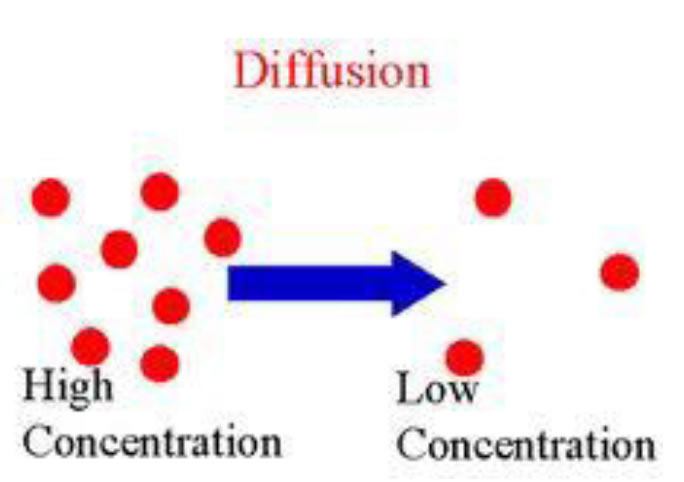
Movement of particles from high to low concentration.
a)
Passive Transport
b)
Active Transport
2.
What is it called when molecules move across the cell membrane from an area of high concentration to an area of low concentration through a carrier protein?
a)
Diffusion
b)
Osmosis
c)
Active Transport
d)
Facilitated Diffusion
3.
Osmosis is the movement of _____ across a membrane.
a)
food
b)
energy
c)
oxygen
d)
water
4.
Which is true about active transport?
a)
It requires energy
b)
it does not require energy
c)
It moves substances down the concentration gradient
d)
it moves material from high to low concentration
5.
This cell organelle helps organisms maintain homeostasis by controlling what substances may enter or leave cells.
a)
vacuole
b)
nucleus
c)
cell membrane
d)
cell wall
6.
Cells transport material across a cell membrane without using energy (high to low concentration)
a)
Passive transport
b)
Concentration
c)
Endocytosis
d)
Active Transport
7.
The movement of molecules from an area of high concentration to an area of low concentration.
a)
Osmosis
b)
Respiration
c)
Diffusion
d)
Active Transport
8.

This image is an example of a phospholipid. Which part of a phospholipid is HYDROPHOBIC?
a)
the phosphate "head"
b)
the lipid "tails"
9.
This image is an example of a phospholipid. Which part of a phospholipid is HYDROPHILIC?
a)
the phosphate "head"
b)
the lipid "tails"
10.
What does "hydrophobic" mean?
a)
water loving, associates with water
b)
water fearing, does not associate with water
c)
a world war II submarine
d)
an example would be solutes like sugar or salt
11.
What does "hydrophilic" mean?
a)
water loving, associates with water
b)
water fearing, does not associate with water
c)
a world war II submarine
d)
an example would be solutes like oil or fat
Reset

