
 Worksheets
4C Viruses
Total questions: 31
Worksheet time: 39mins

A student produces a labeled drawing of a virus for a presentation. The student states that the capsid has a function similar to the nuclear membrane found in animal cells. Which of these describe the similar functions of capsids and nuclear membranes?
both transport proteins throughout the structures
both provide energy for activities in the structures
both protect genetic information for the structures
both code for the proteins needed for reproduction of the structures
In the 1880's, Louis Pasteur developed a method of weakening viruses. The weakened viruses could be injected into healthy individuals. How is this method effective in fighting viral diseases?
the immune system develops antibodies in response to the weakened viruses
the weakened viruses attach to unaffected viruses in the host and interrupt the viral reproductive cycle
the rate of genetic mutation in the host is decreased due to the introduction of weakened viruses
weakened viruses are unable to enter the host organism
Which of these describes a difference between viruses and cells?
cells contain protein, and viruses contain only carbohydrates
viruses have flagella, and cells have only cilia
cells reproduce independently, and viruses require a host to reproduce
viruses have membranes made of proteins, and cells have membranes made of nucleic acid
The human immunodeficiency virus (HIV) often infects and destroys CD4 T cells. Thes CD4 T cells are one of many kinds of white blood cells that are an important part of the immune system. The most common danger related to the destruction of CD4 T cells is -
an increase in the risk of high blood pressure
an increase in the threat of diseases caused by microorganisms and viruses
a decrease in the flow of blood to vital organs
a decrease in the amount of oxygen being transported to tissues
Viruses can be transmitted through air, water, food, insect bites, and direct skin contact. Once a virus gains entry to the body, it invades a host cell in order to -
deactivate the host cell's defenses
synthesize antibodies for defense
metabolize host proteins and grow
access cellular processes for replication
The 1918 influenza epidemic killed between 50 million and 100 million people worldwide. This epidemic happened near the end of World War I. More people died from the influenza epidemic than were killed in the war. Which of the following explains why this virus was so deadly worldwide?
infected soldiers returning from the war spread the virus when they coughed
food was scarce because of the war, so people were undernourished, and their immune systems were weakened
medical personnel often became ill as a result of exposure to airborne virus particles
all of the above

A photograph of a virus is shown. The projections on the surface of this virus allow the virus to -
move inside a host cell
attach to a host cell
control a host cell's DNA
signal other viruses to infect a host cell
Cold sores are caused by the herpes simplex virus type 1. A company that wants to develop antiviral drugs would ask a research immunologist to study -
the mechanisms used by the virus to infect cells
how closely related the virus is to cold viruses
the metabolism of the virus
meiosis in the virus

Bacteria
The Flu (Influenza)
Which of the following is true for both bacteria and viruses?
both contain genetic material
can be killed using antibiotics
have a cell membrane
have a protein coat
Which statement is true about viruses?
Viruses can eat and metabolize food.
Viruses can reproduce only using a host cell.
Viruses can reproduce on their own at any time.
Viruses contain DNA, so they are alive.
What type of cells contain a nucleus?
bacterial cells
virus cells
prokaryotic cells
eukaryotic cells
Which of the following is true?
Viruses and bacteria are both prokaryotes.
Bacteria are eukaryotes and viruses are prokaryotes.
Some bacteria are prokaryotes and some are eukaryotes.
All bacteria are prokaryotes.
What do viruses need to reproduce?
Genetic material
A host cell
Bacteria
Insulin
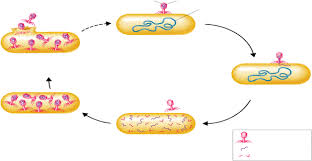
Which viral life cycle kills its host cell by lysing (bursting)?
Lysogenic Cycle
Lytic Cycle
Binary Fission
Conjugation
Can a virus be cured with antibiotics?
yes
no
A viral infection that weakens a person's immune system for the rest of their life is..
strep throat
HIV/AIDS
tuberculosis
the plague



