
 Worksheets
US Constitution Quiz #4 Review (Citizenship-Judicial Branch)
Total questions: 75
Worksheet time: 45mins


The Articles of Confederation gave the national government the power to
declare war
collect taxes
regulate foreign trade
regulate interstate trade
Shay's Rebellion was a protest by farmers who faced problems from
an oversupply of paper currency
debts they owed to creditors
debts owed to them by Congress
debts owed to them by the state of Massachusetts
The Great Compromise was an agreement about how to
ratify the Constitution
count slaves in determining population
determine a state's representation in Congress
divide powers between the states and the central government
The number of states needed to ratify the Constitution before it could go into effect was
seven
nine
eleven
thirteen
Adding a bill of rights to the Constitution was largely supported by the
small states
large states
Federalists
Antifederalists
What term means official approval
Emancipation
Proclamation
Ratification
Declaration
Which of the following was not included or emphasized in the State constitutions?
Limited the power government leaders
Everyone had the right to vote
Guaranteed specific rights for citizens (speech, religion)
Stressed liberty NOT equality
Which of the following is NOT true about the Articles of Confederation?
Under the Articles, the government was controlled by a unicameral, one house, legislature known as Congress
States kept all the powers not given to Congress
Each state had only one vote in the Congress regardless of a state's population or wealth
Congress had the power to make the states obey the Articles
Which of the following were powers of the National Government under the Articles of Confederation?
Declare war or make peace
Make treaties
Raise an army by asking the States for troops
All the above.
Our first plan of government was called
Articles of Constitution
Amendments of Confederation
Articles of Confederation
The Constitution


U.S. citizens are people who were born in the United States.
True
False
People who want to become naturalized must meet a set of requirements.
True
False
Everyone living in the U.S. has the right to freedom of expression and freedom to assemble peacefully.
true
false
There are some rights and responsibilities that are only for U.S. citizens.
true
false
People who want to become naturalized must meet a set of requirements.
True
False
Locke argued that we had 3 main natural rights. What are they? (Select 3)
Life
Liberty
Pursuit of Happiness
Property
According to John Locke, if the government didn't protect the people's natural rights, what could the people do?
Overthrow the government
Petition the government for their rights
Nothing, the people don't have rights

President of the Constitutional Convention?
George Washington
Alexander Hamilton
John Jay
James Madison


According to our Constitution, who selects Supreme Court judges?
Congress
the President
Joint Chiefs of Staff
lower court judges
How often can the number of representatives in the house change?
every 5 years
every 10 years
every 20 years
never

Which of these is a difference between the House of Representatives and the Senate?
Representatives are elected but senators are chosen by the president.
Each state has the same number of representatives and one senator.
Each state has two senators; the number of representatives depends on each state's population.
They are basically the same. They even share an office building.
The Speaker of the House becomes President if both the President and Vice President die. Who is the current Speaker of the House?
Nancy Pelosi
Tammy Duckworth
Elizabeth Warren
Lori Lightfoot

Which of the following Constitutional Principle splits powers between the national and state governments?
Republicanism
Separate Branches
Federalism
Popular Sovereignty
How many seats are on the Supreme Court?
7
9
12
11
The power of the Supreme Court to decide whether a law or an act of the other branches of government is constitutional or not is known as
Checks and Balances
Federalism
Judicial Review
Separation of Powers
Article of the Constitution that establishes the Judicial Branch is the
Article I
Article II
Article III
Article IV
Federal cases begin in
District Courts
Supreme Courts
Appelate Courts
Political Courts
Enacts legislation for worker safety
Secretary of State
Secretary of Homeland Security
Secretary of Labor
Attorney General
Secretary of the Interior
Responsible for the printing of money
Secretary of State
Secretary of Homeland Security
Secretary of Labor
Attorney General
Secretary of the Treasury
Engages in affairs with foreign countries
Secretary of State
Secretary of Homeland Security
Secretary of Labor
Attorney General
Secretary of the Interior
Helps prevent terrorist attacks
Secretary of State
Secretary of Homeland Security
Secretary of Agriculture
Attorney General
Secretary of the Interior
Promotes legislation to help farmers
Secretary of State
Secretary of Homeland Security
Secretary of Agriculture
Attorney General
Secretary of the Interior
Who is 2nd in Presidential succession?
President pro tempore of the Senate
Secretary of State
Speaker of the House
Secretary of the Treasury
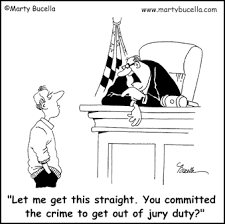
Original Jurisdiction is when:
a court is the first to hear a case
a court has the authority to hear a case
a court reviews the decision of a lower court
power is shared between the Federal and State courts to hear a certain case
The Articles of Confederation could be considered our first Constitution
True
False
Marbury v. Madison established the precedent for judicial review
True
False
One-third of the senate is elected every two years
True
False
A U.S. senator may be reelected only once
True
False
¾ vote is necessary for Congress to pass a law over the President’s veto
True
False
The president’s cabinet operates here
Executive Branch
Legislative Branch
Judicial Branch
Interprets the laws and administers justice
Executive Branch
Legislative Branch
Judicial Branch
Can declare laws unconstitutional
Executive Branch
Legislative Branch
Judicial Branch
Makes the country's laws
Executive Branch
Legislative Branch
Judicial Branch
Enforces the laws
Executive Branch
Legislative Branch
Judicial Branch
Must live in the state he or she represents
Senate
House of Representatives
Both
Neither
Elected every two years
Senate
House of Representatives
Both
Neither
Members are appointed by the Supreme Court
Senate
House of Representatives
Both
Neither
Chief legal officer
Secretary of State
Secretary of Homeland Security
Secretary of Labor
Attorney General
Secretary of the Interior
According to the Constitution, a nationwide census is conducted every ten years in order to determine-
membership in political parties
the portion of federal funds a state receives
the number of representatives for each state in Congress
which party will hold a majority in congress
System of government in which power is shared between state and national government.
federalism
nationalism
fundamentalism
sectionalism

