wayground logo

Free Printable Worksheets

NEW

Font size

S
M
L
XL
Worksheets

Elements Principles and Styles of Art

Total questions: 41

Worksheet time: 41mins

Name
Class
Date
1.

The Elements of Art are the ______ used when creating, viewing and speaking about art. (also known as building blocks)

a)

tools

b)

point

c)

dot

d)

start

2.
These would be an example of which element?
a)
texture
b)
shape
c)
line
d)
form
3.
These are examples of which Element of Art? It is measured by Length X Width.  It is an enclosed line.
a)
shape
b)
space
c)
line
d)
form
4.
These are an example of which element of art?   They are measured by Length X Width X Depth.
a)
form
b)
texture
c)
line
d)
shape
5.
These are examples of which Element of Art ? They show the light and dark areas of an object or a color. It makes flat 2-dimensional pictures look life-like or 3-dimensional.
a)
form
b)
color
c)
value
d)
shapes
6.

In Joan Miro's painting, there are two types of shape. What are they?

a)

natural and geometric

b)

biomorphic and unnatural

c)

organic and unnatural

d)

organic and geometric

7.
What is this tool that helps determine the lightness and darkness of an object or color.
a)
value scale
b)
color scale
c)
value tool
d)
color tool
8.
The surface of this rabbit looks soft, when touched all that is felt is paper. The surface does not feel the way it looks. What type of Element of Art is it?
a)
real texture
b)
implied texture
c)
implied shape
d)
real value
9.
If you were to touch the fur, the surface would look the way it feels.  What Element of Art is being used?
a)
tree value
b)
actual texture
c)
tree color
d)
implied texture
10.
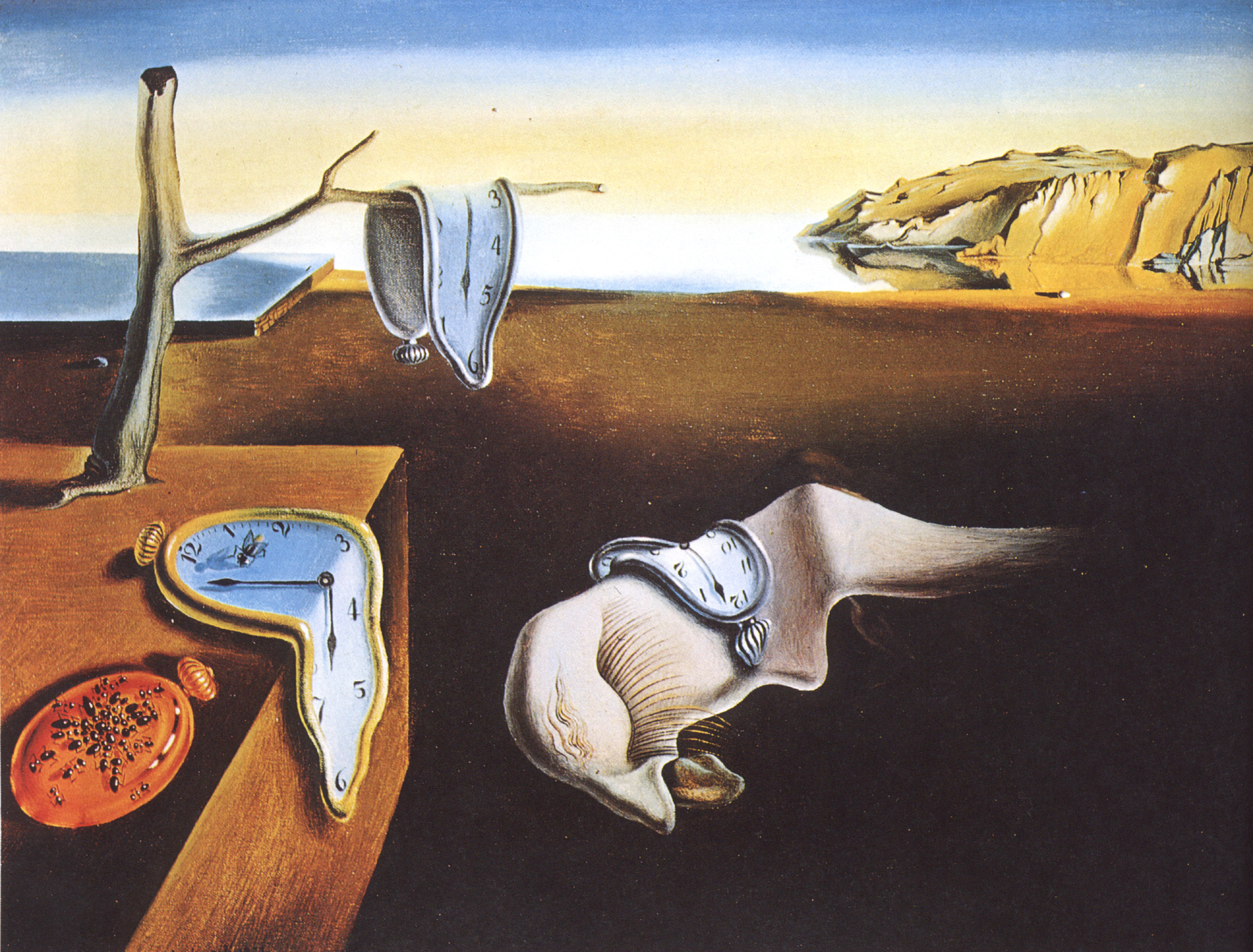
In Salvador Dali’s painting, “The Deterioration of The Persistence Of Memory”, the use of this element (Space) really helps to determine how things go into the distance. Which element is being used
a)
low space
b)
shallow space
c)
atmospheric perspective
d)
high space
11.
The Elements of Art are the “Tools” used when creating art.  The Principles of Design are the _____________ used when creating, talking or viewing art.
a)
materials
b)
focus
c)
cost
d)
rules
12.
This Principle of Design is about recurring Elements of Art?
a)
Balance
b)
Emphasis
c)
Contrast
d)
Repetition
13.
This Principle of Design is about recurring Elements of Art in a predictable way?
a)
rhythm
b)
pattern
c)
contrast
d)
emphasis
14.
This Principle of Design is about recurring Elements of Art in a non-predictable way?
a)
rhythm
b)
pattern
c)
contrast
d)
emphasis
15.
This is the way the eye travels from similar object to similar object throughout the artwork.
a)
Contrast
b)
Movement
c)
Emphasis
d)
Unity
16.

Johan Vermeer’s painting, “Girl with a Pearl Earring”, is an example of how this Principle of Design shows the differences between the various Elements of Art. This Principle of Design is known shown as?

a)

emphasis

b)

contrast

c)

movement

d)

unity

17.
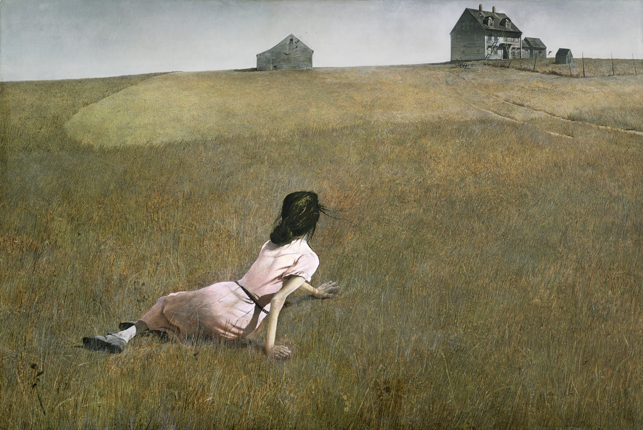
In Andrew Wyeth’s painting, “Christina’s World” he painted her as the the focal point. This is where the artist wants the viewer to see the most important part of the artwork. What is this Principle of Design called?
a)
emphasis
b)
balance
c)
unity
d)
repetition
18.
James Whistler’s painting of his mother is an example of which type of balance?  It is the most interesting type of balance - one side is not the same as the other side. This is called?
a)
symmetrical
b)
radial
c)
asymmetrical
d)
by-metrical
19.
This shows how the Principle of Design - Balance extends out from the center.  Which type of Balance is this?
a)
asymmetrical
b)
radial
c)
symmetrical 
d)
bi-metrical
20.

This type of balance shows one side looking the same as the other side. What type of Balance is this called?
a)
asymmetrical
b)
radial
c)
symmetrical 
d)
bi-metrical
21.
This principle provides harmony that makes an artwork feel complete and finished using variety and proportion. Through the use of similar Elements of Art this is achieved. Which principle is this?
a)
unity
b)
repetition
c)
balance
d)
contrast
22.

This refers to pleasing size relationships to create unity

a)

variety

b)

movement

c)

repetition

d)

proportion

23.

When different Elements of Art are used many times to create sense of unity.

a)

variety

b)

movement

c)

repetition

d)

proportion

24.
With ________ objects in the front may block ones further away.
a)
size
b)
color
c)
overlapping
d)
detail
25.

Objects closer to the bottom of the paper is in the _________ placement of a composition.

a)

under ground

b)

background

c)

foreground

d)

middle ground

26.

When objects are in the central area of your composition, it is known as?

a)

foreground

b)

middle ground

c)

underground

d)

background

27.

When objects are in the top area of your composition, it is known as?

a)

foreground

b)

middle ground

c)

underground

d)

background

28.
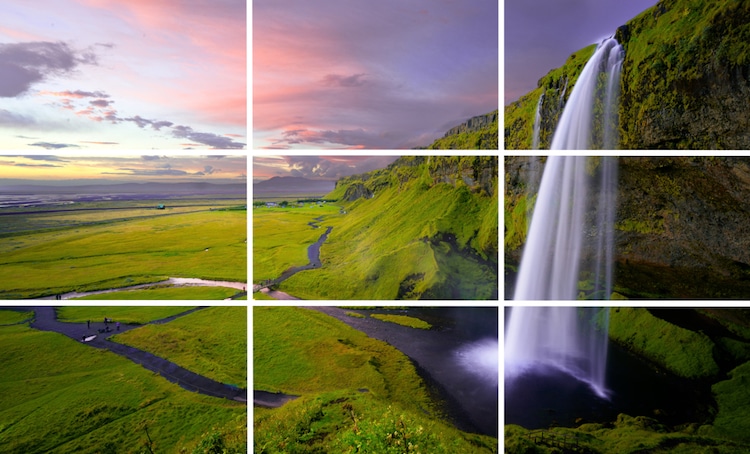
This helps to establish the best compositional placement for Emphasis when creating artwork.
a)
Focus Points of Composition
b)
Division of the Squares
c)
Dividing the Planes
d)
Rule of Thirds
29.

Where the lines intersect (circled areas) are important for what reason?

a)

Helps to divide objects into groupings- Art Groupings.

b)

Areas to hold the most weight- Perceived Weight.

c)

Sight lines that help center artwork when hanging - Horizon Line.

d)

Best places to add the focal point- Emphasis.

30.
What are the “little sketches” called that help you figure out your design layout called?
a)
drawings on little tiny paper
b)
mini sketches
c)
thumbnail sketches
d)
tiny sketches
31.

This type of space is also known as the "figure".

a)

empty space/shapes

b)

filled space/shapes

c)

positive space/shapes

d)

negative space/shapes

32.

The area around the object is know as what type of space?

a)

empty space/shapes

b)

filled space/shapes

c)

positive space/shapes

d)

negative space/shapes

33.

In this drawing the image looks like the actual object. This is art that has a subject matter and depicts life as it is seen is what type of art?

a)

Realistic

b)

Abstract

c)

Non-Objective

d)

Unclassified

34.
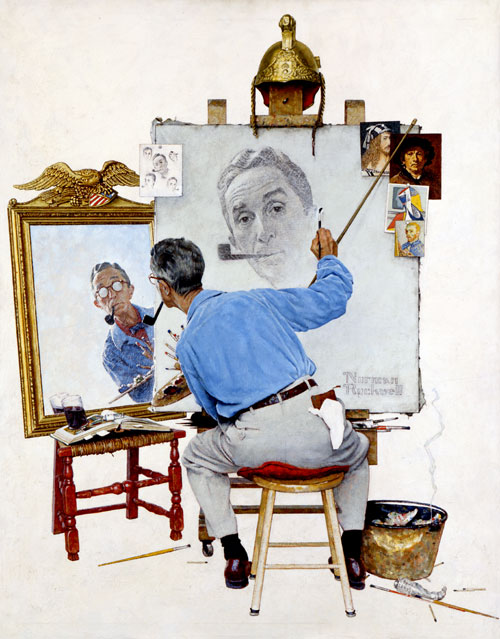
Norman Rockwell used the technique of “Trompe l’oeil” when painting his self portrait.  What does Trompe l’oeil mean?
a)
blending of edges
b)
drawing backwards
c)
lightness and darkness
d)
to fool the eye
35.
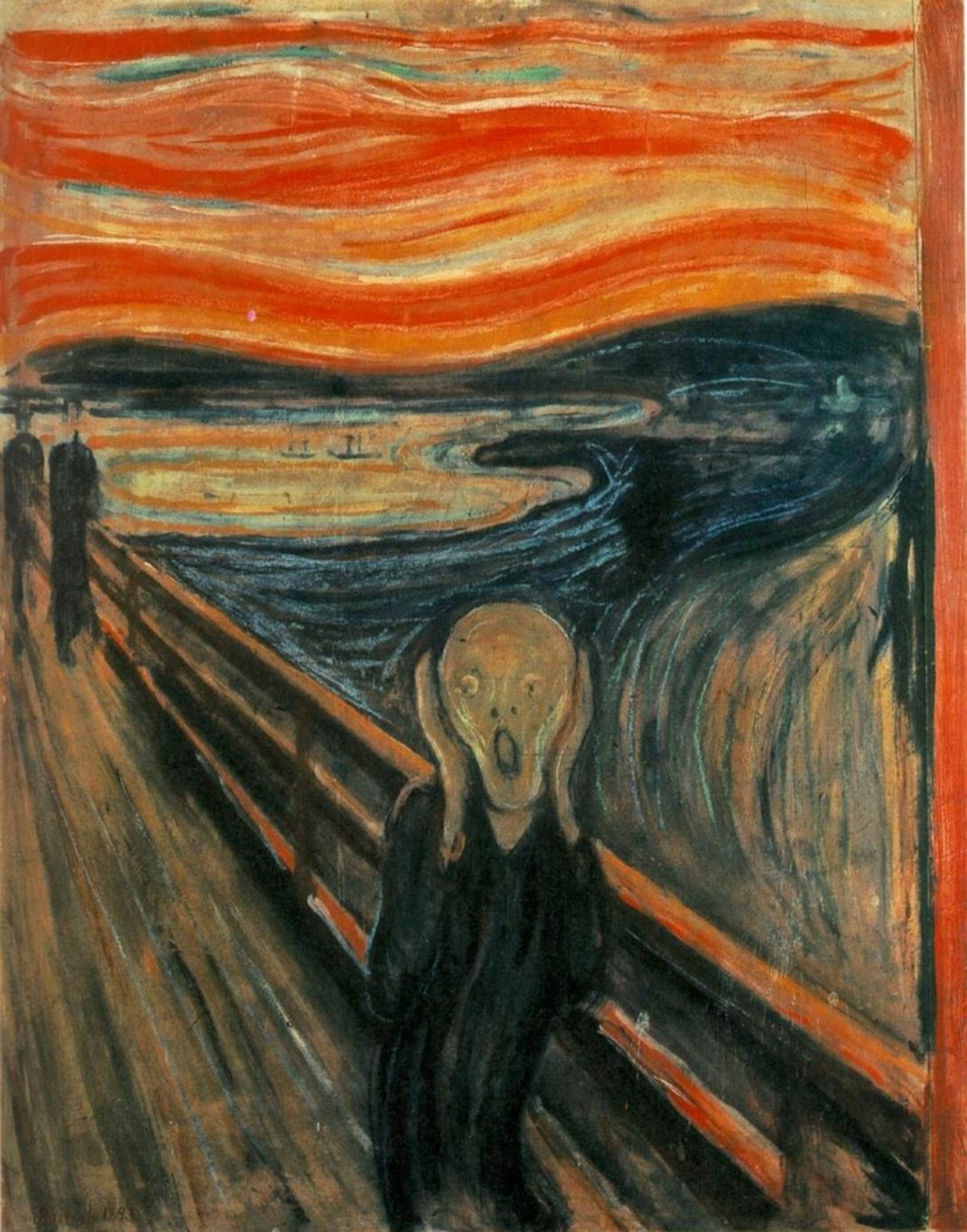
Edvard Munch, “The Scream”, would be an example of art that has been distorted for an emotional effect. This would be an example of which type of Abstract Art?
a)
Abstract Impressionism
b)
Abstracts Modern
c)
Abstract Expressionism
d)
Abstract Obliques
36.

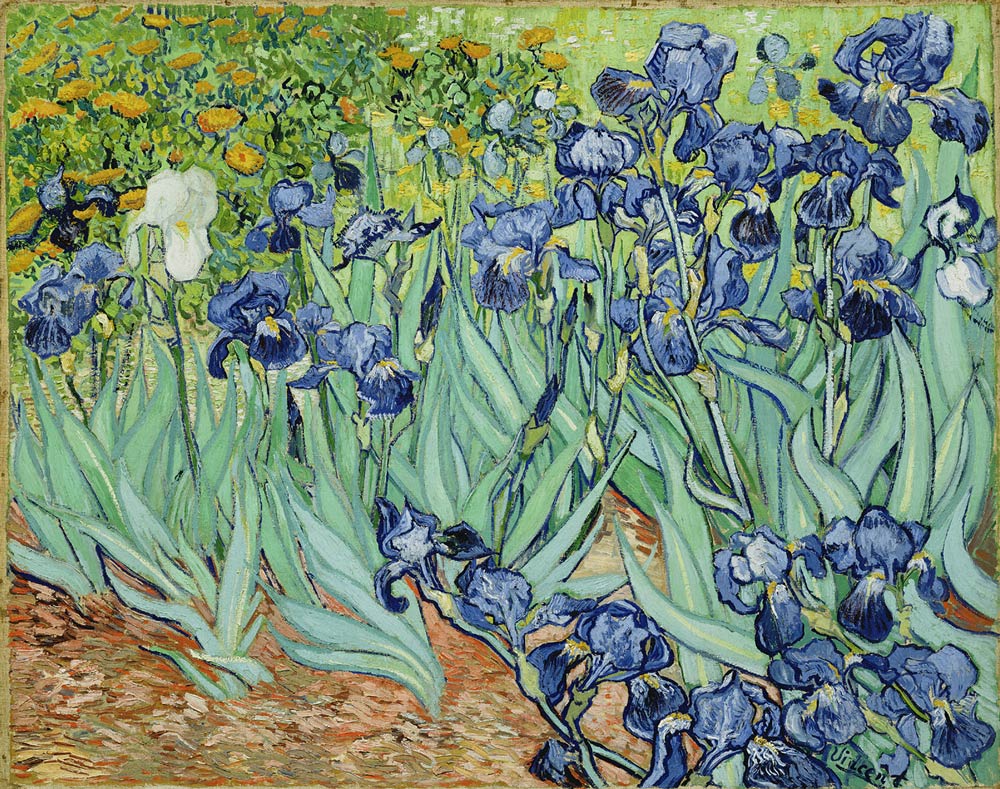
Vincent Van Gogh tried to capture this one moment, how the light reflected off the sky and surrounds while recovering in a hospital. This would be an example of which type of Abstract Art?

a)

Abstract Impressionism

b)

Abstracts Modern

c)

Abstract Expressionism

d)

Abstract Obliques

37.

Picasso’s Bull”, drawing is an example of how the subject matter was distorted by using shapes, colors and textures. This would be an example of which type of Abstract Art?

a)

Abstract Impressionism

b)

Abstracts Modern

c)

Abstract Expressionism

d)

Abstract Obliques

38.
Jackson Pollock’s painting, “Number 31”, is an example of art that does not have any subject matter.  It focuses mainly on the Elements of Art (line, shape, form, color, texture etc).  This would be an example of what type of art?
a)
Surreal
b)
Non-Objective
c)
Realistic
d)
Abstract
39.
The use of hues (red, yellow, and blue) are examples which Element of Art?
a)
value
b)
color
c)
line
d)
shape
40.
_____________ is used to make a flat 2-dimensional picture look life-like or 3-dimensional.
a)
value
b)
color
c)
lines
d)
grid
41.
Frida Kahlo's Self-Portrait shows an example of how the background is not very far from the objects in the foreground. What type of space is this?
a)
low space
b)
shallow space
c)

aerial perspective

d)
atmospheric perspective