
 Worksheets
2021 Grade-4 Unit-1 Test Review
Total questions: 29
Worksheet time: 24mins

Why is it harder for the boy in image B to roll down the hill?
motion
friction
work
energy

Students rolled a baseball down a ramp and measured the distance it traveled on three different surfaces. What question could they be trying to answer?
Why do baseballs stop after rolling down a ramp?
How does friction change how far a baseball rolls?
How does a baseball stop rolling on a flat surface?
Which kind of ball rolls the furthest down a ramp?

Students conduct an investigation by rolling a car down a ramp covered with four different surfaces, while measuring the time it takes for the car to travel from the top of the ramp to the bottom of the ramp. The results are shown in the graph. Which surface causes the LEAST amount of friction?
Surface W
Surface X
Surface Y
Surface Z
The ability to conduct electricity is a physical property. Which of the following materials is a good conductor of electricity?
rubber
plastic
copper
cloth
What happens to the water in a pot when the water evaporates?
It becomes a new substance
It gets colder.
It changes to a gas
It becomes a solid

Students enter science class. Students see the science materials shown. What should students do first?
Put a circuit together
Attach the wire to the bulb and socket
Mix the water and salt together
Wait for the teacher's directions
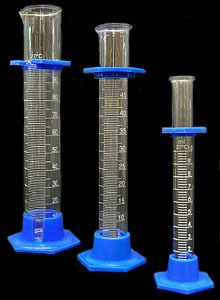
_____ is a tool that is used to measure the amount of liquid, or volume, in a container.
Flask
Test tube
Graduated cylinder
Anemometer

what force is illustrated in this picture?
push
gravity
pull
friction
Which group of items could be used to investigate the strength of different magnets?
Magnets, iron nails, triple beam balance
Magnets, water, aluminum foil
Magnets, hand lens, graduated cylinder
Magnets, pennies, ruler
Students investigated if water balloons dropped from greater heights made larger splatters. This experiment is an investigation of the effect of which of the following?
Sound
Temperature
Gravity
Magnetism

Students performed an experiment in which they rolled toy cars with different masses down the same ramp three times. Which testable question could the students be investigating?
Does the surface of a ramp affect the distance a toy car travels?
Does the mass of a toy car affect the distance it travels?
How does ramp height affect the distance a toy car travels?
How is a toy car affected by the attraction of magnets?
Which of the following is used to measure length?
Microscope
Pan Balance
Graduated Cylinder
Meter Stick


Students designed an experiment to test the effect of friction. First, they covered a ramp with waxed paper. Then they placed a toy car on the ramp and recorded how far the car rolled. Next, they replaced the waxed paper with sandpaper. Then they placed the toy car on the ramp and recorded how far the car rolled. Which of these conclusions is best supported by the information found in the diagram?
There was more friction between the car and the sandpaper than between the car and the waxed paper.
There was the same amount of friction between the car and the sandpaper and between the car and the waxed paper.
There was no friction between the car and the sandpaper or between the car and the waxed paper.
There was less friction between the car and the sandpaper than between the car and the waxed paper.

Which physical property of the object is being measured?
The mass
The weight
The volume
The shape

Name this tool and its purpose.
Graduated Cylinder; measures volume
Beaker; measures volume
Balance; measures mass
Meter Stick; measures length
A pipette is another name for a -
Water Dropper
Graduated Cylinder
Spring Scale
Thermometer
Which scientific tool would be used to measure the temperature of the air?


Which of the following measures the pull of gravity or weight of an object?
Spring Launch
Spring Scale
Triple Beam Balance
Pan Balance
_____ is a tool that is used to measure the amount of liquid, or volume, in a container.
beaker
thermometer
spring scale
graduated cylinder
A tool that is used to magnify, or make objects appear larger. This tool allows you to see small details that could NOT be seen with a hand lens.
Microscope
Safety Goggles
Hand Lens
Balance Scale
What are the three main states of matter?
solid, liquid, color
liquid, gas, solid
gas, texture, liquid
solubility, liquid, odor
Which is an example of water's solid state?
ice in a skating rink
rain falling from clouds
a waterfall in a river
steam rising from a pasta pot


