
 Worksheets
Chemistry Periodic Table Trends, Electron Configuration, Light
Total questions: 44
Worksheet time: 53mins

What do you call a positively charged ion (usually a metal) that has lost an electron?
(a)
What do you call a negatively charged ion (usually a nonmetal) that has gained an electron?
(a)

The ability of the atom to attract electrons to itself is called (a) . It's highest for Fluorine.

The amount of energy required to steal an electron from an atom is its (a) . It's very high for halogens and noble gases.

The size of the atom is called (a)

The most reactive group of metals containing one valence electron is also known as the (a) .
Elements with 8 valence electrons are known as the...
(a)

As you move DOWN a group, atoms get bigger (their atomic radius increases). Why?
More electron shells/energy levels
Fewer neutrons and protons
Fewer valence electrons
Higher electronegativity
As you move ACROSS a period, the size of each atom gets smaller. Why?
More electron shells/energy levels
Fewer neutrons and protons
More protons, but same number of electron shells
Higher electronegativity

The most reactive NONMETALS are known as halogens. They are in group (a) (a number).

Which orbital block (part of the periodic table) includes transition metals?
s-block
d-block
p-block
f-block
Which orbital block (part of the periodic table) includes lanthanides and actinides?
s-block
d-block
p-block
f-block

An element has an electron configuration of 1s2 2s2 2p6 3s2 3p6 4s2 3d7. It is in period (row)...
2
3
4
5

Alkaline earth metals, which are silvery and less reactive than Group 1, have (a) valence electrons.

Boron and aluminum have ____ valence electrons.
3
13
2
4

To attain a noble gas configuration, selenium must...
Gain two e-
Lose two e-
Gain three e-
Lose one e-

Look at your periodic table. Rank the following in order of DECREASING atomic radius.
Be, Ti, Fr
F, Al, Cs
Cs, Ca, Li
Why does magnesium have higher ionization energy than strontium?
Magnesium is an alkaline earth metal whereas strontium is an alkali metal
Trick question, magnesium is predicted to have a lower ionization energy than strontium
Magnesium has fewer energy shells/levels than strontium, so it's harder to remove an electron
Magnesium has more energy shells/levels than strontium, so it's harder to remove an electron

Which two atoms would have the SAME electron configuration?
Neutral helium atom and H+ (hydrogen cation)
Neutral helium atom and Be- (beryllium anion)
Neutral helium atom and Li+ (lithium cation)
Neutral helium atom and Li- (lithium anion)
An element whose electron configuration ends in s2d2 would be considered a...
(a)
A phosphorus atom would gain ____ electrons and ____ in size to attain a noble gas configuration.
5; decrease
3; decrease
3; increase
5; increase
A gallium atom would lose ____ electrons and ____ in size to attain a noble gas configuration.
1; decrease
3; decrease
3; increase
1; increase
What is the BEST explanation for how electron shielding influences ionization energy?
Inner electrons and valence electrons are attracted to one another
Inner electrons enhance nucleus's ability to hold onto valence electrons
Inner electrons 'block' the positive charge of the nucleus from holding onto valence electrons
Atomic radius increases going down a group

Cations are _____ than the corresponding neutral atom whereas anions are ____.
smaller, larger
larger, smaller
more reactive, less reactive
less reactive, more reactive
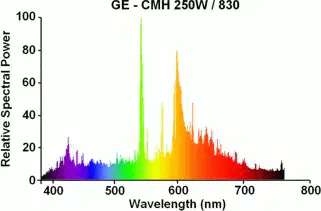
The "light fingerprint" of an element after excitation is unique. This fingerprint is also known as...
(a)
The Bohr model of the atom is also known as the _______ model, whereas more recently, Schrodinger and de Broglie showed that electrons behaved like ______.
planetary; matter waves
plum pudding; matter waves
matter waves; plum pudding
matter waves; planets orbiting the sun
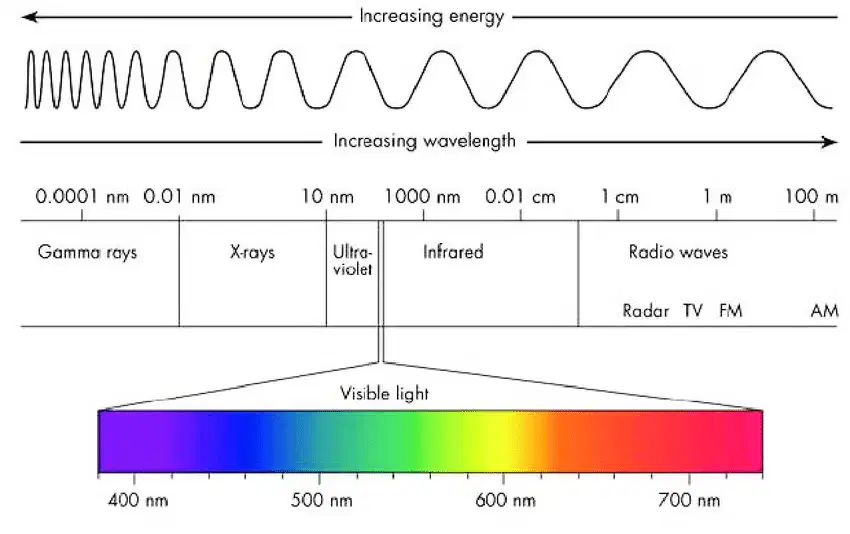
The distance between two peaks or troughs for a light wave is known as...
(a)
Which of the following is TRUE about light waves?
As the energy of light increases, wavelength also increases
High frequency waves like UV light also has high energy
The number of times a wave passes by per second is known as wavelength
Electrons jump up to the ground state after energy is added to the system

Red light has a wavelength of 6.7*10^-7 m. What is the frequency of this wave? (speed of light is 3.0*10^8 m/s)
201 Hz
4.88*10^14 Hz
4.48*10^14 Hz
2.23*10^-15 Hz

Calculate the wavelength of infrared light that has a frequency of 3.4*10^12 Hz if the speed of light is 3.0*10^8 m/s.
1.02*10^21 m
8.82*10^-5 m
11,333 m
None of the above
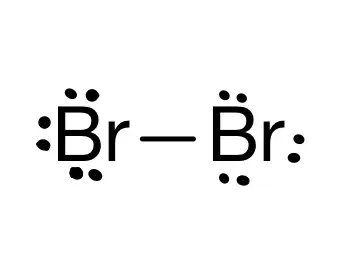
(a) electrons are involved in chemical reactions and bonding.


Which of the following will have a lower ionization energy than Scandium (Sc)?
Helium (He)
Titanium (Ti)
Calcium (Ca)
Magnesium (Mg)

Across a period in the periodic table (left to right), ionization energy generally ...
decreases
decreases, then increases
increases
remains constant

How many valence electrons are represented here?
(a)

Anions ____ electrons, becoming _____ charged and thus becoming larger.
Gain; positively (+)
Gain; negatively (-)
Lose; positively (+)
Lose; negatively (-)

Why is the atomic radius of hydrogen is so much smaller than the atomic radius for potassium?
Only potassium is an alkali metal whereas hydrogen is a non-metal
Hydrogen has fewer energy levels (electron shells) than potassium
Hydrogen has fewer protons than potassium
Hydrogen has a higher ionization energy than potassium
Which of the following elements has the largest atomic radius?
Potassium (K)
Sodium (Na)
Rubidium (Rb)
Lithium (Li)

What happens to the ionization energy as you move down a group in the periodic table?
It increases
It decreases
It fluctuates randomly
It remains the same
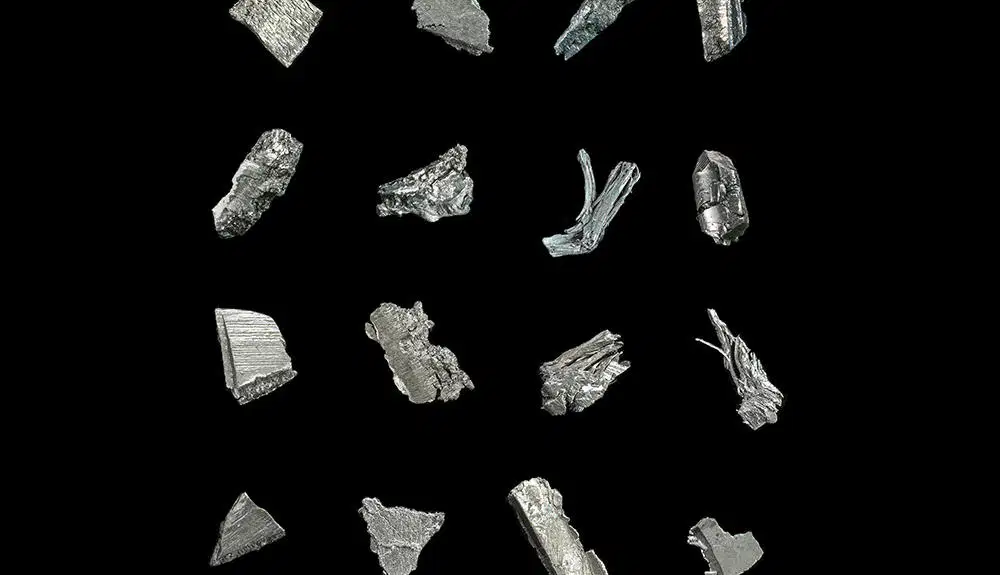
Which of the following statements is TRUE about the f-block elements?
They include the lanthanides and actinides
They are found in periods 1 and 2
They tend to react with alkali metals to reach 8 valence electrons
They are located in the s-block of the periodic table
Vertical columns on the periodic table are called (a) .
Horizontal rows on the periodic table are called (a) .
Mendeleev initially organized the periodic table by (a) .
Moseley later organized the periodic table based on (a) .

