
 Worksheets
Continental Drift
Total questions: 30
Worksheet time: 32mins
Name
Class
Date
1.
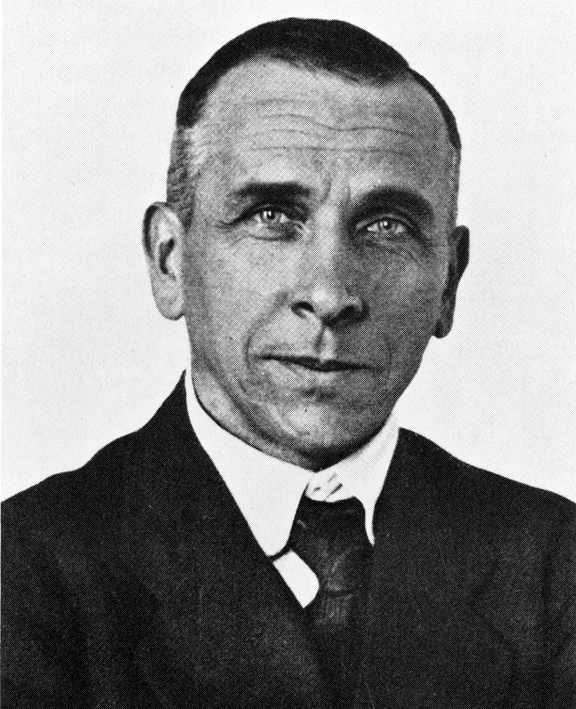
Who is the person credited with developing the theory of continental drift?
a)
Harry Hess
b)
Galileo
c)
Alfred Wegener
d)
Newton
2.
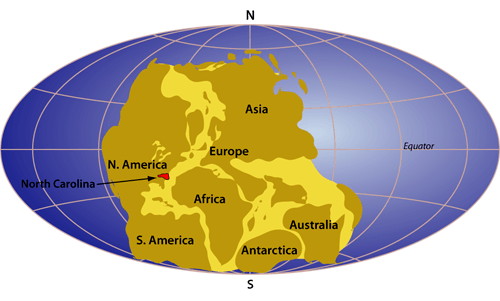
What is this a picture of?
a)
plate tectonics
b)
continental drift
c)
pangea
d)
glacier scaring
3.
What does the theory of continental drift state?
a)
The continents were once joined in a super-continent and have moved over time
b)
Continents are stationary and do not move
c)
The Earth is broken into lithospheric plates that move due to convection currents
d)
none of the above
4.
What evidence did Wegener use in his theory?
a)
Continents and fossils fitting together/matching-up like puzzle pieces
b)
glacier scars and evidence from temperature
c)
mountain ranges and coal deposits line up across continents
d)
all of the above
5.
Why did no one believe Wegener's thoery?
a)
He could not explain HOW the continents moved
b)
He didn't have evidence
c)
His data was wrong
d)
He didn't use the right technology to gather data
6.
What two specific continents fit together most noticeably?
a)
Africa and North America
b)
South America and Europe
c)
South America and Africa
d)
Antartica and Africa
7.
How long ago is Pangea believed to have existed?
a)
200-300 million years ago
b)
1000-2000 years ago
c)
10,000-20,000 years ago
d)
20-30 billion years ago
8.
What does the word Pangea mean?
a)
big land mass
b)
old land
c)
all land
9.
How does evidence of glaciation in Africa support the Theory of Continental Drift?
a)
It shows that the continents must have been in a different location.
b)
It doesn't.
c)
I shows that it was colder at the equator in the past.
d)
It shows that it was warmer at the equator in the past.
10.
What is the force that moves the continents?
a)
Conduction
b)
Convection
c)
Radiation
d)
Conveyor belts
11.
What are the two types of crust?
a)
continental and oceanic
b)
ocean and basin
c)
lower and upper
d)
thick and thin
12.
What is Pangaea?
a)
the name of a German scientist
b)
the name of the super-continent that existed millions of years ago
c)
another name for continental drift
d)
the name of an ancient fossil
13.
What is Pangaea?
a)
the name of a German scientist
b)
the name of the super-continent that existed millions of years ago
c)
another name for continental drift
d)
the name of an ancient fossil
14.
What type of evidence was NOT used by Alfred Wegener to support his continental drift hypothesis?
a)
evidence from landforms
b)
evidence from fossils
c)
evidence from human remains
d)
evidence from climate
15.
The geological theory that states that pieces of Earth's lithosphere are in constant, slow motion is the theory of
a)
subduction
b)
plate tectonics
c)
evolution
d)
seafloor spreading
16.

Who is the scientist who proposed Continental Drift Theory?
a)
Albert Einstein
b)
Alfred Wegener
c)
Isaac Newton
d)
John Dalton
17.

What causes the continents to move?
a)
Magma
b)
Tectonic Plates
c)
Earthquake
d)
All of the choices
18.

What are the remains of organism noticed by Wegener that are found the same in two continents?
a)
Leaves and flowers
b)
Ice and mountains
c)
Plants and animals
d)
Dinosaurs and reptiles
19.

What is a theory?
a)
An idea based on hypothesis and problems observed using five senses
b)
A belief, policy, or procedure that is not proposed or followed as the basis of action
c)
A supposition or a system of ideas intended to explain something, especially one based on general principles independent of the thing to be explained.
d)
A set of concepts that uses tests without evidences but uses the scientific method in order to prove a specific phenomena that happened on Earth or may happen to Earth
20.
A plate boundary where two plates move away from each other is called
a)
Divergent Boundary
b)
Convergent Boundary
c)
Transform Boundary
d)
Subduction
21.
A plate boundary where two plates move away from each other is called
a)
Divergent Boundary
b)
Convergent Boundary
c)
Transform Boundary
d)
Subduction
22.
A boy touches a hot cup and burns his finger. This is an example of
a)
Radiation
b)
Conduction
c)
Convection
d)
Convection Current
23.
A Plate Boundary where two plates move toward each other is called
a)
Convergent Boundary
b)
Divergent Boundary
c)
Transform Boundary
d)
Subduction
24.
What is the difference between the lithosphere and asthenosphere that makes up the mantle?
a)
The lithosphere is ismade of dense solid meal whle the asthenosphere is made of liquid molten metal
b)
The lithosphere is a mixture of gasses while the asthenosphere is made of solid rock
c)
The lithosphere is molten rock that moves while the asthenosphere is ridid and thin
d)
The lithosphere is made of solid rock while the asthenosphere is more flexible hot rock that moves.
25.
Convergent Plate Movement can create
a)
Rifts
b)
Mountains
c)
Ocean Ridges
d)
Radiation
26.
A Plate Boundary where two plates move toward each other is called
a)
Convergent Boundary
b)
Divergent Boundary
c)
Transform Boundary
d)
Subduction
27.
You an feel the sun's rays on your face as you lay by the beach on a warm summer day. Which type of heat transfer is this an example of?
a)
Conduction
b)
Convection
c)
Radiation
d)
Radioactive
28.
Divergent Plate movement can create
a)
Convection Currents
b)
Conduction
c)
Mountains
d)
Rifts and ocean ridges
29.
When pressure builds between two tectonic plates, it can suddenly release causing a (an) ______________________
a)
Earthquake
b)
Volcano
c)
Convection Current
d)
Gravitational Pull
30.
The movement of metals within the earth's outer core cause a ____________________________ that is detectable on the earth's surface using a compass
a)
Gravitational Pull
b)
Volcanic Eruption
c)
Magnetic field
d)
Convection Current
100 %

