wayground logo

Free Printable Worksheets

Font size

S
M
L
XL
Worksheets

Dr. Potts - Unit 2 Test Review

Total questions: 69

Worksheet time: 2hrs 47mins

Name
Class
Date
1.

Rigid, outermost layer of the plant cell (a)  

Choose from the below words
nucleus
cell membrane
cell wall
cytoplasm
2.
Semi-permeable layer around the cell that encloses the contents of the cell
a)
nucleus
b)
cell membrane
c)
cell wall
d)
chloroplast
3.
jelly-like substance that is located between the cell membrane and the nucleus
a)
mitochondria
b)
chloroplast
c)
vacuole
d)
cytoplasm
4.

I am the "brain" of the cell. I control all cell activities (a)  

Choose from the below words
nucleus
lysosome
cytoplatelets
vacuole
5.

Which organelle uses energy from sunlight to make sugar? (a)  

Choose from the below words
mitochondria
nucleus
chloroplasts
vacuoles
6.
What organelle helps with cell digestion?
a)
Lysosomes
b)
Ribosomes
c)
Golgi Complex
d)
ER
7.
Using this image, what organelle is D?
a)
Endoplasmic Reticulum
b)
Flagella
c)
Rough ER
d)
Smooth ER
8.
What is the difference between rough and smooth ER?
a)
There is no difference.
b)
Plants have rough ER, animals have smooth ER.
c)
What type of injuries the Doctors treat.
d)
Rough has ribosomes, smooth does not.
9.
Which of the following is directly involved in the transportation of materials inside/within the cell?
a)
Endoplasmic Reticulum
b)
Vacuole
c)
Lysosome
d)
Mitochondria
10.
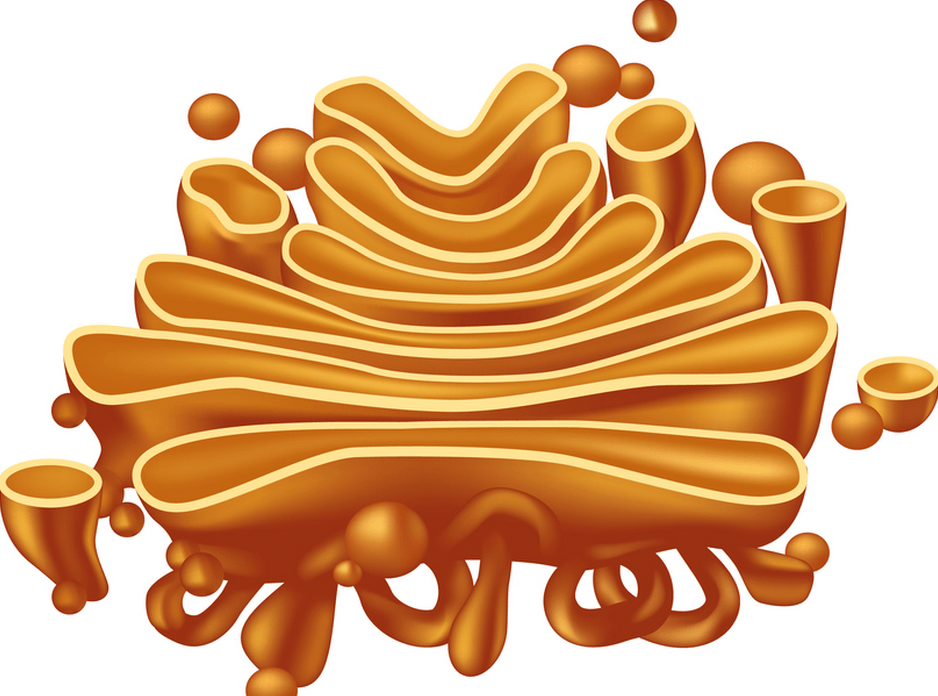
I am a protein packaging and shipping machine! Who am I?
a)
vacuole
b)
ribosome
c)
mitochondrion
d)
golgi apparatus
11.
What is found in both plant and animal cells but is much larger in plant cells?
a)
Nucleus
b)
Mitochondria
c)
Chloroplast
d)
Vacuole
12.
Where are proteins made?
a)
Golgi body
b)
Mitoichondria
c)
Chromosomes
d)
Ribosomes
13.
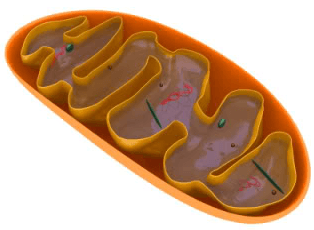
What are tiny organelles that convert glucose into ATP?
a)
Ribosomes
b)
Vesicles
c)
Cytoskeleton
d)
Mitochondria
14.

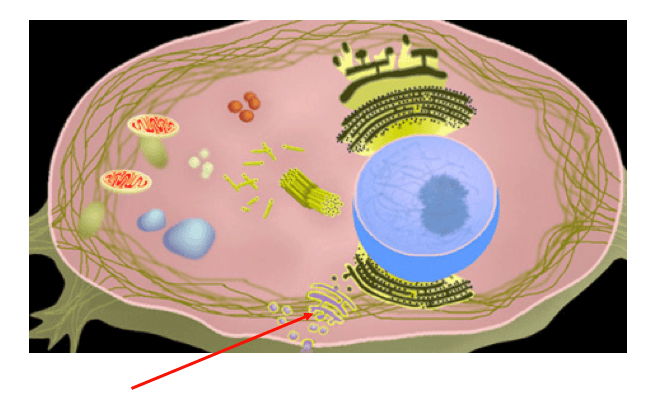
Identify the structure that the arrow is pointing to.

a)

Endoplasmic Reticulum

b)

Golgi Body

c)

Ribosome

d)

Mitochondria

15.

In what organelle is the genetic material found inside?

a)

cell membrane

b)

chloroplast

c)

nucleus

d)

ribosome

16.

Anything that photosynthesizes HAS to be

a)

an autotroph

b)

a heterotroph

c)

both of these

17.
What is the difference between a plant and animal cell?
a)
Animal cells are eukaryotic and plant cell are not
b)
Plant cells are eukaryotic and animal cells are not
c)
plant cells have a larger vacuole, chloroplast, and a cell wall
d)
animal cells have a larger vacuole, chloroplast, and a cell wall
18.
Which of the following is the correct equation for PHOTOSYNTHESIS?
a)
CO+ light + H2O --> O+ Sugar
b)
CO+ sugar + H2O --> O+ light
c)
O2 + light + H2O --> CO+ Sugar
d)
CO+ O2 + H2O --> Light+ Sugar
19.
What is the pigment in chloroplasts that performs photosynthesis?
a)
Chlorosynthesis
b)
Chlorophyll
c)
ADP
d)
Electron Transport
20.
What are the products of photosynthesis?
a)
Glucose and Chlorophyll
b)
Glucose and Oxygen
c)
Water and Light energy
d)
Carbon Dioxide and Light energy
21.
The openings on the bottom of leaves, which allow in CO2 (carbon dioxide) and releases O2 (oxygen) is the 
a)
stomata
b)
xylem
c)
Phloem
d)
Mesophyll
22.

1. What is the main purpose of photosynthesis?

a)

to create energy

b)

to make food

c)

to make Carbon di oxide

d)

to absorb sunlight

23.
What are the products of photosynthesis?
a)
water and carbon dioxide
b)
oxygen and glucose
c)
oxygen and carbon dioxide
d)
oxygen and water
24.
Cellular respiration is a cellular process that occurs in the cells of –
a)
plants
b)
Plants and Animals
c)
Animals
d)
None
25.
What are the two reactants of cellular respiration?
a)
C6H12O6 & 6CO2
b)
6 CO2 & 6H2O
c)
C6H12O& 6O2
d)
6CO2 & 6O2
26.
Fermentation involves
a)
aerobic respiration
b)
anaerobic respiration 
27.
______________ produces the most ATP.
a)
photosnthesis
b)
aerobic respiration
c)
anaerobic respiration
d)
glycolysis
28.

How does ATP provide energy for the cell?

a)

The bond between the first and second phosphate is broken to release energy.

b)

The bond between the adenine and the sugar is broken to release energy.

c)

The bond between the sugar and phosphates are broken and release energy.

d)

The bond between the second and third phosphate are broken to release energy.

29.
What is the correct equation for cellular respiration?
a)
6O2 + C6H12O6 -> 6CO2 + 6H2O + Energy
b)
6O2 + C6H12O6 + Energy -> 6CO2 + 6H2O
c)
6CO2 + 6H2O -> 6O2 + C6H12O6 + Energy
d)
6CO2 + 6H2O + Energy -> 6O2 + C6H12O6
30.

What are the two parts of aerobic respiration?

a)

Krebs & Calvin Cycle

b)

Glycolysis & Krebs

c)

ETC (Electron Transport Chain) & The Calvin Cycle

d)

Krebs Cycle and ETC (Electron Transport Chain)

31.

Where does Anaerobic cellular respiration take place?

a)

The cell membrane

b)

The Chloroplast

c)

The Mitochondria

d)

The Cytoplasm

32.

The portion of Photosynthesis where the glucose molecule is actually made......

a)

The Calvin cycle

b)

The light reaction

c)

Krebs cycle

d)

Glycolysis

33.

What are the two parts of aerobic respiration?

a)

Krebs & Calvin Cycle

b)

Krebs Cycle and ETC (Electron Transport Chain)

c)

ETC (Electron Transport Chain) & The Calvin Cycle

d)

Glycolysis & Krebs

34.

Which statement is an accurate description of The Endosymbiotic Theory?

a)

The Endosymbiotic Theory explains how mitochondria and chloroplast ended up becoming a part of the prokaryotic cell.

b)

This theory explains the origin of the golgi apparatus and Chloroplast in eukaryotic cells.

c)

This theory explains the origin of eukaryotic cells.

d)

The Endosymbiotic Theory explains how mitochondria and chloroplast ended up becoming a part of the eukaryotic cell.

35.

These are counted as evidence that supports the endosymbiotic theory

a)

The fact that the golgi body is inside the eukaryotic cell

b)

The fact that The mitochondria and chloroplast have their own DNA

c)

The fact that The nucleus and chloroplast have their own unique DNA

d)

None of these

36.
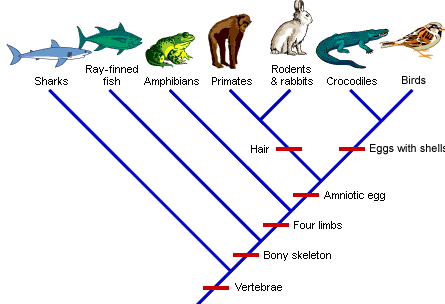
According to this cladogram, sharks are MOST closely related to which organism? 
a)
Amphibians
b)
Ray finned fish
c)
Crocodiles
d)
Birds
37.
You look at two species and see very similar DNA. What does this likely tell you?
a)
These are the same animal.
b)
These animals have a common ancestor.
c)
These animals are not likely related.
d)
These animals are likely becoming one species.
38.
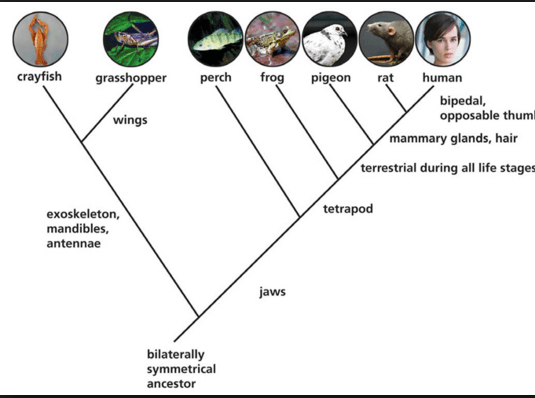
According to the cladogram, which organism is most distantly related to the human?
a)
crayfish
b)
grasshopper
c)
perch
d)
frog
39.

Which species is most closely related to species C?

a)

A

b)

B

c)

D

40.
The scientific name for an organism is made from the:
a)
class and family name
b)
genus and species name
c)
domain and kingdom name
d)
kingdom and phylum name
41.
The 8 levels of classification, most broad to most specific.
a)
Domain, Genus, Family, Order, Class, Phylum, Kingdom, Species
b)
Domain, Species, Kingdom, Genus, Phylum, Family, Class, Order
c)
Domain, Kingdom, Phylum, Class, Order, Family, Genus, Species
d)
Domain, Kingdom, Species, Phylum, Family, Order, Class, Genus
42.

Match the following monomer

a)

amino acids

1.

proteins

b)

fatty acids

2.

lipids

c)

saccharides

3.

carbohydrates

d)

nucleic acids

4.

nucleotides

e)

Carbohydrates

5.

starches & sugars

43.

Match the following organelles

a)

Nucleus

1.

Contains the codes & information for protein synthesis

b)

Rough ER

2.

Transports the proteins

c)

Golgi

3.

Packages the proteins

d)

Mitochodrion

4.

Supplies ATP to all organelles

e)

Ribosomes

5.

Synthesizes the proteins

44.

Fill in the chemical equation for photosynthesis:

​ (a)   ​ (b)   ​ (c)  

Choose from the below words
Carbon dioxide + Water
-- Light -->
Oxygen + Glucose
Water + Oxygen
45.

Select all that apply: What kinds of organisms can do photosynthesis?

a)

Plants (with chloroplasts)

b)

Animals

c)

Bacteria (with chlorophyll)

d)

Fungi

46.

Fill in the equation for photosynthesis:

​ (a)   + Water --​ (b)   --> ​ (c)   + Glucose

Choose from the below words
Carbon dioxide
Light
Oxygen
47.
Where does glycolysis take place?
a)
Cytoplasm
b)
Stroma
c)
Thylakoid
d)
Mitochondria
48.
Which is not a waste product of cellular respiration?
a)
Water
b)
Heat
c)
Carbon Dioxide
d)
Oxygen
49.

What do organisms use ATP for?

a)

To make glucose

b)

To live and function

c)

For photosynthesis

50.

What is the name of the 1st step of cellular respiration?

a)

aerobic

b)

Kreb's cycle

c)

Glycolysis

d)

ETC

51.

Plants do not go through cellular respiration

a)

True

b)

False

52.

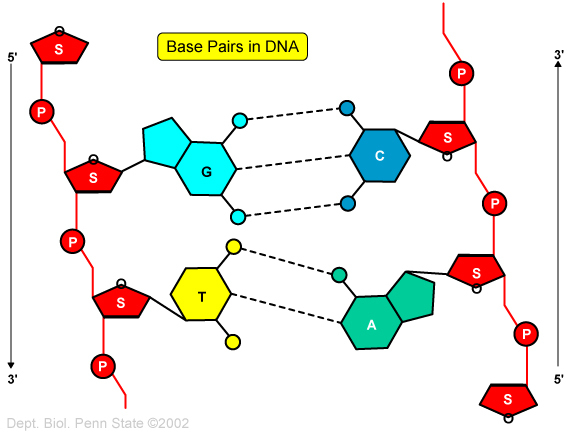
What is "A"?

a)

Nucleotide

b)

Deoxyribose Sugar

c)

Nitrogenous base

d)

Phosphate

53.

What determines the specific traits in an organism?

a)

The number of carbons in the DNA molecule.

b)

The number of hydrogen bonds that hold the strands of DNA together. 

c)

The sequence of nucleotide bases in the DNA molecule.

d)

The sequence of phosphates along each DNA strand. 

54.

In eukaryotes, DNA is usually found in the​ (a)   , while in prokaryotes, DNA is found in the ​ (b)   .

Choose from the below words
nucleus
cytoplasm
55.
If there is 37% guanine how much cytosine is there?
a)
77%
b)
47%
c)
37%
d)
57%
56.

Chargraff's Rule says that

a)

A pairs with C

b)

C pairs with G

c)

G pairs with T

d)

T pairs with A

57.

What makes up the SIDES of a DNA ladder?

a)

nitrogen bases

b)

sugars & phosphates

c)

genes & chromosomes

d)

RNA

58.
Nitrogenous bases are joined by which type of bond?
a)
polar bonds
b)
ionic bonds
c)
covalent bonds
d)
hydrogen bonds
59.

Match the following

Throw Back question

a)

Lipid

1.

Fats

Cell membranes

b)

Carbs

2.

Sugars

Rice

Potatoes

c)

Nucleic Acid

(NA)

3.

DNA

RNA

d)

Proteins

4.

Amino Acids

60.

This is a picture of:

a)

Prokaryotic Cell

b)

Eukaryotic Cell

61.

Which type of cell is this?

a)

Prokaryotic Cell

b)

Eukaryotic Cell

62.
How would the DNA sequence GCTATA be transcribed to mRNA?
a)
GCUAUA
b)
CGATAT
c)
CGAUAU
d)
GCUTUT
63.
In messenger RNA, each codon specifies a particular
a)
nucleotide
b)
enzyme
c)
amino acid
d)
promoter
64.
Changes is DNA sequences that affect genetic information are known as
a)
replications
b)
mutations
c)
transformations
d)
translations
65.
Which of the following is incorrect regarding RNA?
a)
RNA contains uracil
b)
RNA can only be found inside the nucleus
c)
RNA is single stranded
d)
RNA contains genetic information
66.
What is the mRNA strand that would be created from this DNA strand:
T A C A G G C C T
a)
A C G T C C G G A
b)
A U G U C C G G A
c)
T U G G G C C A T
d)
U T G U C C G G U
67.
The diagram shows the process of
a)
Transcription
b)
Translation
c)
Replication
d)
Mitosis
68.
What is occurring in this diagram?
a)
Translation
b)
Transcription
c)
Dehydration Synthesis
d)
Hydrolysis
69.
Which amino acid is coded from the DNA segment:
G G T
a)
Glutamine
b)
Arginine
c)
Glycine
d)
Proline