wayground logo

Free Printable Worksheets

Font size

S
M
L
XL
Worksheets

Mass calculations

Total questions: 27

Worksheet time: 20mins

Name
Class
Date
1.
In order for an atom to be neutral what has to be true?
a)
The atom has more protons than neutrons
b)
The atom has more neutrons than protons
c)
The atom has the same number of protons and neutrons
d)
The atom has the same number of protons and electrons
2.

What is the combined mass of all the protons and neutrons of an atom and is approximately equal to the number of protons and neutrons?

a)

atomic mass

b)

atomic number

c)

subatomic particles

d)

nucleus weight

3.

What is a subatomic particle without an electric charge, located in the nucleus of an atom?

a)

neutron

b)

proton

c)

electron

d)

valence electron

4.
Most of the mass in an atom is made up of _____________________?
a)
protons and electrons
b)
protons and neutrons
c)
neutrons and electrons
d)
electrons and quarks
5.

What is a subatomic particle with a positive charge that is in the nucleus of an atom?

a)

neutron

b)

proton

c)

electron

d)

valence electron

6.
How is the number of neutrons in the nucleus of an atom calculated?
a)
Add the number of e- and p+ together
b)
Subtract the number of e- from p+
c)
Subtract the number of p+ from the mass number
d)
Add the mass number to the number of e-
7.

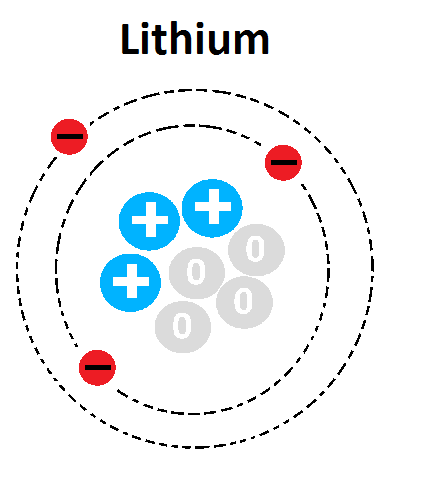
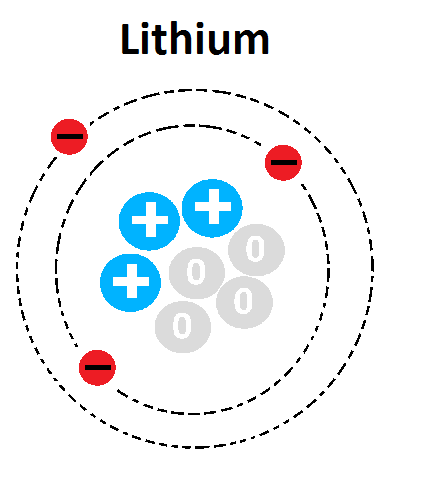
What is the mass number of this atom?

a)

1

b)

3

c)

4

d)

7

8.

What is the number of protons in the nucleus of an atom that determines the chemical properties of an atom?

a)

mass number

b)

atomic mass

c)

atomic number

d)

atomic symbol

9.

What is the atomic number of this atom?

a)

1

b)

3

c)

4

d)

7

10.
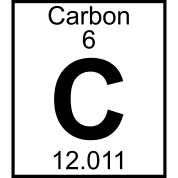
What does the C represent?
a)
atomic mass
b)
atomic number
c)
element name
d)
chemical symbol 
11.

What does the 6 represent?

a)

Atomic mass

b)

atomic number

c)

chemical symbol

d)

element name

12.

Using your periodic Table, calculate the formula mass of N2.

Answer:

(a)  

13.

Using your periodic Table, calculate the formula mass of CaCO3.

Answer:

(a)  

14.

Using your periodic Table, calculate the formula mass of Mg(OH)2.

Answer:

(a)  

15.

What elements are in this compound?

a)

Iron

b)

Sulfur

c)

Oxygen

d)

all of the above

16.

How many atoms of Iron are in this formula

a)

2

b)

3

c)

12

d)

1

17.

What is the total atomic mass of Fe in this compound

a)

55.845

b)

111.69

c)

32.067

d)

15.999

18.
How many elements are in C6H12O6?
a)
1
b)
2
c)
3
d)
4
19.

What is the smallest unit of matter? It is composed of protons and neutrons, held together in the nucleus, and electrons around the nucleus in different electron orbitals, which form an electron cloud.

a)

cell

b)

nucleus

c)

atom

d)

electron

20.
In the equation,          2Mg + O2 ---> 2MgO, which are the reactants?
a)
Mg and O
b)
MgO
c)
Mg and MgO
d)
O and MgO
21.
Balance this equation...
H2 + Cl2 --> HCl
a)
It is balanced 
b)
3H2 + Cl2 --> 6H2Cl
c)
H2 + Cl2 --> 2HCl
d)
I don't know! Oh well.
22.
Which of the following is an unbalanced equation?
a)
CaCO--> CaO + CO2
b)
PbO+ 2H2-->2Pb + H2O
c)
2Na+ 2H2O-->2NaOH + H2
d)
CS+ 2O--> CO+ 2SO2
23.
Which of the following shows the correct way to balance the chemical equation?
Fe + O2 -> Fe2O3
a)
4Fe + 3O2 -> 2Fe2O3
b)
2 Fe + 3O2 -> Fe2O6
c)
4 Fe + O6 -> 2Fe2O3
d)
None of the options are correctly balanced.
24.

What is the law of conservation of mass?

a)

Mass of products is more than mass of reactants

b)

Mass of reactants is less than mass of products

c)

Mass of reactants is equal to mass of products

25.
A sealed test tube containing 8 grams of iron filings and 5 grams of sulfur is heated until the material in the test tube glows bright red.  What is the mass of products? 
a)
Mass is less than 13 grams
b)
Mass is equal to 13 grams
c)
Mass is greater than 13 grams
d)
Mass cannot be measured
26.

Predict what would happen to the mass of this chemical reaction

Cu (s) + O2(g) --> CuO ( s)

a)

increase

b)

decrease

c)

stays the same

27.

Predict what would happen to the mass of this chemical reaction

HCl (aq) + CuCO3(s) --> CuCl2( aq) + CO2(g) + H2O (l)

a)

increase

b)

decrease

c)

stays the same