Wayground logo

Free Printable Worksheets

Font size

S
M
L
XL
Worksheets

History of atom and Subatomic Particles

Total questions: 25

Worksheet time: 19mins

Name
Class
Date
1.
Which model is this?
a)
Thomson Model
b)
Cloud Model
c)
Bohr Model
d)
Rutherford Model
2.

Which of the following is/are conclusions based on Rutherford’s gold foil experiment?

a)

Atom is mostly empty space

b)

The nucleus is positively charged

c)

The atom has a small dense nucleus

d)

All answers are correct

3.
J.J. Thomson provided evidence that an atom...
a)
is the smallest particle of matter
b)
contains negatively charged particles
c)
has an overall negative charge
d)
has an overall positive charge
4.

Democritus was known for

a)

discovering the electron

b)

discovering the proton

c)

creating the term atom, meaning indivisible

d)

discovering the nucleus

5.
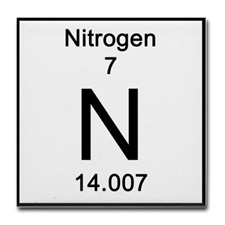
What is the number of protons that the element in this image contain?
a)
14
b)
7
c)
15
d)
18
6.
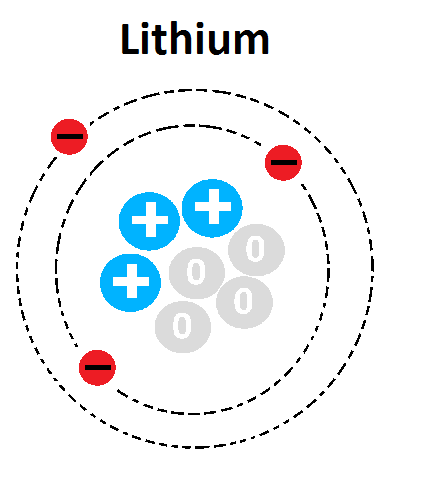
What is the atomic number of this nucleus?
a)
1
b)
3
c)
4
d)
7
7.

What is the mass number of this atom?

a)

1

b)

3

c)

4

d)

7

8.
Which subatomic particles contribute the most to the mass of an atom?
a)
Protons, Neutrons, Electrons
b)
Protons only
c)
Protons and Electrons
d)
Protons and Neutrons
9.

An atom has 10 protons, 15 neutrons and 10 electrons what is its mass number.

a)

20

b)

10

c)

35

d)

25

10.
The atomic number of an element that has 9 protons, 9 electrons, and 10 neutrons is _____.
a)
9
b)
10
c)
19
d)
28
11.
An element with a mass number of 11 and an atomic number of 5 has how many neutrons?
a)
11
b)
5
c)
6
d)
16
12.
Which statement is true about oxygen-17 and oxygen-18?
a)
They do not have the same number of protons.
b)
Their atoms have an identical mass.
c)
They are isotopes of oxygen.
d)
The have the same mass number.
13.
What is the charge of an atom that has lost one electron?
a)
1-
b)
2-
c)
1+
d)
2+
14.

What is the charge of an atom that has gained three electrons?

a)

1-

b)

3-

c)

1+

d)

3+

15.
What is the atomic mass of the atom pictured? 
a)
9
b)
10
c)
18
d)
19
16.
What is the neutron? 
a)
A negatively charged particle outside the nucleus 
b)
A positively charged particle inside the nucleus 
c)
A particle without a charge inside the nucleus 
d)
A positively charged particle outside the nucleus 
17.
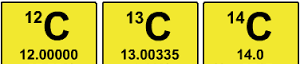
What do these isotopes of carbon all have in common?
a)
neutrons & mass number
b)
atomic number and neutrons
c)
atomic number and electrons
d)
protons, atomic number, and mass number
18.
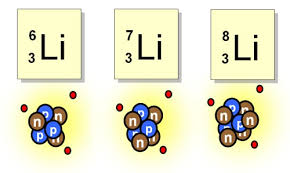
which atom has  4 neutrons?
a)

Lithium-6

b)

Lithium-7

c)

Lithium-8

d)
they have the same # of neutrons
19.
If X is the symbol for an element, which of the following two symbols represent    isotopes of the same element?     I. 7735X  II. 7733X  III. 8137X  IV. 8135 X
a)
I and II
b)
III and IV
c)
I and IV
d)
I and III
20.

John Dalton said that all atoms of the same element are _________________.

a)

identical

b)

indestructible

c)

indifferent

d)

ironic

21.

Rutherford's Gold Foil Experiment provided evidence that

a)

gold is not as dense as previously thought

b)

negative and positive charges are spread evenly throughout the atom

c)

there is a dense positively charged nucleus at the center of an atom

d)

alpha particles have a positive charge

22.

Who used a cathode ray in their experiment to discover the electron?

a)

Dalton

b)

Democritus

c)

Thomson

d)

Rutherford

23.

Which scientist performed the gold foil experiment?

a)

Dalton

b)

Rutherford

c)

Thomson

d)

Goldstein

24.
An element has two naturally occurring isotopes. One is 10.013 amu and is 19.9% abundant. The other is 11.01 amu and is 80.1% abundant. What is the average atomic mass? What element is it?
a)
9.012, Beryllium
b)
12.011, Carbon
c)
6.941, Lithium
d)
10.812, Boron
25.
An isotope has three forms.  30% have a mass of 4 amu, 20% have a mass of 5 amu and 50% have a mass of 3 amu.  Average atomic mass will be closest to
a)
2 amu
b)
3 amu
c)
4 amu
d)
5 amu