
 Worksheets
Cells Section 1 Quiz
Total questions: 26
Worksheet time: 26mins
Name
Class
Date
1.
Which type of cell has no nucleus?
a)
Eukaryote
b)
Prokaryote
c)
Animal
d)
Plant
2.
Prokaryotes have contains membrane-bound organelles. True or False?
a)
True
b)
False
3.
Are prokaryotes multicellular or unicellular?
a)
Multicellular
b)
Unicellular
4.

Which type of cell?
a)
Prokaryote
b)
Eukaryote
c)
Mixed
5.

Which type of cell?
a)
Prokaryote
b)
Eukaryote
6.
Has cytoplasm
a)
Prokaryote
b)
Eukaryote
c)
both
d)
yes
7.
Plants and animal cells are examples of ___ cells
a)
prokaryotic cells
b)
eukaryotic cells
8.
Which of the following are prokaryotic cells?
a)
plants
b)
animals
c)
baceteria
9.
Eukaryotes have a cell membrane?
a)
True
b)
False
10.
Eukaryotes contain DNA and ribosomes?
a)
True
b)
False
11.
Which type of cell is bigger?
a)
Prokaryotic
b)
Eukaryotic
12.
Where is the genetic material found in the cell?
a)
Nucleolus
b)
Cytoplasm
c)
Nucleus
d)
Chloroplast
13.
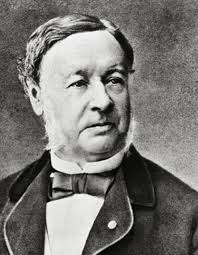
Which of the following scientists concluded that all animals are made of cells?
a)
Rudolf
Virchow
b)
Matthais
Schleiden
c)
Robert
Hooke
d)
Theodor
Schwann
14.
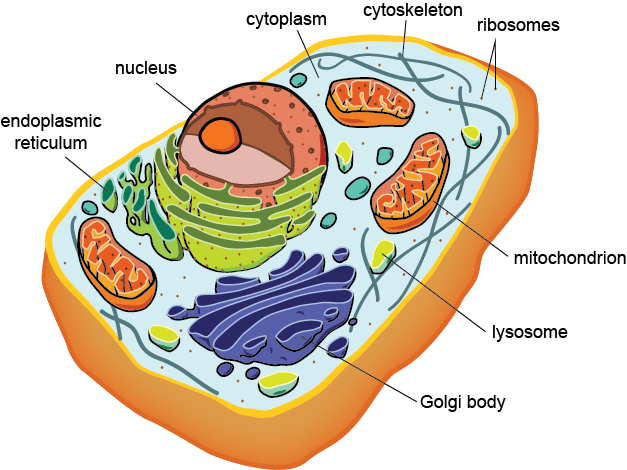
Which of the following statements is not part of the cell theory?
a)
Cells are the basic unit of structure and function in all living things.
b)
All cells are produced from other cells.
c)
Only animal cells are composed of cells.
d)
All living things are composed of cells.
15.

Which of the following scientists contributed to the cell theory?
a)
Rudolf Virchow, Robert Hooke, Anton van Leuwenhoek
b)
Matthais Schleiden, Theodor Schwann, Rudolf Virchow
c)
Robert Hooke, Theodor Schwann, Anton von Leuwenhoek
16.
The ___ is the basic unit of sturucture and function of organisms
a)
atom
b)
cell
c)
matter
d)
all other answers are correct
17.
Which invention from the 17th century allowed for the development of modern cell theory?
a)
x-rays
b)
computers
c)
the light microscope
d)
the scanning electron microscope
18.
What did Hooke first examine?
a)
Pond water
b)
Plant cells
c)
Cork
d)
Animal fat
19.
You should always carry the microscope by the
a)
arm and base
b)
arm and body tube
c)
arm only
20.
When looking at a specimen on your slide, you should always start with the
a)
low objective lens
b)
medium objective lens
c)
high objective lens
21.
A compound light microscope will use _______ or more lenses at the same time.
a)
1
b)
2
c)
3
22.
Magnifies the image (usually 10x) and you look into the scope here.
a)
Eyepiece/ Ocular
b)
arm
c)
low power objective
d)
fine adjustment
23.
Lets light pass through an object and then through two or more lenses
a)
Binocular Microscope
b)
Compound Microscope
c)
Electron Microscope
d)
Simple Microscope
24.
Which statement is a part of the cell theory?
a)
All cells come from preexisting cells
b)
Bacteria are prokaryotic cells
c)
Eukaryotic cells are complex
d)
Humans are multicellular
25.
Which microscope delivers the highest overall magnification possible?
a)
Scanning Electron (SEM)
b)
Transmission Electron Microscope (TEM)
c)
Light Microscope
d)
Dissecting Microscope
26.
Which of the following is a disadvantage of both the TEM and SEM?
a)
Low magnification
b)
Cannot observe living specimens
c)
High resolution
100 %

