
 Worksheets
Grade-7 Distribution of rainfall
Total questions: 17
Worksheet time: 9mins
Rainfall is caused by
water vapour rising
Water vapor cooling down and condensing
Condensed water vapour falling back to the earth
evaporation
There are _______ types of rainfall.
2
3
4
5
________ rainfall occurs mainly in the afternoon.
convectional
relief
frontal
border
Which type of rainfall is most likely to be found in tropical regions close to the equator?
Convectional
Relief
Frontal

The correct geographical term for any water falling from the sky is...
precipitation
accumulation
condensation
transpiration

Which type of rainfall is seen in the image?
precipitation
relief
frontal
convectional

True or False?
The image illustrates frontal rainfall.
False
True

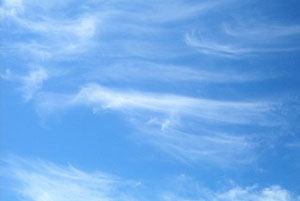
What type of clouds are shown in the picture below?
cumulus
cirrus
stratus
cumulonimbus
These clouds are made of ice crystals.
cumulus
cirrus
stratus
cumulonimbus
Which will hold more water, warm air or cold air?
Warm Air
Cold AIr
‘When temperature increases, relative humidity…’
Increases
Decreases

