
 Worksheets
World History Mid-Term
Total questions: 40
Worksheet time: 18mins
One similarity between the Sepoy Rebellion in India and the Boxer Rebellion in China is that both were:
Reactions to the opium trade
Religious reform movements
Attempts to end foreign interference
Success revolts against absolute monarchs
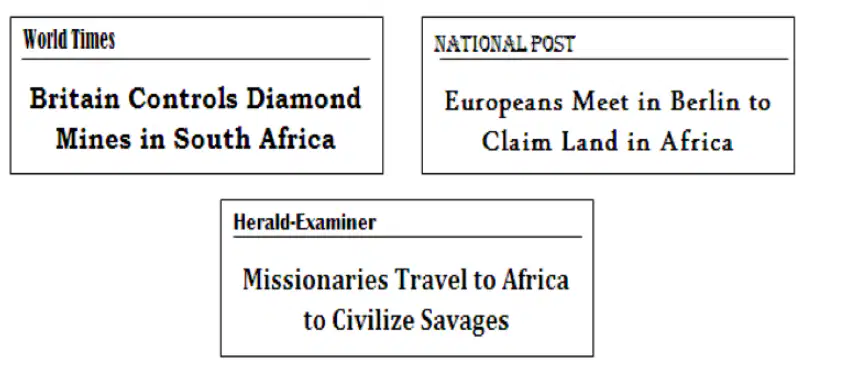
All of the headlines above refer to -
Motives for Imperialism
Causes of the Boer War
Effects of the Crimean War
Actions of Nationalism
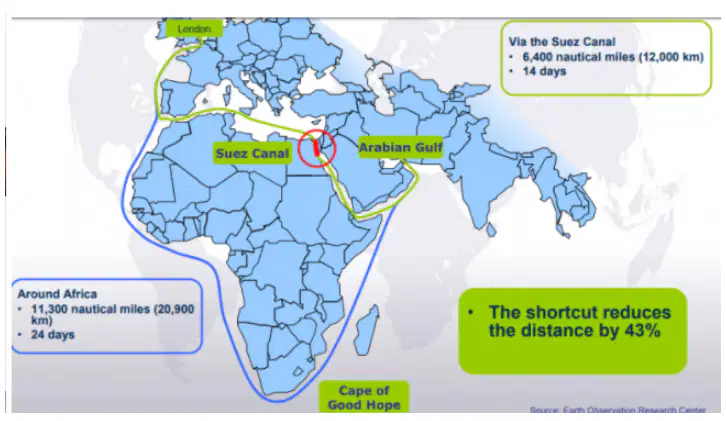
Why was the construction of the Suez Canal important?
It protected Egypt against invasions from the east
It allowed Europeans easy access to Asia
It allowed Egyptians easy access to Europe
It protected Europe against invasions from the South

These are examples of:
British Imperialism
American Imperialism
Spanish Imperialism
Russian Imperialism
During the 19th century, European nations established spheres of influence in China mainly to
Claim exclusive trading privileges in China
Introduce Islam to the Chinese people
Profit from the ivory trade
Obtain human rights for Chinese citizens

What conclusion can be drawn from this chart?
Direct control probably caused more loss of cultural identity
Management methods would have no effect on cultural identity.
Indirect control probably caused more loss of cultural identity.
Both management methods caused about the same loss of culture identity.
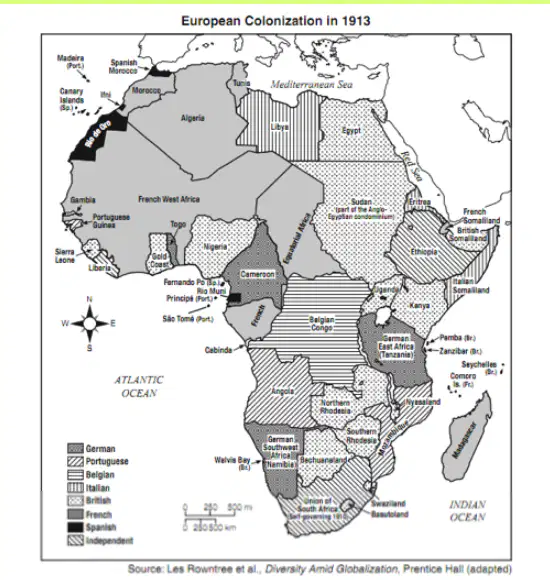
Many of the political divisions shown on this map were directly related to the
Meiji Restoration
Paris Conference
Boer War
Berlin Conference

What geographic advantage helped Britain resist conquest?
It was farther north.
It was larger.
It was an island.
It was far from France.
During the Reign of Terror, who was safe from the guillotine?
no one
the nobility
known revolutionaries
only Maximilien Robespierre
What legacy did Napoleon leave throughout Europe?
Conquered countries kept many of the changes Napoleon introduced through the Napoleonic Code.
He was revered throughout Europe as a hero of democracy and a great advocate of religious freedom.
He stoked the fires of socialism in countries he conquered and never granted them independence.
Europe under Napoleon was a well-run machine similar in size and influence to that of the ancient Roman Empire.
Which of the following is an accurate description of the tax system in France in the years preceding the French Revolution?
Only peasants and the clergy paid taxes.
Only about 2 percent of the nobility paid any taxes.
The nobility paid taxes only on land, not on income.
The members of the Third Estate paid almost all of the taxes.
Which event was considered to be the spark of the French Revolution?
Reign of Terror
Beheading of Louis XVI
Storming of the Bastille
Rise of Napoleon
The French National Assembly swore the Tennis Court Oath, which was a
guarantee that they would continue to support the king
vow to continue to meet until they had produced a new French constitution
pledge of loyalty to Jean-Jacques Rousseau, who called for doing away with feudalism
promise to not rest until all members of the government were tried and executed
What was the Industrial Revolution?
increased purchases of land by wealthy landowners to cultivate larger fields
increased output of machine-made goods that began in England during the 18th-century
a widespread use of teenagers as factory laborers who worked 14-hour days, 6 days a week
increased populations of urban areas during the 1800s
In England, which circumstance was a result of the other three?
availability of labor
abundance of coal and iron
waterpower from many rivers
start of the Industrial Revolution
Which two statements represent Karl Marx's ideas of communism?
Speaker A: Government should not interfere in relations between workers and business owners.
Speaker B: The workers will rise up and overthrow the privileged class.
Speaker C: Private property will cease to exist. The people will own the means of production.
Speaker D: A favorable balance of trade should be maintained by the use of tariffs.
Government should not interfere in relations between workers and business owners.
The workers will rise up and overthrow the privileged class.
Private property will cease to exist. The people will own the means of production.
A favorable balance of trade should be maintained by the use of tariffs.

Which conclusion is best supported by the information on the map?
England's natural resources led to the growth of industrial cities
In 1830, England had an unfavorable balance of trade
Great Britain's prosperity unified the people
People emigrated from Great Britain because of pollution
Which statement is referring to laissez-faire capitalism?
Speaker A: Government should not interfere in relations between workers and business owners.
Speaker B: The workers will rise up and overthrow the privileged class.
Speaker C: Private property will cease to exist. The people will own the means of production.
Speaker D: A favorable balance of trade should be maintained by the use of tariffs.
Government should not interfere in relations between workers and business owners.
The Workers will rise up and overthrow the privileged class.
Private property will cease to exist. The people will own the means of production.
A favaorable balance of trade should be maintained by the use of tariffs.
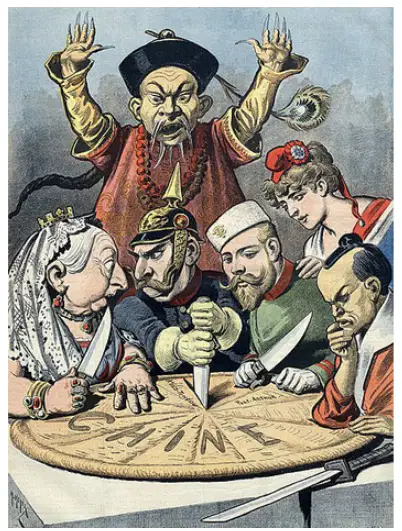
What is the best title for the image above?
China controls the world
The Partition of China
Japanese Imperialism
The Berlin Conference
What happened because of the Berlin Conference of 1884-1885?
There was less fighting between African leaders and European powers.
African leaders voiced their suggestions for better relations with European powers.
France and Britain agreed to govern their African colonies jointly
Europeans divided Africa into colonies without consulting African leaders.
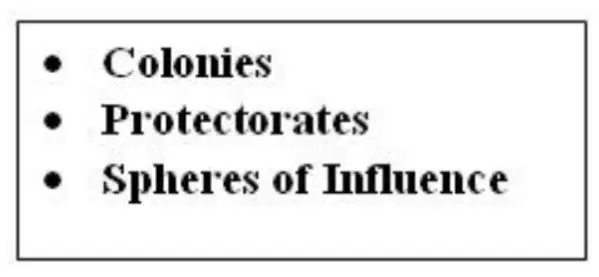
The items in the box are all examples of -
Nationalism
Communism
Socialism
Imperialism
Which goal was NOT stated in the "slogan of the Revolution"?
fraternity
justice
equality
liberty
Which document stated that "men are born and remain free and equal in rights"?
Napoleonic Code
Declaration of Independence
Declaration of the Rights of Man
Holy Alliance
The Napoleonic Code eliminated…?
Taxes
Gender inequality
The French Monarchy System
The estate system
Which geographic condition contributed to the defeat of Napoleon's troops during the invasion of Russia?
Typhoons
Severe flooding
Harsh winter
Drought
The Congress of Vienna -
supported Napoleon's attempt to unify Europe
restored European monarchies
established democracies in Europe
gave France and Austria more territory
What was Maximilien Robespierre's role during the Reign of Terror?
He was a nonviolent leader dedicated to gradual evolution and a constitutional republic.
He was a personal friend of Louis XVI and did everything he could to prevent his execution.
He advocated the writings of the Enlightenment thinkers and edited a newspaper that constantly attacked the King.
He led the Committee of Public Safety and prosecuted anyone who was suspected to be against the revolution.
One of the most important causes of the economic crisis that caused the French Revolution was
the new United States of America.
food shortages
economic expansion.
an economic slowdown.
Improving economic status for workers through collective bargaining was the primary reason for the formation of
associations of journeyman
craft guilds
secret fraternal organizations
labor unions
Which of these were a problem caused by the Industrial Revolution?
Reduced spending on military goods
Sharing of profits with workers
Exploitation of children in factory jobs
Increase in isolationist policies

Which concept is most closely associated with the pattern of population distribution in England as shown on this map?
Urbanization
Colonization
Collectivization
Globalization
Electricity was especially valuable because it was a power source and because it
didn't cost anything to create.
did not use wires or rails
made other inventions possible.
worked better than chemicals to run machinery.
In the early 18th century, the Agricultural Revolution in Great Britain resulted in urbanization because
Enslaved persons replaced free laborers on farms
Factory work strengthened extended families
Displaced rural workers migrated to find jobs
The middle class decreased in size.
Which of the following was the first area to undergo major industrialization?
banking
railroads
coal mining
textile production
Socialist parties appealed to many workers in Europe because they
used violence against factory owners.
attacked the bourgeoisie.
supported workplace reforms.
did not believe in revolution.
Why did employers first hire women?
There were not enough men to fill all the low-paying white-collar jobs.
Women were better at white-collar jobs than men were.
The government had laws that forced everyone to hire women.
Women had always been hired equally with men to work outside the home.

What was true of direct control?
Local government officials were used.
It had no self-rule.
The British preferred it.
Local rules were included with European styles.

What was the goal of indirect control?
assimilation
end of self-rule
establishment of European-style governments
development of future leaders

Which event is considered the immediate cause of World War I?
Signing of the Treaty of Versailles
Invasion of Poland by Germany
Assassination of Archduke Franz Ferdinand
Use of unrestricted submarine warfare by Germany
All of the following are regarded as primary causes of World War I except
alliances
nationalism
militarism
communism

