

wayground logo

Free Printable Worksheets

Font size

S
M
L
XL
Worksheets

Classifying and Describing Matter Quiz

Total questions: 35

Worksheet time: 19mins

Name
Class
Date
1.
Flammability (burns): Chemical or Physical Property
a)
Chemical Property
b)
Physical Property
2.
Odor: Chemical or Physical Property
a)
Chemical Property
b)
Physical Property
3.

Is water, H2O, a mixture, element, or compound?

a)

mixture

b)

element

c)

compound

4.

Is Chlorine, Cl, a mixture, element, or compound?

a)

mixture

b)

element

c)

compound

5.

An atom is:

a)

a substance that has only one type of atom

b)

a group of two or more atoms held together by chemical bonds

c)

basic unit from which all matter is made

d)

substance made of two or more elements that are chemically combined

6.

An element is:

a)

a substance that has only one type of atom

b)

a group of two or more atoms held together by chemical bonds

c)

basic unit from which all matter is made

d)

substance made of two or more elements that are chemically combined

7.

A compound is:

a)

a substance that has only one type of atom

b)

a group of two or more atoms held together by chemical bonds

c)

basic unit from which all matter is made

d)

substance made of two or more elements that are chemically combined

8.

A pure substance is a single kind of matter. A(n) ____________ is made up of two or more substances that are together in the same place, but each substance keeps its own properties.

a)

mixture

b)

compound

c)

atom

d)

molecule

9.

What is described in this picture?

a)

Homogenous mixture

b)

Heterogenous mixture

c)

It is both homogenous and heterogenous

d)

None of these

10.

What is described in this picture?

a)

Homogenous mixture

b)

Heterogenous mixture

c)

It is both homogenous and heterogenous

d)

None of these

11.
Which measurement is taken with this tool?
a)
volume
b)
mass
c)
weight
d)
heaviness
12.
Which physical property allows this lava lamp to work?
a)
density
b)
mass
c)
volume
d)
color
13.
What are the correct units for density?
a)
mL
b)
g/cm3
c)
g
d)
cm3
14.
What are the correct units for mass?
a)
Kg or g
b)
pounds or Newtons
c)
mL or cm3
d)
g/cm3
15.
Which liquid has the greatest density?
a)
lamp oil
b)
karo syrup
c)
water
d)
honey
16.
Dimensions of a shape are:
length- 10cm
height- 8cm
width- 7cm
What is the volume?
a)
560cm cubed
b)
25cm cubed
c)
56cm cubed
d)
80cm cubed
17.
The amount of space that matter takes up is its _______.
a)
atom
b)
volume
c)
matter
d)
weight
18.
The amount of matter something contains is its ______________.
a)
gas
b)
solid
c)
weight
d)
mass
19.
Volume is ______________.
a)
length X width
b)
height X length
c)
length X width X height
d)
width X height
20.
________________ is anything that has mass and takes up space.
a)
volume
b)
matter
c)
mass
d)
weight
21.
What would be the best way to measure the volume of a small rock?
a)
L x W x H with a ruler
b)
Put on triple beam balance
c)
Mass ÷ Volume
d)
Displacement method using graduated cylinder
22.
Ice melting
a)
Chemical Change
b)
Physical Change
23.
Wood burned in a fireplace
a)
Chemical Change
b)
Physical Change
24.
Glass bottle that is shattered
a)
Chemical Change
b)
Physical Change
25.

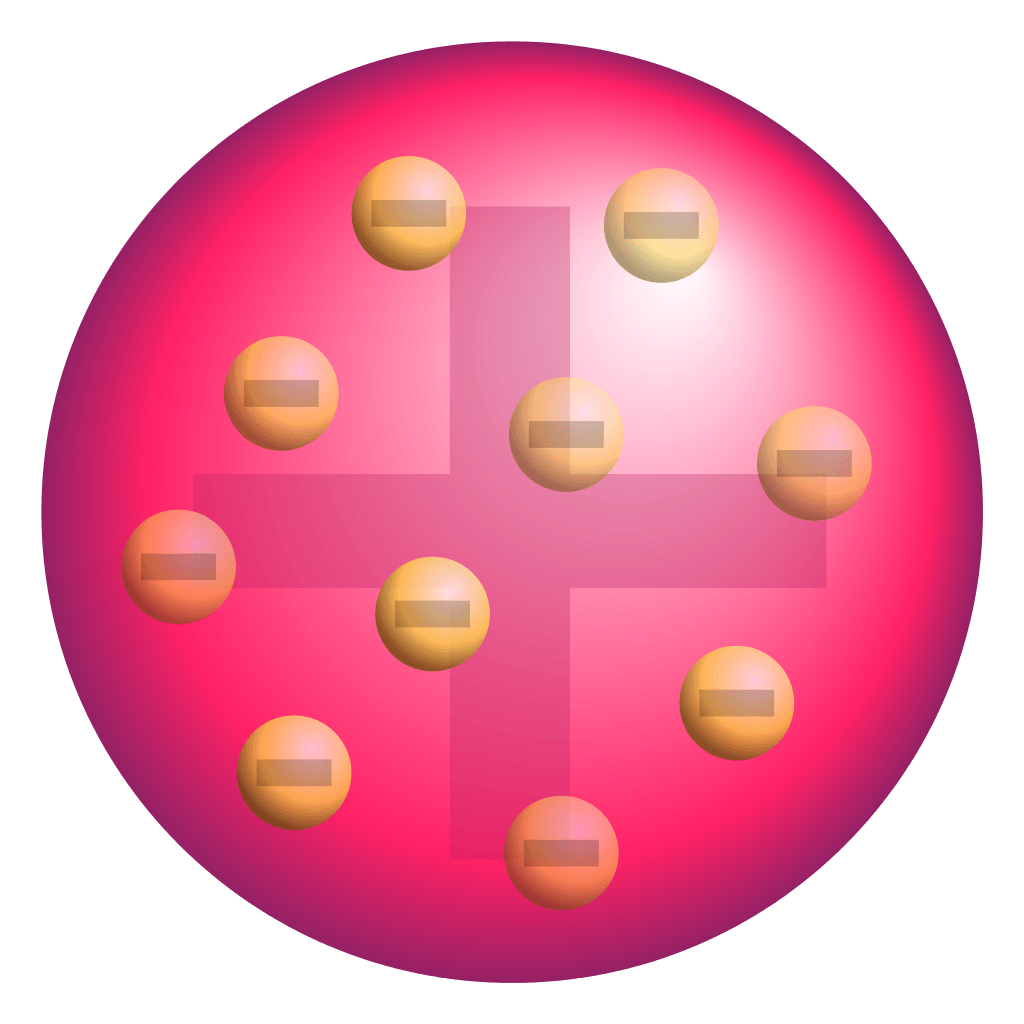
This model was developed after J.J. Thompson discovered electrons, a particle smaller than an atom. It shows electrons floating freely in a positive region.

a)

The "Plum Pudding Model" of the atom

b)

The "Rutherford Model" of the atom

c)

Democritus's model of the atom

d)

The "Quantum Mechanical Model" of the atom

26.
In the gold foil experiment, most of the positively charged alpha particles passed through the gold foil, but some were deflected or bounced back.  What did we conclude because of this?  
a)
Atoms are small indivisible spheres
b)
Atoms are mostly empty space with a small, dense, positive center
c)
Atoms have negatively charged particles which orbit the nucleus
d)
Light is a wave, not a particle
27.

Who was the first to propose that matter consist of indivisible particle of matter called atoms?

a)

John Dalton

b)

Aristotle

c)

Democritus

d)

Plato

28.

What are electrons?

a)

an atom’s central regions, which is made up of protons and neutrons

b)

subatomic particles that have negative charges

c)

subatomic particles that have neutral charges

d)

subatomic particles that have positive charges

29.

What subatomic particles make up the nucleus of an atom?

a)

electrons

b)

protons

c)

neutrons

d)

leptons

e)

mesons

30.
Which one of the following would you use to separate sand from iron filings?
a)
a bar magnet
b)
filter paper
c)
chromatography paper
d)
alum
31.
Separating mixtures based on boiling points.
a)
Desalination
b)
Distillation
c)
Decantation
d)
Condensation
32.
Why does ice float?
a)
Liquid water is less dense than solid water.
b)
Solid water is less dense than liquid water.
c)
Gaseous water is less dense than solid water.
d)
Liquid water is less dense than gaseous water.
33.
What is the formula for density?
a)
density = mass x volume
b)
density = mass / volume
c)
density = mass + volume
d)
density = mass - volume
34.
Jack has a rock. The rock has a mass of 14g and a volume of 2cm3. What is the density of the rock?
a)
7 mL
b)
7 g/cm3
c)
28 g/cm3
d)
1/7 g/cm3
35.
An object with which of the following densities will float on water?
a)
0.7 g/cm3
b)
1.2 g/cm3
c)
3.5 g/cm3
d)
11.4 g/cm3
