
 Worksheets
Enzymes and Mammalian teeth
Total questions: 32
Worksheet time: 24mins
1) What is the part of the tooth you can see above the gum?
(a)Crown
(b) Pulp
(c) Cavity

Which type of tooth is the picture representing?
(a)Premolar
(b) Molar
(c) Canine
An adult has ___ teeth.
42
32
22

This skull is possessed by a_______
herbivore
carnivore
omnivore

What feeding level belongs to this teeth?
herbivore
carnivore
omnivore
none of the above
The pulp at your teeth contains ______, which send messages to the brain if your ice pop is too cold.
blood vessels
nerves
brain waves
none of the above
This type of tooth is pointy, sharp, and made to help tear food.
molars
incisors
canines
pre molars

What tooth is this?
molar
incisors
canine
premolar

Identify the part of the tooth labelled A.
Dentine
Pulp
Enamel
Root
The first set of teeth are called as
Milk Teeth
Temporary Teeth
Baby Teeth
All of the above
The tooth receives nourishment from
Enamel
Dentine
Pulp
None of the above
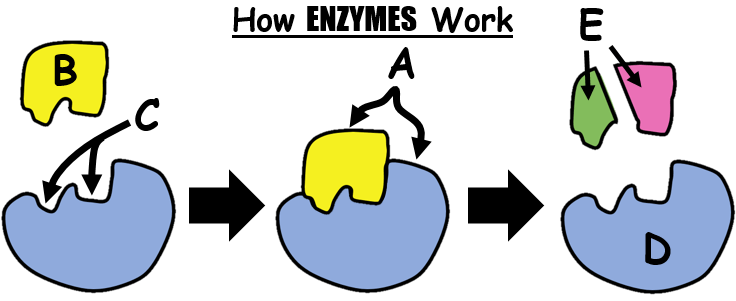
Type of protein that SPEEDS UP metabolic reactions in plants and animals without being permanently changed or destroyed
The reactant
Glucose
Enzyme
ATP
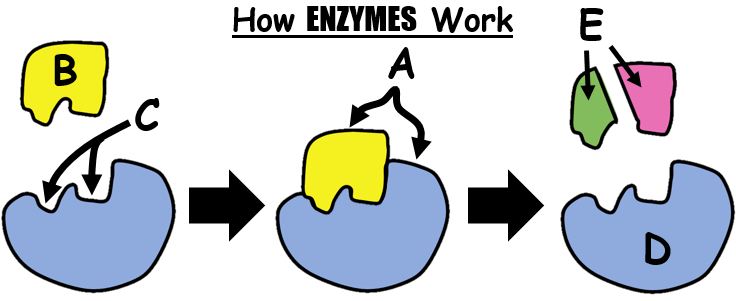
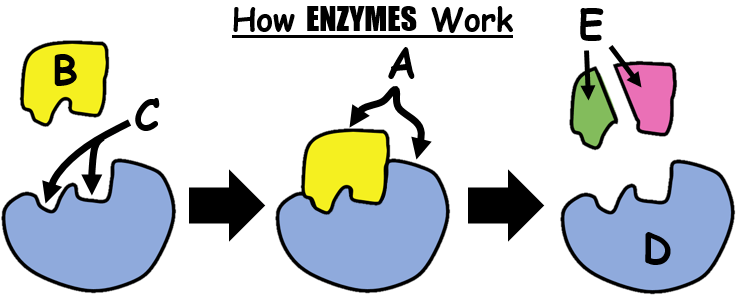
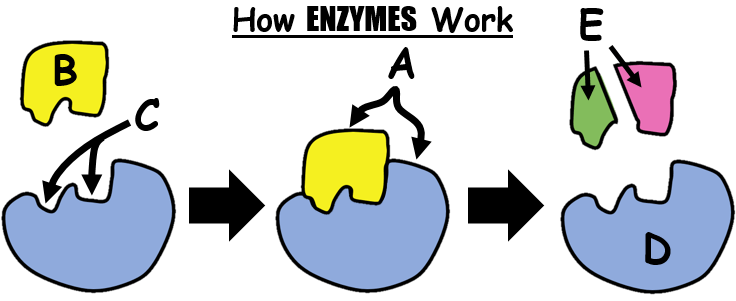
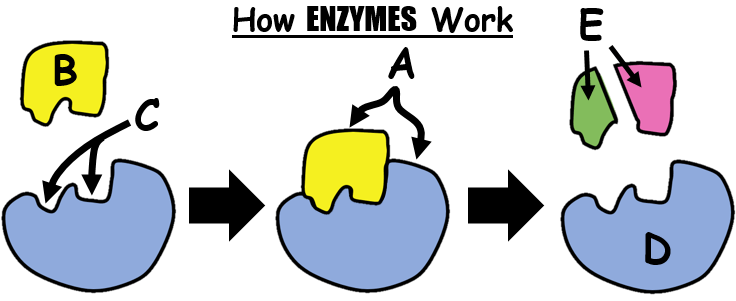
The substance which an enzyme act on is known as ___
product
substrate
activation energy
active site
Most enzymes -
have no effect on the rate of the chemical reaction
speed up the chemical reaction
slow the rate of the chemical reaction
keep the rate of the chemical reaction the same

Refer to the figure above. What temperature would be considered the optimum temperature for this enzyme's activity rate?
20 Degrees Celsius
60 Degrees Celsius
40 Degrees Celsius
30 Degrees Celsius
What suffix is used in the names of most enzymes?
-nic
-ase
-gen
-yme
Enzymes only work with specific substrates because each substrate -
actively interferes with other substrates around it
destroys its specific enzyme
can only use a specific ionic bond with the enzyme
has a specific activation site for enzyme attachment
What two factors can denature enzymes?
pH & temperature
temperature & concentration
temperature & amount of substrate
temperature & malleability
Which of the following is an enzyme?
lipase
lactose
galactose
glucose

A toothless space meant for the mixing of food in the mouth of a herbivore is called (a) .
A special kind of teeth found in carnivores needed for tearing flesh from bones is known as the (a)

