
 Worksheets
Intro to Ecosystems
Total questions: 15
Worksheet time: 10mins
Name
Class
Date
1.
Temperature, light, air, water, and soil are all _____ parts of the environment
a)
alive
b)
biotic
c)
abiotic
d)
living
2.
All of the living AND non-living things in an area that interact with each other are called a/an __________.
a)
community
b)
habitat
c)
population
d)
ecosystem
3.
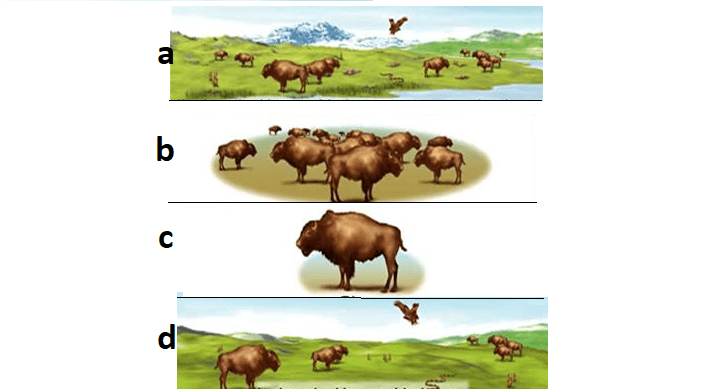
Which represents a community?
a)
a
b)
b
c)
c
d)
d
4.
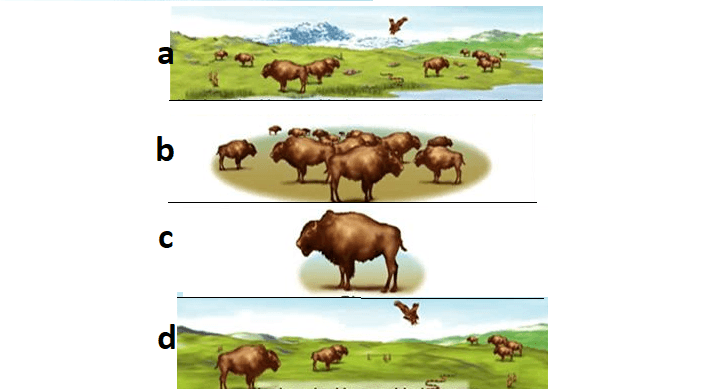
Which represents an organism?
a)
a
b)
b
c)
c
d)
d
5.
Which of the following is an example of an interaction between a living and nonliving organism?
a)
a snake using a mouse for food
b)
a worm using the soil as shelter
c)
a bird using an insect for food
6.
What are examples of biotic factors?
a)
mushroom, snail, whale
b)
tree, hair, paper
c)
clouds, dirt, plastic
d)
athlete's foot, grapes, gold
7.

What part of an ecosystem would a field of daisies represent?
a)
Organism
b)
Population
c)
Community
8.
What part of an ecosystem would a field of daisies represent?
a)
Organism
b)
Population
c)
Community
9.

a rock
a)
biotic
b)
abiotic
10.

What are the nonliving factors in this image?
a)
water, sunlight, dirt, air
b)
birds and plants
c)
birds, water, dirt
d)
plants, water
11.

What would most likely happen if an ecosystem no longer received sunlight?
a)
The number of herbivores would increase
b)
The number of plants would increase
c)
all organisms would adapt
d)
All living organisms would eventually die
12.
Ecosystems are made up of....
a)
Living things only
b)
Living and non-living things
c)
air and nutrients only
d)
Non-living things only
13.
Light, air, soil and water are considered
a)
non-living things that support life
b)
unimportant
c)
living things
d)
ecosystems
14.
An example of an ecosystem is
a)
All the frogs and tadpoles in a pond
b)
All the frogs, bass and lily pads in a pond
c)
All the sunlight, water, temperature and sunlight in a pond
d)
All the plants and animals as well as the sunlight, temperature, water and soil of a pond
15.
organisms such as plants and animals are considered
a)
living things
b)
ecosystems
c)
non living things
d)
nutrients
100 %

