
 Worksheets
Early Development of Human and Twins
Total questions: 25
Worksheet time: 25mins
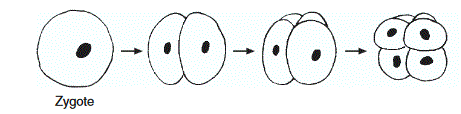
The diagram below represents some stages of early embryonic development. Which process is represented by the arrows in the diagram?
meiosis
Mitosis
Fertilization
Evolution
Where do the egg and sperm meet?
The ovary
The fallopian tube / oviduct
The vas deferens
The uterus
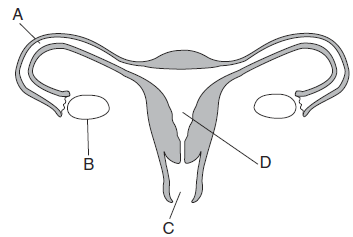
If an egg that has been fertilized by a sperm splits into two while it is in the fallopian tube, the beginning of two babies can start to grow. These are known as
identical twins
fraternal twins
triplets
If multiple eggs have been fertilized by a different sperm and develop at the same time in the uterus. These are known as
identical twins
fraternal twins
What structure protects and cushions the fetus throughout its prenatal development?
amniotic sac and fluid
placenta
umbilical cord
vagina
Which is the correct order?
embryo, foetus, zygote
foetus, zygote, embryo
embryo, zygote, foetus
zygote, embryo, foetus
Which of the following consist of a hollow ball of cells
Gastrula
Morula
Blastocyst

State the number of chromosomes in a human zygote.
12
23
46
92
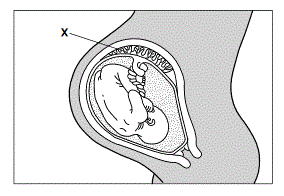
Which statement(s) correctly describe about structure X?
(Choose all that apply)
help to maintain a thick, blood-enriched endometrium throughout the pregnancy
exchange of nutrients from the mother to the foetus
exchange of wastes from mother to the foetus
Oxygen diffuses from fetal blood to maternal blood.
Which of the following twins form from the fertilisation of one sperm and one ovum?
Identical twins
Fraternal twins
Siamese twins
The embryos of the twins develop into two foetuses, each with its own placenta and umbilical cord.
The above description is true for
identical twins
fraternal twins
siamese twins

The above image is
identical twins
fraternal twins
siamese twins
Which of the following carry blood rich in carbon dioxide and nitrogenous waste products from the foetus to the placenta?
foetal artery
umbilical artery
umbilical vein
foetal vein
Where is human chorionic gonadotrophin (HCG) produced?
Ovary
Anterior pituitary
Embryo
Posterior pituitary
Which of the following are functions of the placenta?
I. Gas exchange
II. Stimulation of uterine contractions
III. Secretion of progesterone
IV. Secretion of estrogens
I only
III and IV only
I, III and IV only
I, II, III and IV
Why is human chorionic gonadotropin (HCG) important in early pregnancy?
It is required for equal cell divisions in the growing embryo.
It stimulates the ovary to continue production of estrogen and progesterone.
It increases the rate of cell division in the embryo.
It promotes growth of the inner cell mass within the embryo.
Which hormone maintains the corpus luteum in the ovary of a woman at implantation?
FSH
LH
HCG
Progesterone
Which of these statements about the human placenta is incorrect?
The placenta is the site of nutrient and gas exchange between the mother and fetus
The placenta produces hormones, such as estrogen.
The placenta begins to develop after implantation of the blastocyst.
The mother’s blood and the baby’s blood mix in the placenta.
The umbilical artery carries blood from the fetus to the placenta and the umbilical vein carries blood from the placenta to the fetus.
How does the composition of the blood in the umbilical artery and the umbilical vein differ?
Blood in the umbilical artery contains less glucose than blood in the umbilical vein.
Blood in the umbilical artery contains less carbon dioxide than blood in the umbilical vein.
Blood in the umbilical vein contains less oxygen than blood in the umbilical artery.
Blood in the umbilical vein contains more urea than blood in the umbilical artery.
Choose the correct statements about umbilical cord.
a tube that connect placenta and the foetus
a thin and strong membrane
contains blood vessel
prevents blood form mother and foetus from mixing
to transport substance between the foetus and the mother

