wayground logo

Free Printable Worksheets

Font size

S
M
L
XL
Worksheets

Weather

Total questions: 35

Worksheet time: 18mins

Name
Class
Date
1.
Water as a gas is called _________.
a)
water vapor
b)
tornado
c)
hibernate
d)

cloud

2.
How water moves from land to air and back again is called the ____________.
a)
weather
b)
thermometer
c)
water cycle
d)

climate

3.
A tool used to measure temperature is called ______________.
a)
thermometer
b)

anemometer

c)

barometer

d)

wind vane

4.
The changing of water (liquid) into water vapor (gas) is called ___________.
a)
condensation
b)
evaporation
c)
precipitation
5.
The changing of water vapor (gas) into water (liquid) is _____________________.
a)
water vapor
b)
tornado
c)
condensation
6.
The condition of the outside air at a particular moment is called ________________.
a)
tornado
b)
weather
c)

air pressure

d)

climate

7.
A storm with fast, twisting winds that form a cloud that can touch the ground is a  ______________________.
a)
condensation
b)
hibernate
c)
tornado
8.
What season has the hottest temperature?
a)
Winter
b)
Summer
c)
Fall
d)
Spring
9.

Which cloud is a thin, wispy cloud that typically means fair weather?

a)
Cirrus
b)
Hail
c)
Stratus
d)
Cumulus
10.
Which cloud type is white and puffy and looks like pieces of floating cotton?
a)
Stratus
b)
Cotton balls
c)
Cumulus
d)
Cirrus
11.

What is weather?

a)

what the air is like outside

b)

hot

c)

cold

d)

what the weather conditions usually are

12.

What is the equator?

a)

is an imaginary line that separates the northern and southern hemispheres

b)

a vertical line that separates Europe from the U.S

c)

A line that produces heat

13.

Mountains and other landforms affect the climate.

a)

True

b)

False

14.

What is a barometer?

a)

a tool to help predict the weather

b)

a tool to measure air pressure

c)

a tool used to measure the temperature

15.

An anemometer is a tool to measure

a)

weather

b)

rain

c)

wind speed

16.
Precipitation is....
a)
rain
b)
snow
c)
sleet
d)
all of these are correct
17.

Mountains can affect weather; so it can be raining on one side and dry on the other side.

a)
True
b)
False
18.

If the sky is clear, how can you describe the weather in general?

a)

fair(good) weather

b)

stormy weather

c)

changing weather

d)

not enough information

19.
This weather instrument is a...
a)
anemometer
b)

wind sock

c)
wind vane
d)
barometer
20.

What is the mixture of gases surrounding our planet called?

a)

atmosphere

b)

trees

c)

planet

d)

equator

21.
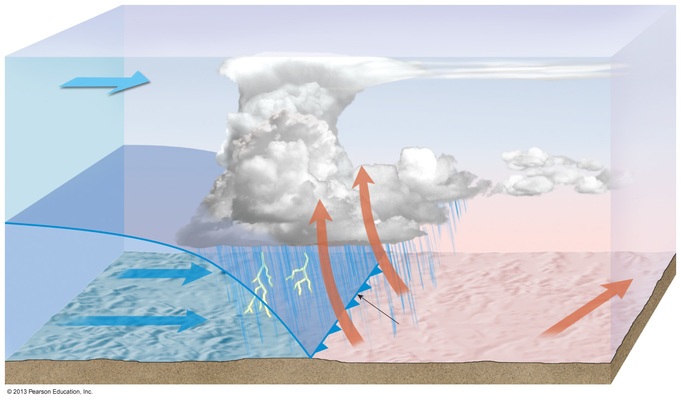
What type of storm front is this? 
a)
warm front
b)
cold front
c)
stationary front
d)
occluded front
22.
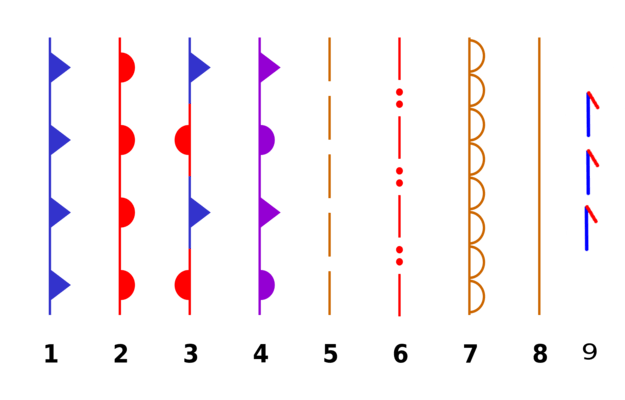
What does symbol # 3 mean?
a)
stationary front
b)
occluded front
c)
warm front
d)
cold front
23.
A front is
a)
where warm air is cooling at earth's surface
b)
a line where hot and cold air are separating
c)
a line where two different air masses meet
d)
where cold air is rising and forming rain clouds
24.
Which most likely produces clear, cool weather?
a)
zero air pressure
b)
stable air pressure
c)
a low pressure system
d)
a high pressure system
25.
_____________ air is more dense and tends to sink
a)
cold
b)
warm
c)
moist
d)
dry
26.
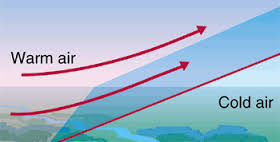
Which type of front is pictured?
a)
Cold front
b)
Warm front
c)
Occluded front
d)
Stationary front
27.
Which system results in rainy or stormy weather?
a)
high pressure
b)
low pressure
c)
hurricane
d)
weather system
28.
Which system results in drier, fairer weather?
a)
high pressure
b)
low pressure
c)
hurricane
d)
weather system
29.
When a cold front is approaching, what happens?
a)
warm air is pushing under cold air causing humid weather and lower temperatures
b)
warm air is pushing under cold air causing humid weather and higher temperatures
c)
warm air rises, cools, and causes rain and thunderstorms
d)
cold air is pushed over warm air causing rain and thunderstorms
30.
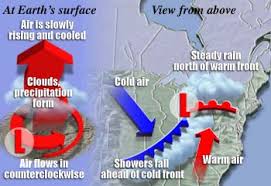
Which type of front is near Seattle?
a)
cold front
b)
warm front
c)
occluded front
d)
stationary front
31.
Which front is located near San Diego?
a)
cold front
b)
warm front
c)
occluded front
d)
stationary front
32.

Why is it less likely to snow along the coast of North Carolina compared to farther inland?

a)

The Atlantic Ocean keeps temperatures near the coast warmer

b)

Central NC is at a higher altitude

c)

The coast of NC is closer to the equator than the middle of NC

d)

The winds blow harder along the coast than in central NC
33.
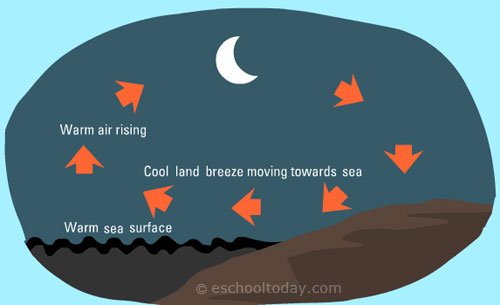
During a land breeze which way does the wind blow?
a)
from the sea to the land
b)
from the land to the sea
34.
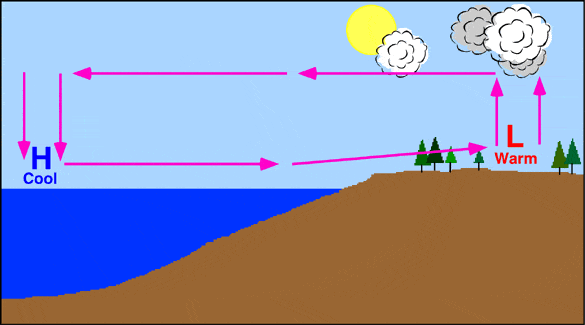
Is this a land or a sea breeze?
a)
land breeze
b)
sea breeze
35.
Is this a land or a sea breeze?
a)
land breeze
b)
sea breeze