
 Worksheets
Uniformly Accelerated Motion Graphs
Total questions: 25
Worksheet time: 18mins
A car accelerating constantly at 5 m s-2. If its velocity changes from 10 m s-1 to 25 m s-1, calculate the time taken to reach final velocity.
1 s
4 s
2 s
3 s

Which of the following velocity vs. time graphs corresponds to the distance vs. time graph shown?


Which of the following distance vs. time graphs represents an object that moves back to its starting position at decreasing speed?


Which of the following acceleration vs. time graphs represent an object in uniformly accelerated motion?


Which of the following cases is considered as uniformly accelerated motion?
I. A car that slows down by 5 m/s every second.
II. A falling apple that picks up a speed of 9.8 m/s every second.
III. A fun run participant that speeds up and slows down at certain points throughout his run.
II only
III only
I and II
II and III
If a runner accelerates from rest at a rate of 1.5 m/s2, what will its velocity be after 4 seconds?
2 m/s
4 m/s
6 m/s
8 m/s
Which of the following shows an object at rest? (PAY ATTENTION TO WHAT TYPE OF GRAPH YOU'RE LOOKING AT)


Which of the following show an object moving in the negative direction? (SELECT ALL THAT APPLY)


Use the graph above and pick the most accurate description of the object's motion
object is moving at constant speed
object is speeding up
object is at rest
object is slowing down

Use the picture above to choose the most accurate description of the object's motion
object is speeding up in the positive direction
object is slowing down in the positive direction
object is speeding up in the negative direction
object is slowing down in the negative direction
Use the picture above to choose the most accurate description of the object's motion
object is speeding up in the positive direction
object is slowing down in the positive direction
object is speeding up in the negative direction
object is slowing down in the negative direction

Which of the following velocity time graphs matches the position time graph above?


Displayed above is an acceleration time graph. Select all of the graphs below which match the acceleration displayed.


Which acceleration time graph matches the graph above?


Which acceleration time graph matches the graph above?

Which of the following graphs could match the acceleration time graph above?


Which position time graph matches the velocity time graph displayed above?


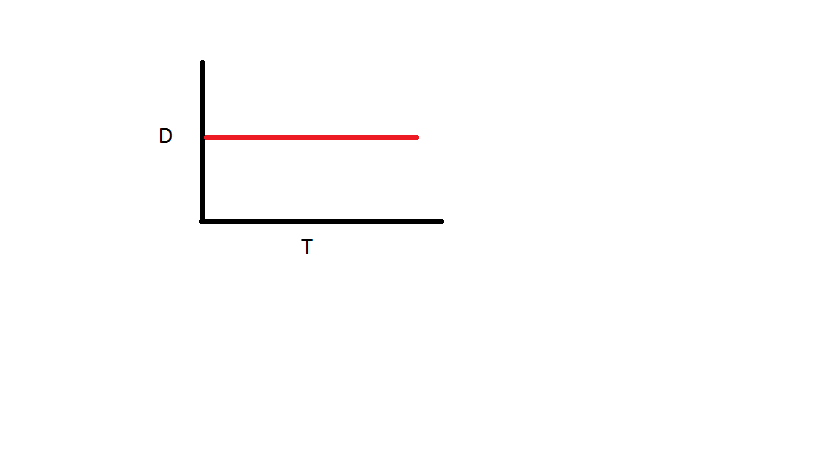
In the position vs. time graph, what type of motion does the line represent?
No motion
Constant velocity
Acceleration
Deceleration
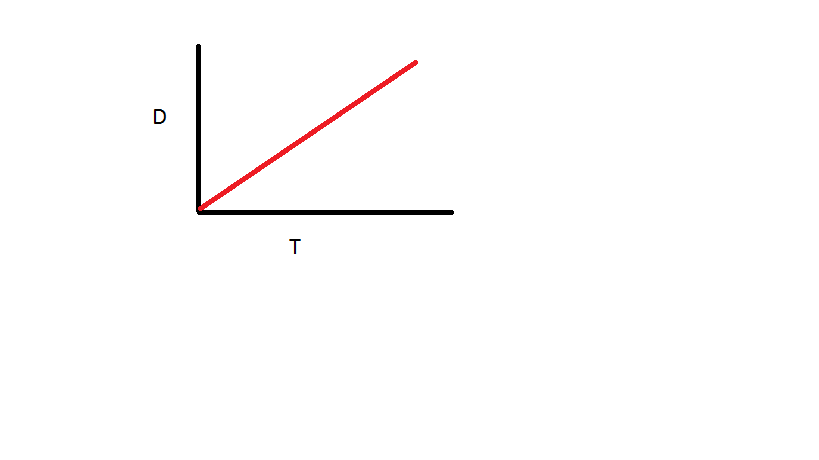
In the position vs. time graph, what type of motion does the line represent?
Acceleration
No motion
Deceleration
Constant Velocity

Select the graphs that would have the acceleration displayed above


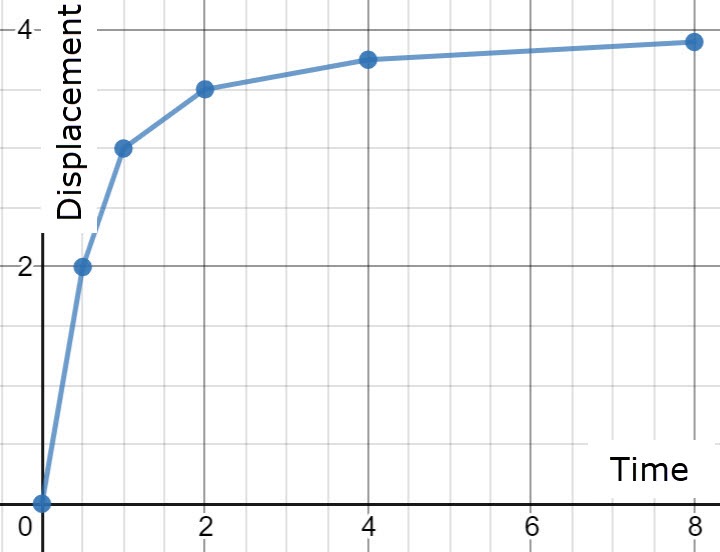
Slowing down
Moving towards me
Speeding up
Constant velocity
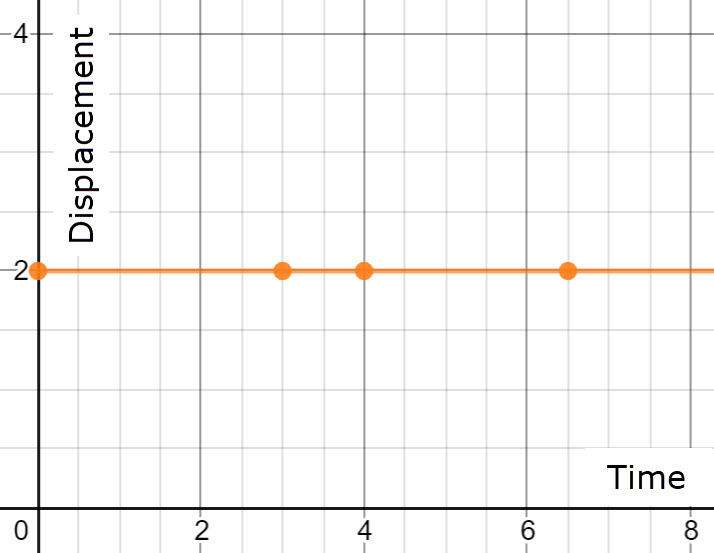
What kind of motion is represented in the position vs time graph above?
Stopped
Constant velocity
Positive velocity
Speeding up
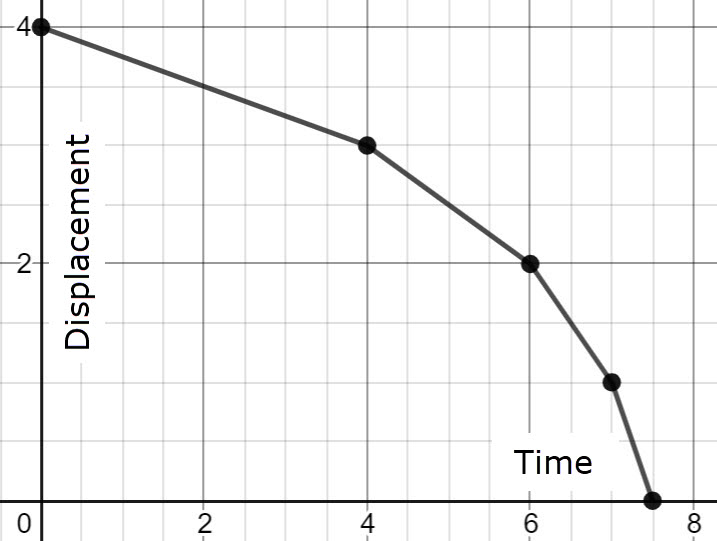
Which of the following best describes the motion of the position vs time graph above?
Speeding up
Slowing down
Constant velocity
Zero velocity
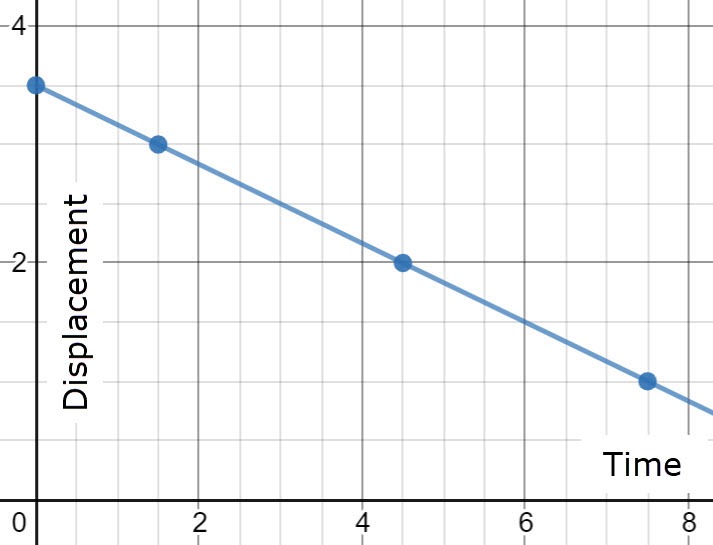
Which of the following bester describes the motion of the position vs time graph above?
Constant velocity in the negative direction.
Constant velocity in the positive direction.
Slowing down in the negative direction.
Speeding up in the positive direction.
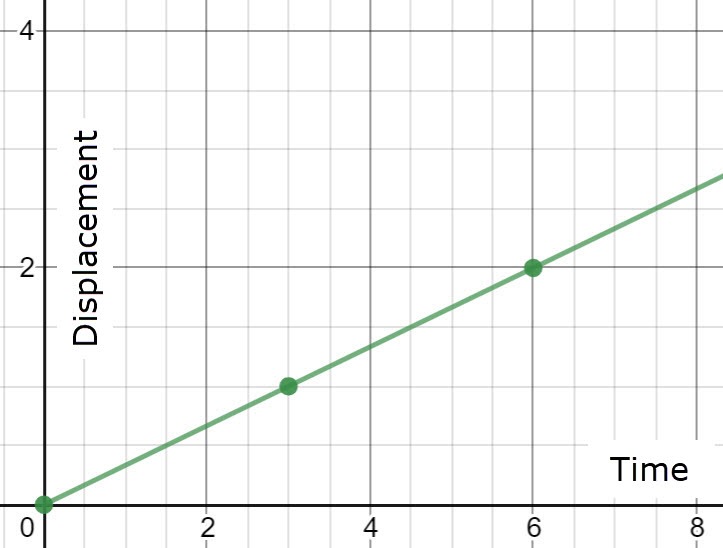
Which of the following best describes the motion of the position vs time graph above?
Constant velocity in the negative direction.
Constant velocity in the positive direction.
Slowing down in the negative direction.
Speeding up in the positive direction.

