Wayground logo

Free Printable Worksheets

Font size

S
M
L
XL
Worksheets

Cell basics

Total questions: 28

Worksheet time: 2hrs 40mins

Name
Class
Date
1.

The 3 parts of the Cell Theory are...?

a)

All living things are composed of cells

Cells are the basic units of structure and function in living things

All cells are produced from other cells

b)

All living things are composed of cells

Cells are the basic units of dance and vibes in living things

All cells are destroyed from other aliens

c)

All living things are composed of Jell-O

Cells are the basic units of structure and function in living things

All cells are produced from factories in Canada

d)

All living things are composed of cells

Cells do karate and practice eating whole pies in their free time

All cells are produced from other cells

2.

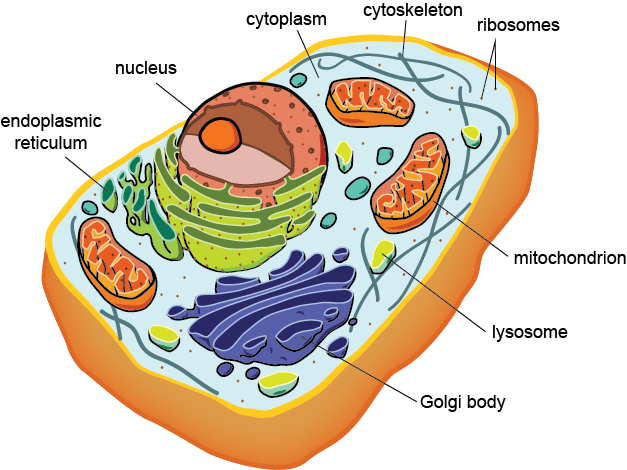
I am the "brain" of the cell or the "control center" for everything happening within the cell. I am a...

a)

Golgi Body/Apparatus

b)

Nucleus

c)

Ribosome

d)

Lysosome

3.

I decide what goes in and out of the cell. I am fluid like and found in BOTH plant and animal cells. I am a...

a)

Cell Wall

b)

Cell Membrane

c)

Cytoplasm

d)

Golgi Apparatus

4.

I provide plant cells their rigid shape. I am the...

a)

Basketball that Nic Quarne left in Mr. Woller's room last week

b)

Cytoskeleton

c)

Cell Membrane

d)

Cell Wall

5.

Animal and Plant Cells are...

a)

Shopkoytes

b)

Eukaryotes

c)

Prokaryotes

d)

The building blocks of non-living things
6.
Which of the following statements is not part of the cell theory?
a)
Cells are the basic unit of structure and function in all living things.
b)
All cells are produced from other cells.
c)
Only animal cells are composed of cells.
d)
All living things are composed of cells.
7.
The invention of the microscope made it possible for people to discover and learn about
a)
Plants
b)
Skin 
c)
Animals 
d)
Cells
8.
What is one way in which all living things on Earth are alike?
a)
All living things have hair.
b)
All living things are made of cells and come from other cells.
c)
The cells of all living things have chloroplast.
d)
All living things can move. 
9.

When cells are damaged, new cells are created by cell a process called cell division. How does the cell theory support this fact?

a)

It states that all cells have a nucleus which divides.

b)

It states that all living things are made up of one or more cells.

c)

It states that cells come from previously existing cells.

d)

It states that the basic units of structure and function are cells.

10.
The ___ is the basic unit of sturucture and function of organisms
a)
atom
b)
cell
c)
matter
d)
all other answers are correct
11.
Which statement is a part of the cell theory?
a)
all cells come from preexisting cells
b)
bacteria are prokaryotic cells
c)
eukaryotic cells are complex
d)
humans are multicellular
12.
Rocks are not living because
a)
they never move
b)
they aren't needed for humans
c)
they are not made of cells
d)
they don't break down
13.

All living things are made up of

a)

Prokaryotic Cell

b)

Eukarytoic Cells

c)

Either prokaryotic or eukaryotic cells

14.

This is a larger cell and has a nucleus.

a)

Prokaryotic

b)

Eukaryotic

c)

Both

15.

This cell has DNA.

a)

Prokaryotic

b)

Eukaryotic

c)

Both

16.

This cell is a bacterial cell.

a)

Prokaryotic

b)

Eukaryotic

c)

Both

17.

This cell has circular DNA floating in the cytoplasm.

a)

Prokaryotic

b)

Eukaryotic

c)

Both

18.

This cell has linear DNA found in the nucleus.

a)

Prokaryotic

b)

Eukaryotic

c)

Both

19.

This cell is smaller and does NOT have a nucleus.

a)

Prokaryotic

b)

Eukaryotic

c)

Both

20.
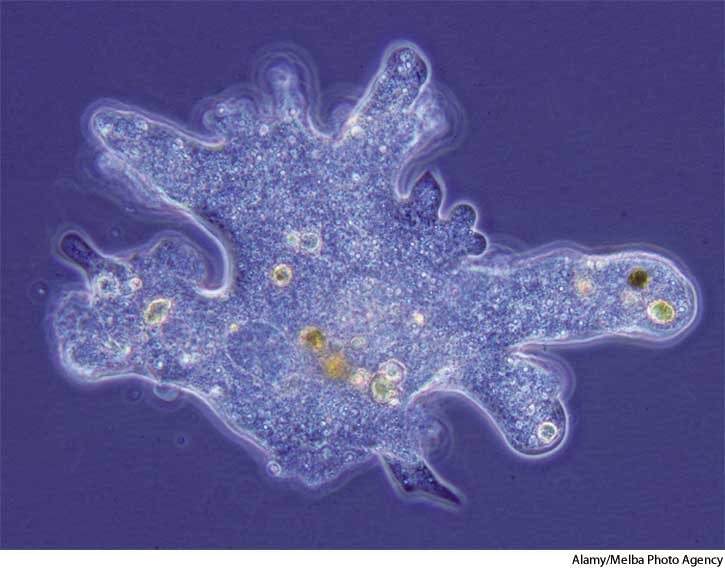
An Amoeba is a unicellular, animal-like protist that lives in ponds and streams. According to cell theory, where did this cell come from?
a)
another pre-existing amoeba cell.
b)
energy from sun that allowed the protist to reproduce.
c)
a multicellular organism.
d)
the nonliving environment.
21.
What tool do you use to view the cells?
a)
metric ruler
b)
centrifuge
c)
microscope
d)
telescope
22.
 Many tiny cell structures located within the cell  
a)
Nucleus
b)
Lysosome
c)
Ribosomes
d)
Organelle
23.
Known as the “Power Houses” of the cell. These organelles convert energy stored in food to energy that the cell can use to live and function
a)
Mitochondria
b)
Golgi Apparatus
c)
Cell membrane
d)
Endoplasmic Reticulum
24.
Most of the cell consists of a thick, clear, gel like fluid that the cell's organelles are suspended in. 
a)
Nucleus
b)
Cell Wall
c)
Ribosomes
d)
Cytoplasm
25.
Only Found in Plants, this organelle has a rigid layer that surrounds cells of plants. Helps protect and support the cell  
a)
Cell Wall
b)
Chloroplasts
c)
Cytoplasm
d)
Cell membrane
26.
This Organelle Controls which substances pass in and out of the cell. Everything a cell needs (food particles, water, oxygen, enters through this organelle
a)
Cell Wall
b)
Golgi Apparatus
c)
Cell membrane
d)
Cytoplasm
27.
Small grain-shaped organelles that produce proteins.
a)
Lysosomes
b)
Ribosomes
c)
Vacuole
d)
Nucleus
28.
 Large oval organelle that is the Cell’s control center  
a)
Vacuole
b)
Mitochondria
c)
Cell membrane
d)
Nucleus