
 Worksheets
Chemical Bonding (Termizi 2021)
Total questions: 25
Worksheet time: 50mins
What is the exception to octet rule for BF3
Incomplete octet
Expanded octet
Odd electron
obey octet rule
Ionic bond is between
Metal
Non metal
Metal and non metal

Trigonal bipyramidal
Tetrahedral
Seesaw
T-Shaped
Which of the following has bond angle of
120°Trigonal planar
Tetrahedral
Square planar
Bent
Which molecule is a polar molecule
F2
AlCl3
CCl4
SF4
The intermolecular forces that cause the instantaneous dipole in molecules is
London dispersion
Hydrogen bond
dipole-dipole forces
covalent bond
What is the hybrid of C for CH4 molecule
sp
sp2
sp3
sp4
SF6 , S atom with hybrid of sp3d2 will adopt geometry of
tetrahedral
octahedral
square planar
seesaw
Li, Na, K and Rb are elements going down group 1 in the periodic table. Which of the following element has the highest melting point?
Li
Na
K
Rb
Na, Mg and Al are elements across period 3 in the periodic table. Which of the following element has the highest melting point?
Na
Mg
Al

How water molecule can form this open structure
water molecule can form more hydrogen bond
water is flexible
Hydrogen bond is strong intermolecular forces
the hydrogen bond arranged the water molecule in tetrahedral

O2 has
2σ bond and 1π bond
1σ bond and 1π bond
1σ bond and 2π bond
__________________is a strong permanent dipole-dipole attraction between the positively charged H atom of a molecule and the negatively charged small and highly electronegative atom ( such as F, O and N atom ) of another molecule.
Hydrogen bond
Dipole-dipole forces
London dispersion forces

All atoms and molecules can have
Hydrogen bond
Dipole-dipole forces
London dispersion forces
What type of bond occurs when two or more nonmetals share valence electrons?
Covalent
Ionic
Metallic
None of the above
What type of bond occurs when a metal transfer its valence electrons to a nonmetal?
Covalent
Ionic
Metallic
None of the above
What is the exception to octet rule for BF3
Incomplete octet
Expanded octet
Odd electron
obey octet rule
What type of bond forms a "sea of electrons"?
covalent
ionic
metallic
none of the above

What is the the shape of this molecule according to VSEPR theory?
Linear
Tetrahedral
Trigonal Planar
Trigonal pyramidal
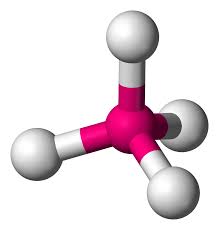
What is the hybridization of this molecule shown above
sp
sp2
sp3
sp4

Which of the following is octahedral?
SCl6
XeI4
NBr5
CH4
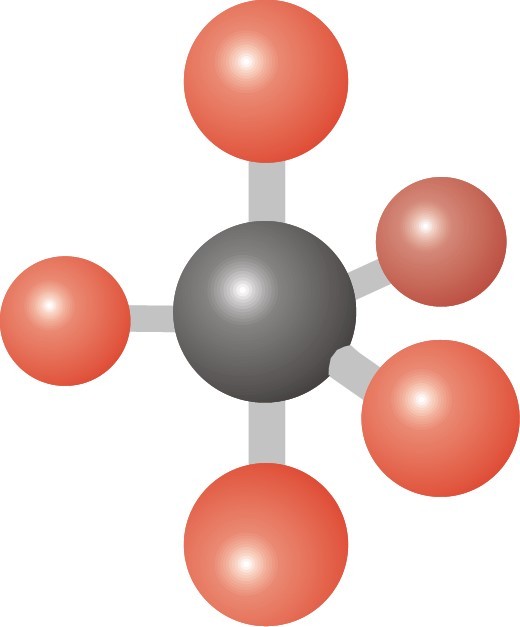
What is the hybridization of PF5?
sp3
sp3d
sp3d2
sp2

